
I started this blog to fulfill a lifelong dream—one sparked by a fascination with sailing the Greek Isles, inspired by a large poster in my childhood home that simply read, Sail Greece. But the journey wasn’t just about sailing Greece; it was about sharing the experience with my father, Mac Madenwald, the man who instilled in me a deep love for sailing and the sea. I wanted that same verve for adventure to be imbued within my family. When I suggested the idea of sailing the Sporades to him, he embraced it with the eagerness of a sailor diving into the sea, drawn by the sirens in Homer’s Odyssey. The idea to blog about the adventure was inspired by my father’s captain’s logs (which he meticulously kept). I knew he’d be writing one on the voyage, and I wanted to capture the memories as well, which has since continued across many sailing adventures and posts with him.
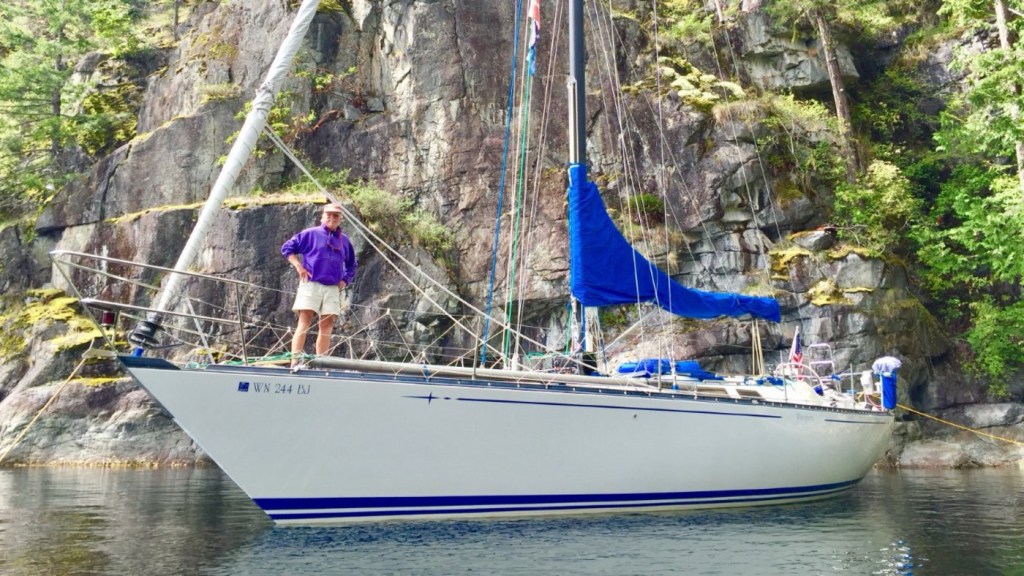
I grew up on boats, starting in the early 70s with Sunflower, my father’s Ranger 33, and then in 1978 with Pangaea, his Baltic 39, which became the heart and soul of our family’s sailing adventures.
A plaque with this definition adorns the wall below deck:
Pangaea
Gaea (Ge): the mythical earth goddess.
She was offspring of Chaos, and begot Uranus (Heaven) Ourea (Mountains), and Pontus (Sea). By Uranus she was the mother of the Cyclopes and the other Titans, and by Pontus she gave birth to Nereus and thus to the sea creatures.
She is ultimately the source of all life – the Earth Goddess or Mother Earth.
Pan: All; All-encompassing or universal.
Pangaea All life or all encompassing Mother Earth.
Pangaea wasn’t just a boat—she was a symbol of my father’s love for the sea. In fact, he was the longest continuous owner of a Baltic yacht, an honor that Baltic Yachts itself celebrated by inviting him out to their factory in Finland. His ownership longevity was a testament to his dedication to both the brand and the lifestyle it afforded him.
Though we never sailed Pangaea to Greece, she, like my father, traveled the world. From the Victoria-Maui race in 1980 and 1982 to countless voyages in the San Juan Islands, Canadian Gulf Islands, Desolation Sound, Barkley Sound, Hood Canal, Puget Sound, The Broughtons, and beyond the Salish Sea, Pangaea was always the constant companion.
Pangaea was more than a vessel; she was a home, one that he said raised his two children and three grand children and served as the introduction to sailing for hundreds of crew members—friends, co-workers, local high schoolers, and many more. One of those high-school students, Nick Estvold, is now the proud owner of Pangaea, carrying forward her and my father’s legacy and both of their welcoming and inclusive spirits.


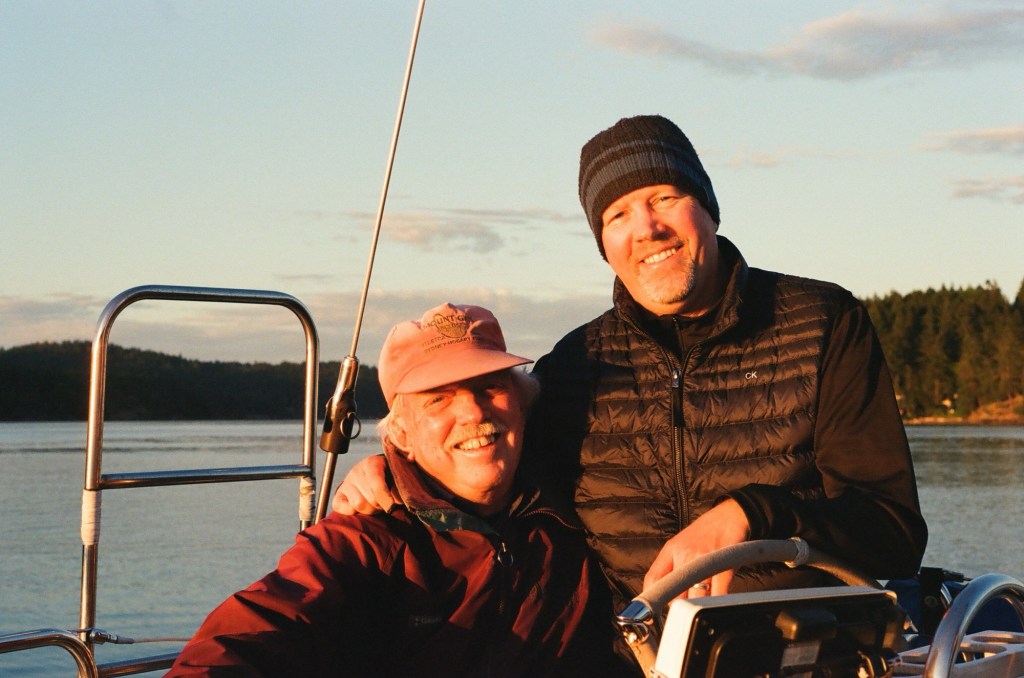
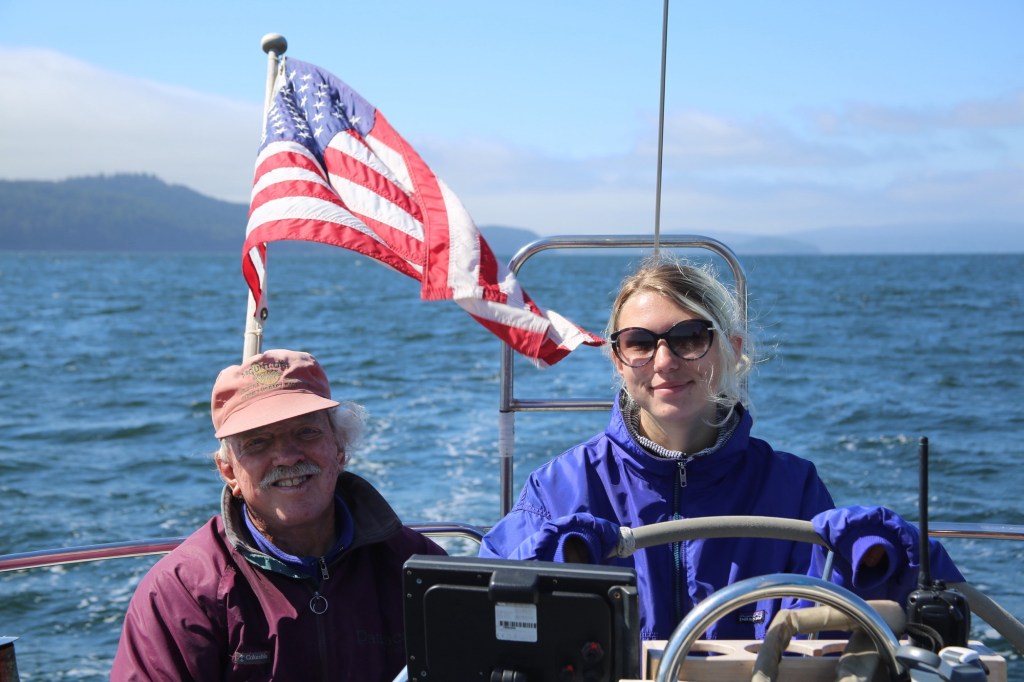
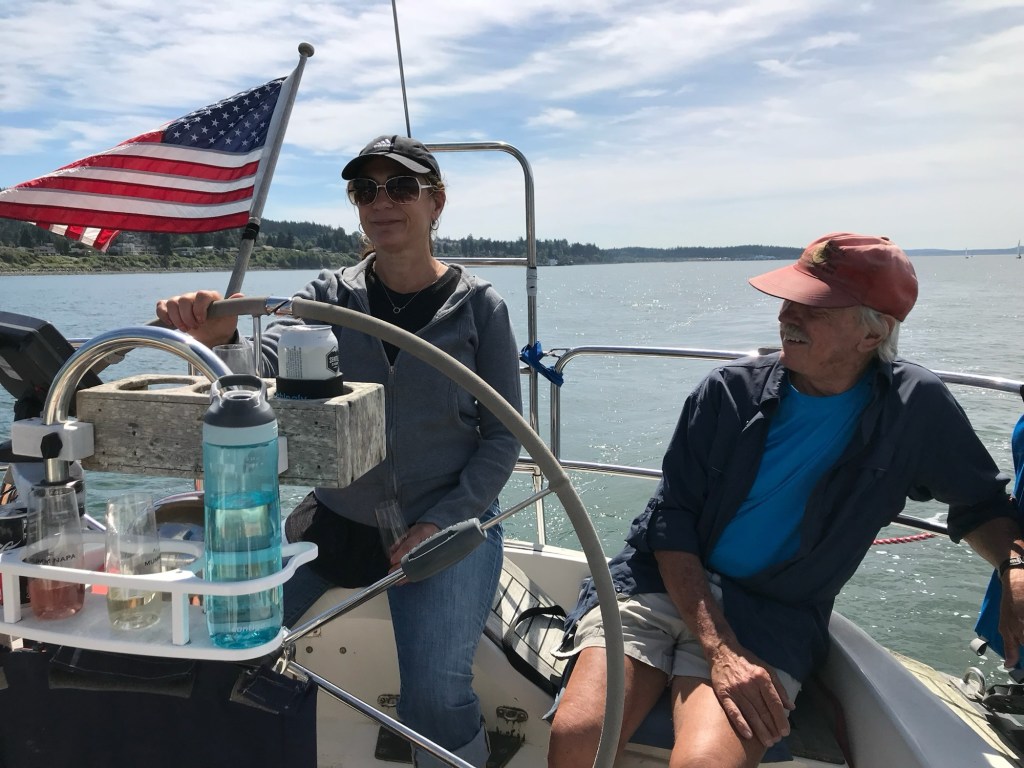
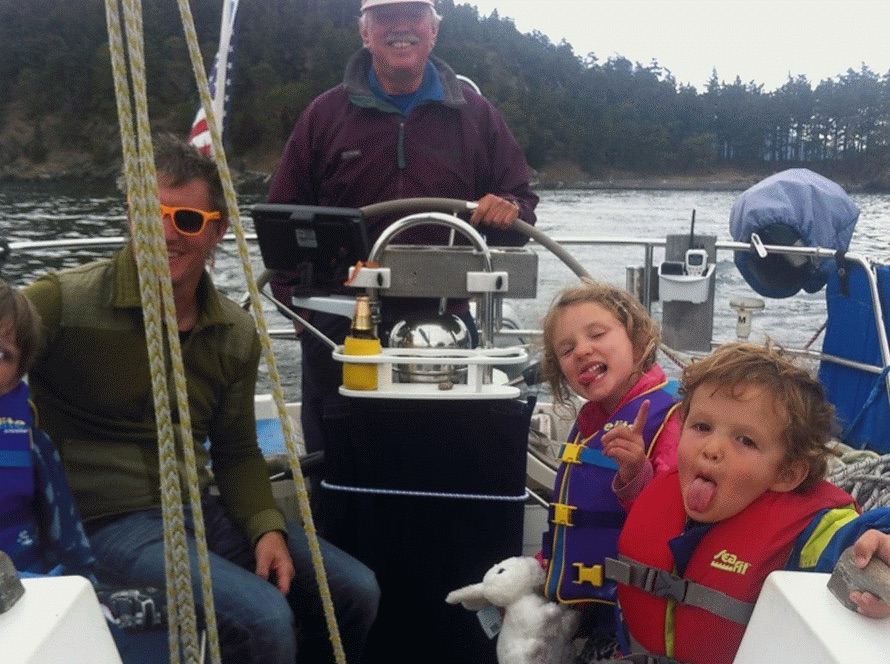
Last week, my father (known as Bumpa to his grandkids) passed away, his time cut short by ‘the ravages of maturity,’ as he put it. Even in his final days, he couldn’t bear to stay away from the sea. On his last day, he asked to visit Pangaea, which was on the hard, getting a new propeller. Seeing her out of the water, exposed and vulnerable, must have taken him back to 1978—the year she first entered our lives–as he followed behind as she was trucked down the highway on her way to be delivered. We knew his time was near, and in those final hours, we told him we would sail Pangaea in his honor in the Foul Weather Race hosted by the Anacortes Yacht Club, a race renowned for its challenging conditions. Ever the sailor, his first question? ‘What’s the forecast?’ It called for high winds and heavy rain—perfect conditions for Pangaea to show her true prowess. He passed away that evening.
On race day, February 22nd, 2025, we gathered—family, old friends, former students who had sailed with him over the years, and my daughter, who had flown in from LA—all wearing our full foul-weather gear. We headed to the starting line, where we tossed fresh tulips from Pangaea’s bow onto the start-line buoy near the Anacortes Refinery, a place so many of us had passed countless times during Wednesday night races.
As the countdown began—10 minutes, 5 minutes, 30, 29, 28, 27…—there was a sense of eager anticipation in the air.
And then, we were off.

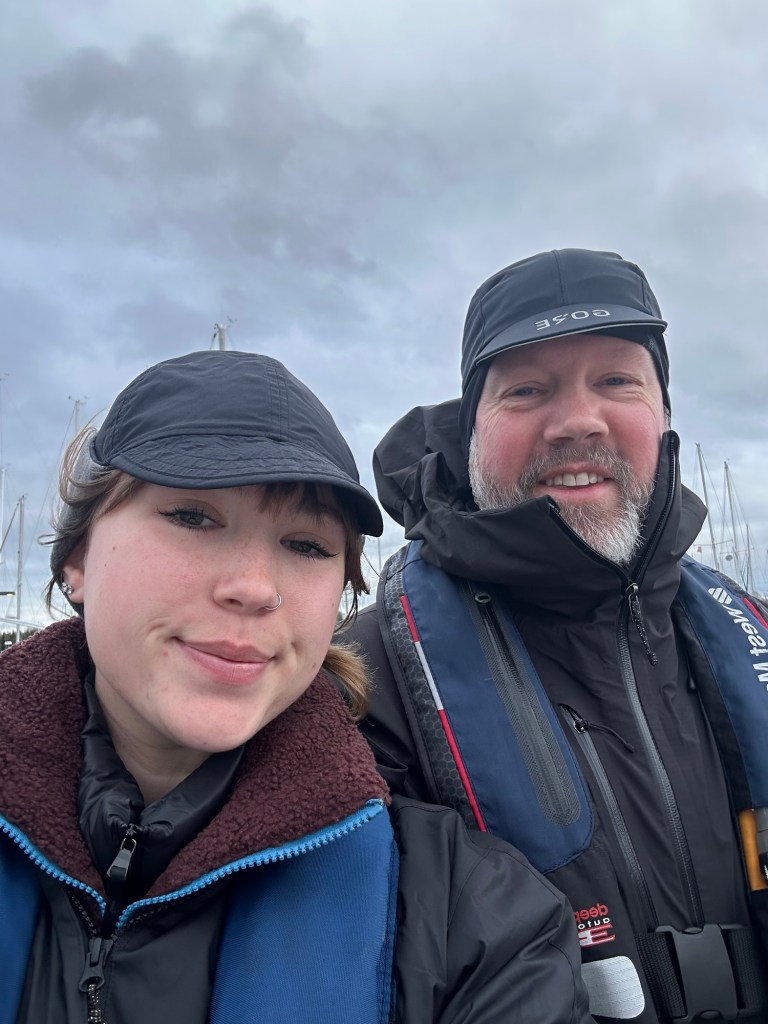
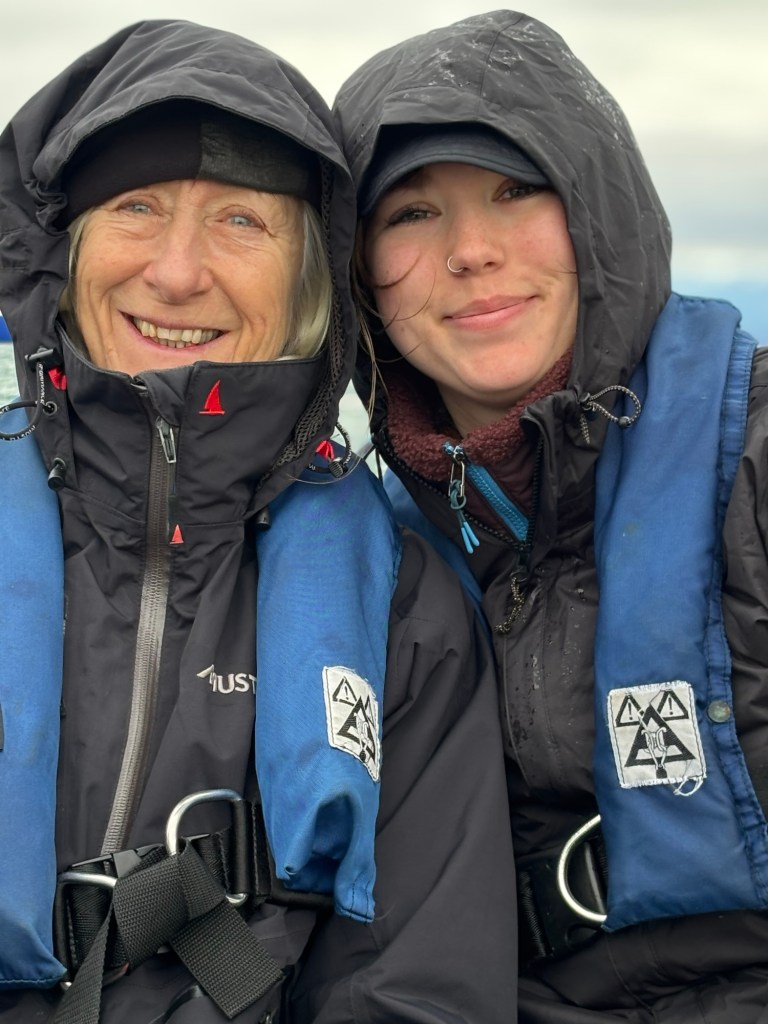
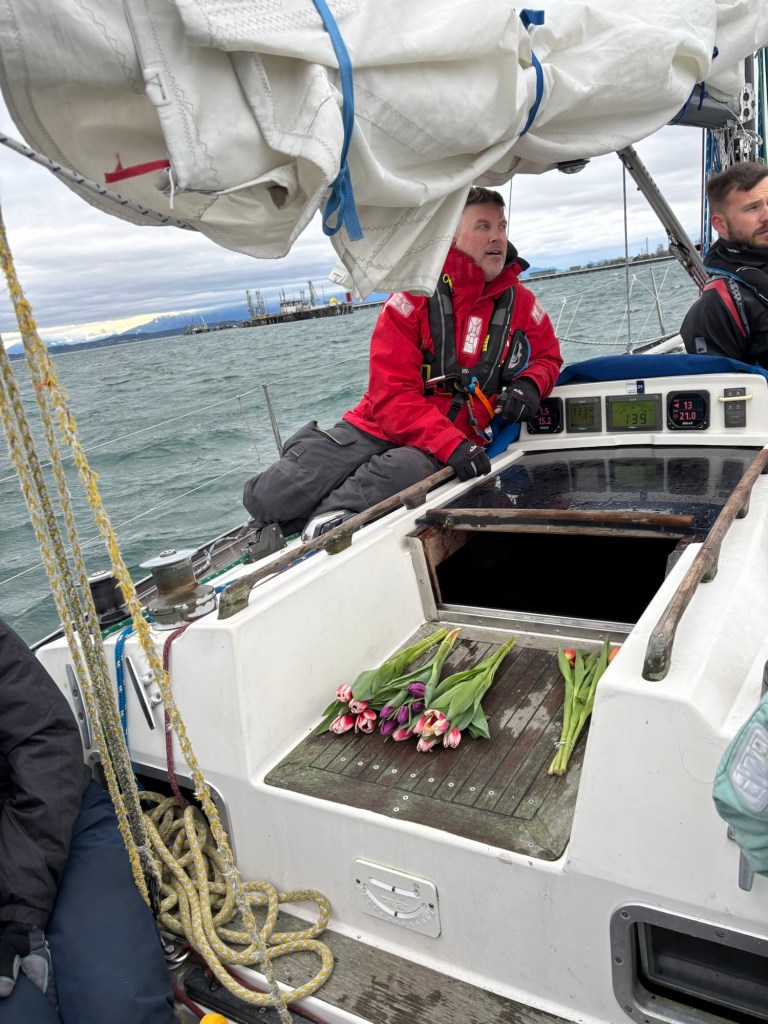
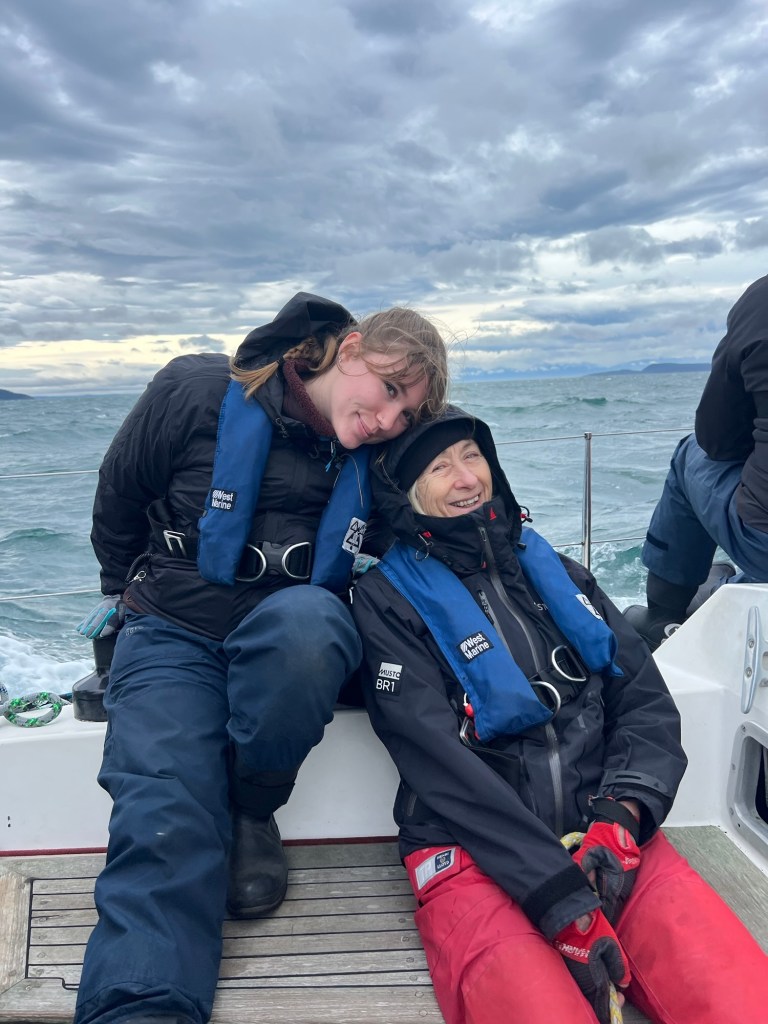

With strong winds pushing us from behind, Pangaea surged forward, cutting through the waves on our way to Friday Harbor. It was a wet and wild ride—not from rain, but from the salty spindrift that whipped through the air. Despite the sorrow of losing my father, there was a strange sense of pride, deep gratitude, and satisfaction in being out on the water racing on Pangaea. I could feel him with us, filling our sails and guiding us as he always had (and maybe knocking down a few of our competitors along the way).
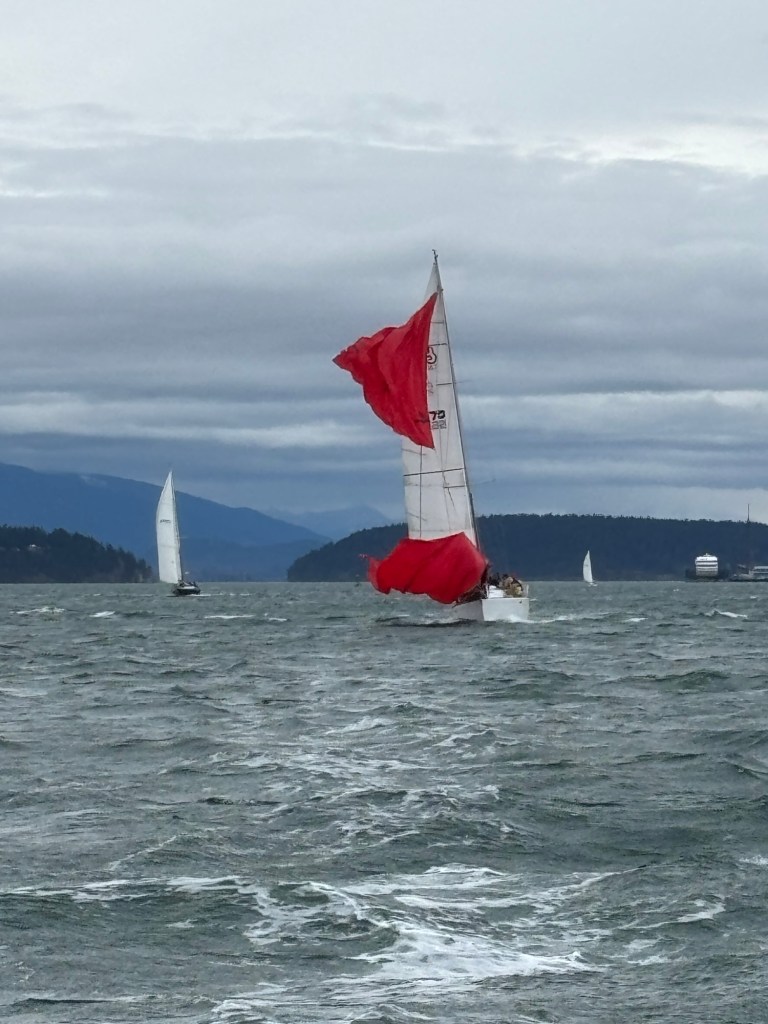
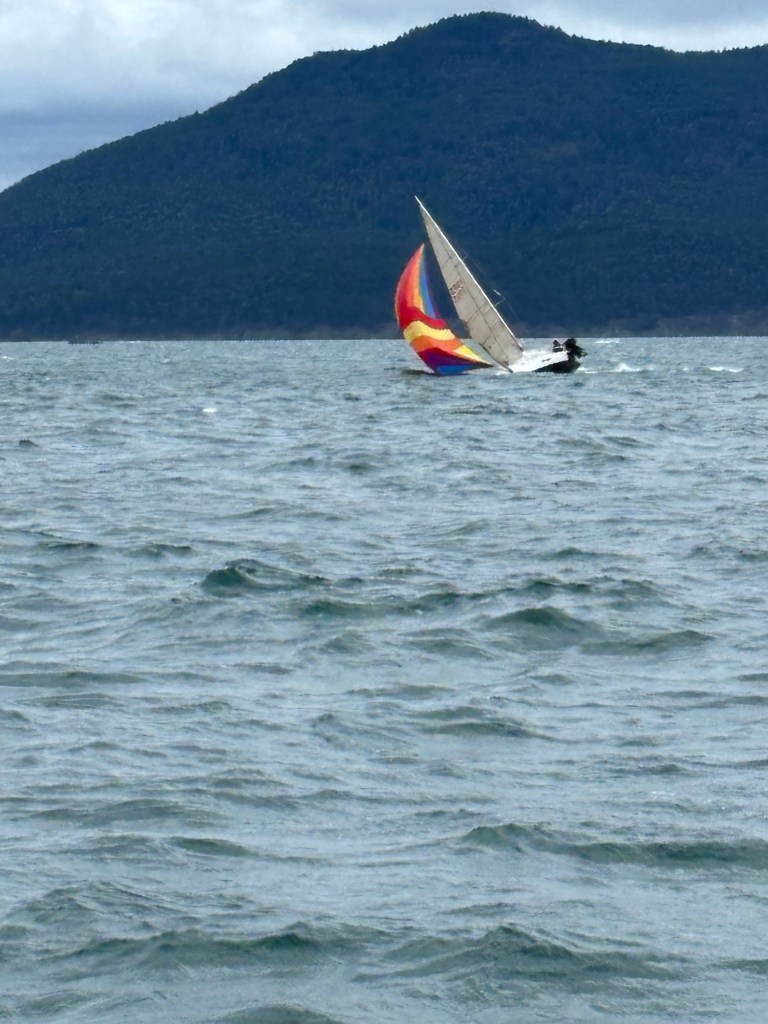

The winds were fierce—average speeds of 25-30 knots, with gusts reaching 35-40. Pangaea leaned hard, healing to 45 degrees, with gusts pushing her leeward rail deep into the Salish Sea, pitching as far as 50 degrees several times. The ballast of the crew riding the rail, and her 11,000-pound lead keel kept us steady, and while many other boats struggled with blown-out spinnakers and flapping sails, Pangaea plowed forward. We embraced the wind and the sea, rolling into Friday Harbor in record time—well under 3 hours—and placing 3rd overall.
My father loved sailing, traveling, and geology, which is why he named his boat Pangaea, after the ancient supercontinent. To him, it wasn’t just a term for continental drift; it was about connecting people and making the world feel a little smaller. And that’s exactly what he did with Pangaea. She brought us all together, from family and friends to strangers who became crew.
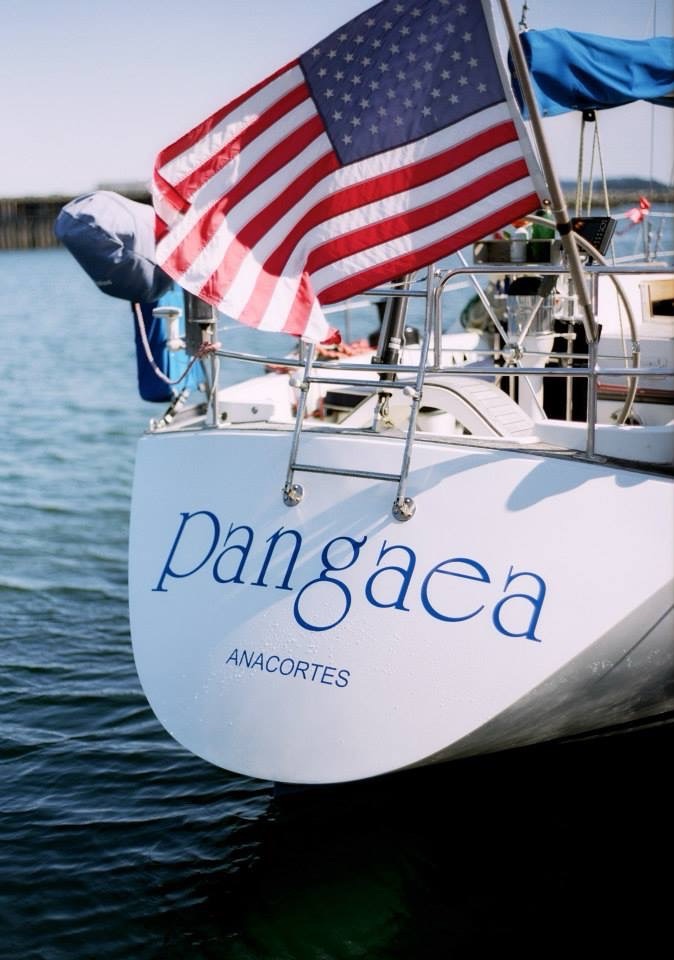
Once at the dock in Friday Harbor, just before the heavy rains whipped us below deck, we raised a glass of Mount Gay Rum to my father, his boat, his family, and his crew. Here’s to you Captain Mac. Here’s to my father—his spirit forever carried on the wind that fills Pangaea’s sails and the currents of the Salish Sea. And here’s to all who’ve sailed with us along the way.
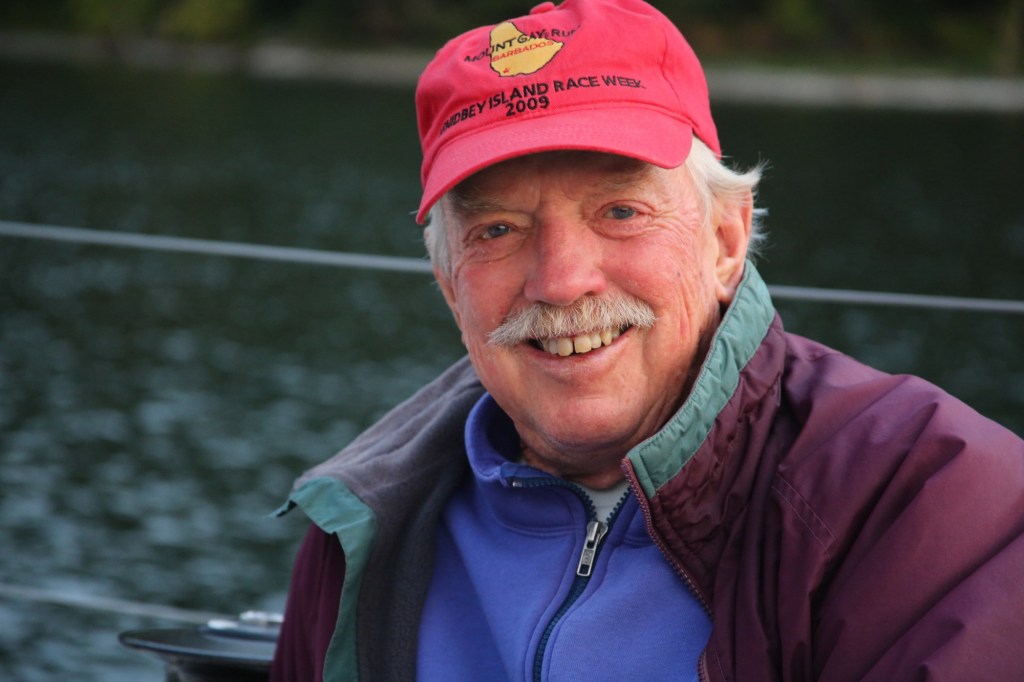
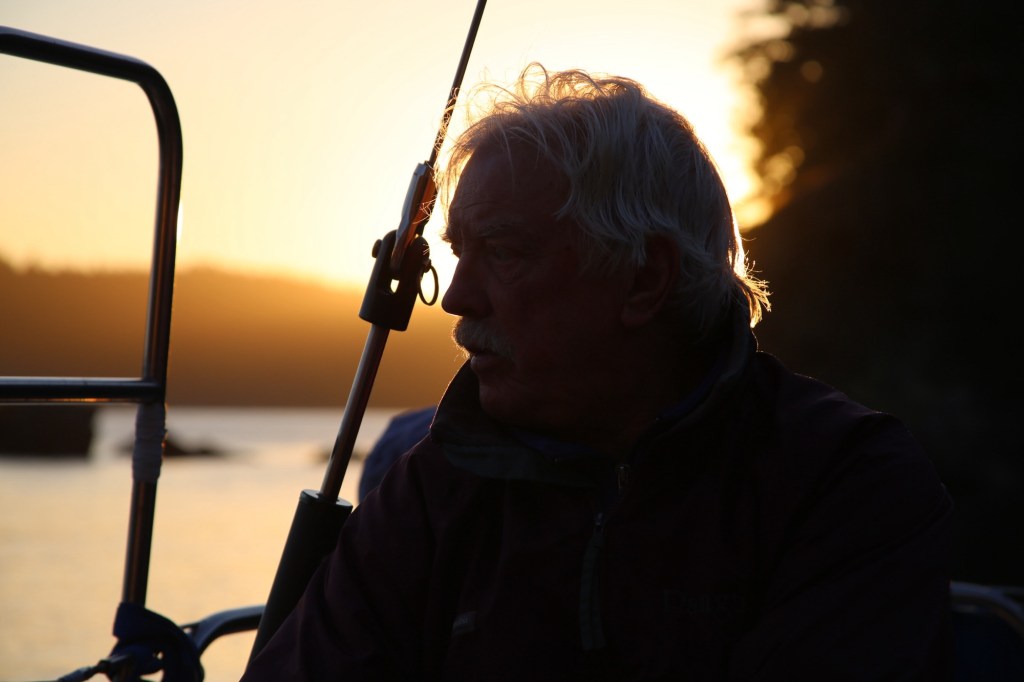
As my father’s license plate holder read, “Honk if you’ve sailed on Pangaea.”
Beep beep.


 Sabbatikos
Leave a comment