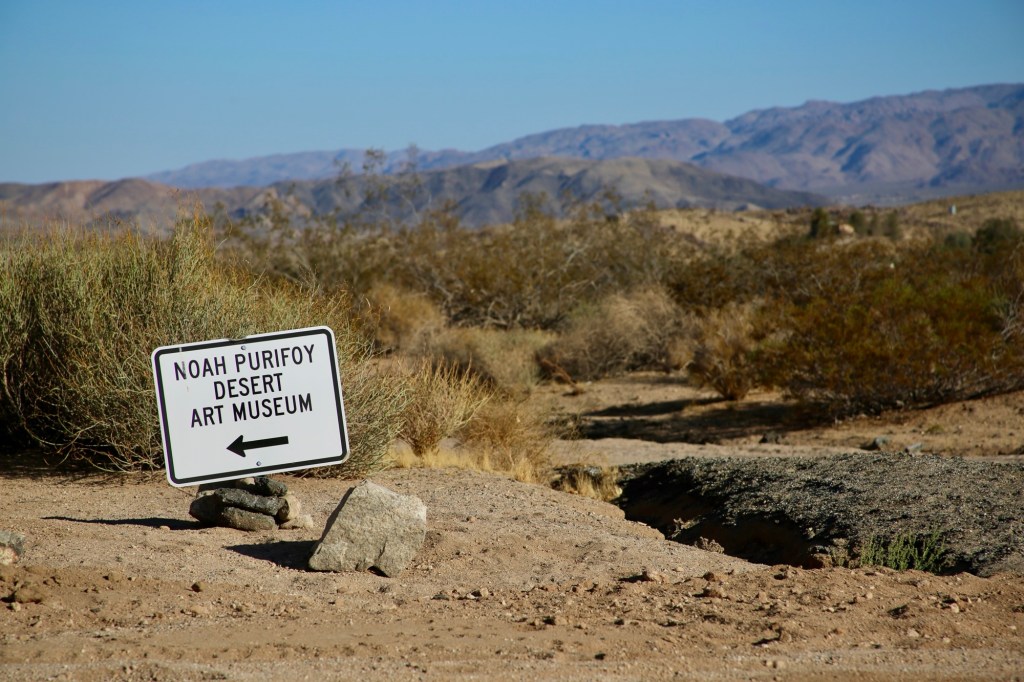
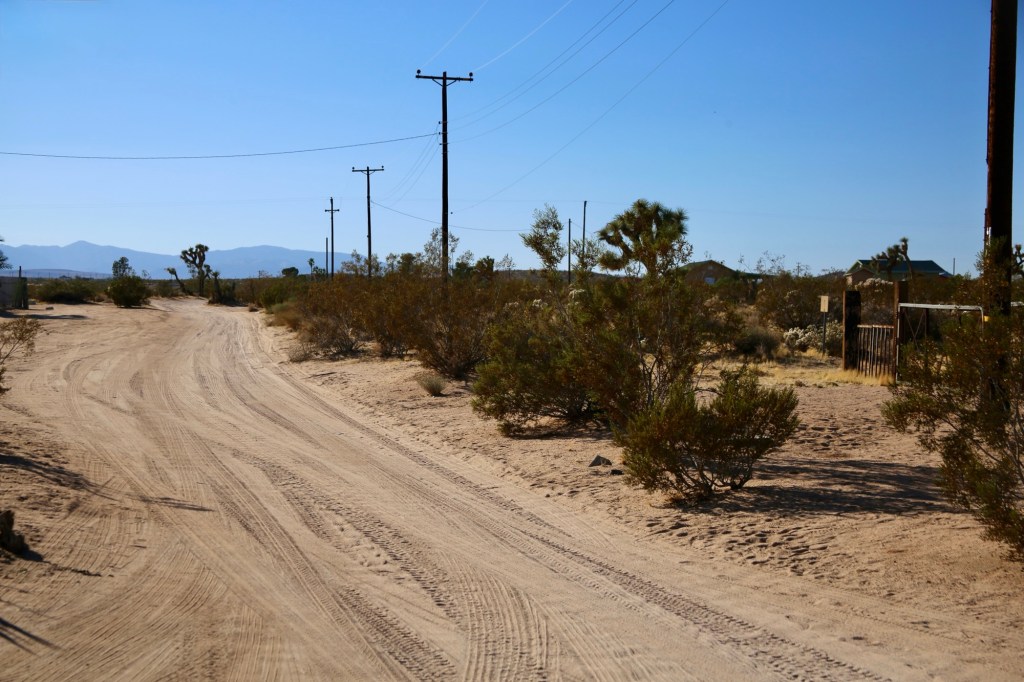
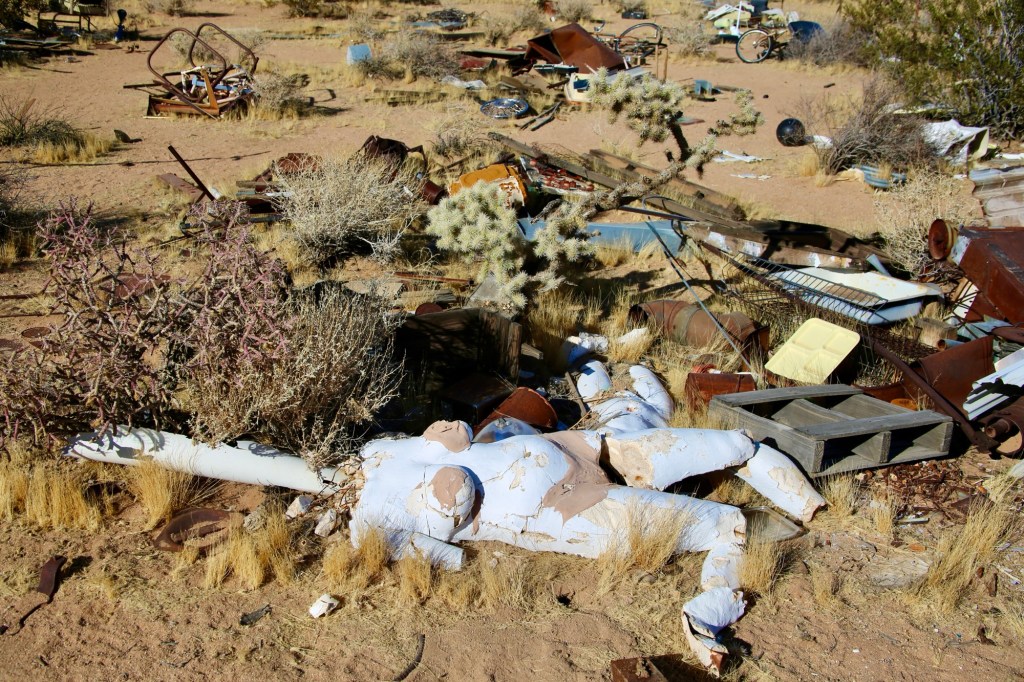
The turnoff to the Noah Purifoy Outdoor Desert Art Museum is well hidden in a rural desert community near Joshua Tree, CA. You could mistake the dusty dirt road as an intentionally unmaintained path to a destination that doesn’t care whether you find it at all. The art is there, weathered by time—by wind, sun, and sand—whether you view it or not. It exists to be cracked, sun-bleached, and indifferent to the passage of time. The art is there to be reclaimed by the desert: a social commentary on impermanence and transformation. As you pull up to the Outdoor Desert Museum, you realize—this must be it: a landscape strewn with flotsam and jetsam from the horse latitudes of the vast Mojave sand-sea.
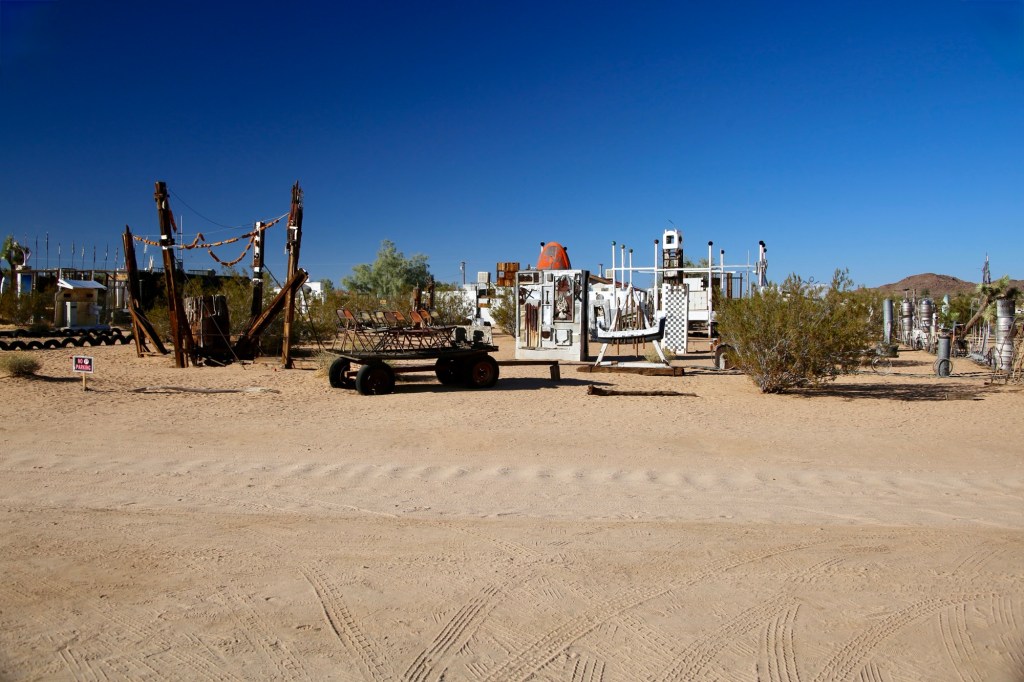
We are clearly out of place, detracting from the mysteriousness of this location as we pull up to the museum—though “museum” seems like too fragile a word for what sprawls before us. This is another world, a post-apocalyptic landscape sculpted from the discarded—a realm of rust and weather-worn Borg-like assimilations that offer rebirth and contemplative new purpose. We’ve rolled up in a private party bus. About 26 of us. We’ve bought out the entirety of Ruby Montana’s Coral Sands as well as several nearby Palm Springs Airbnbs, rented a huge party bus, and driven fear and loathing-style out into the Mojave Desert for an epic celebration of my fiftieth birthday. First stop: Noah Purifoy’s Outdoor Desert Art Museum, for an apropos self-reflection on the passage—and ravages—of time.
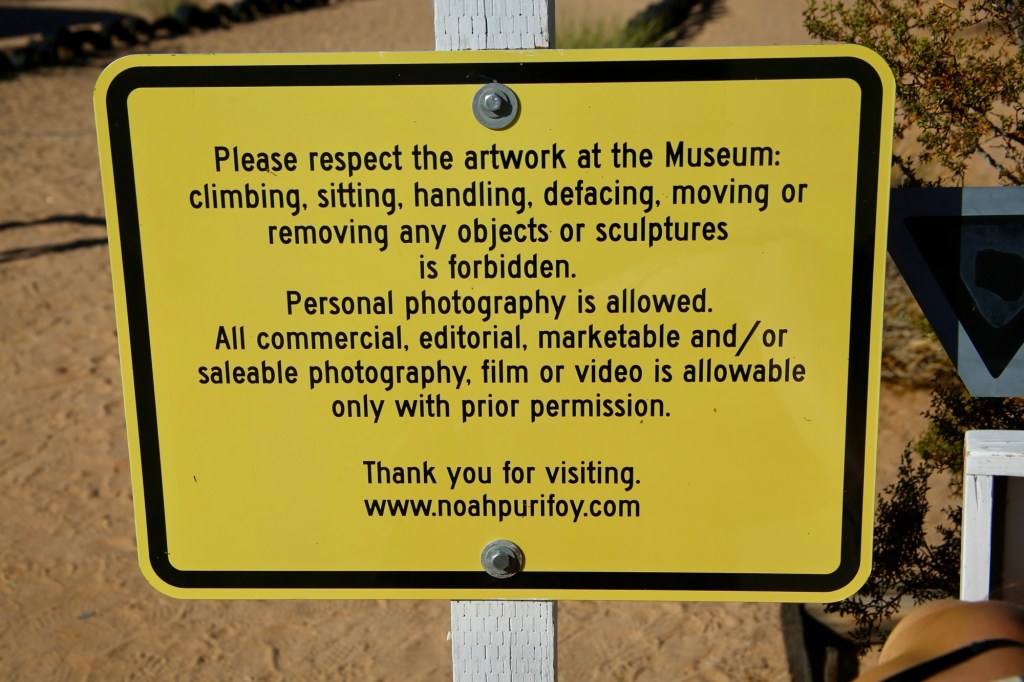
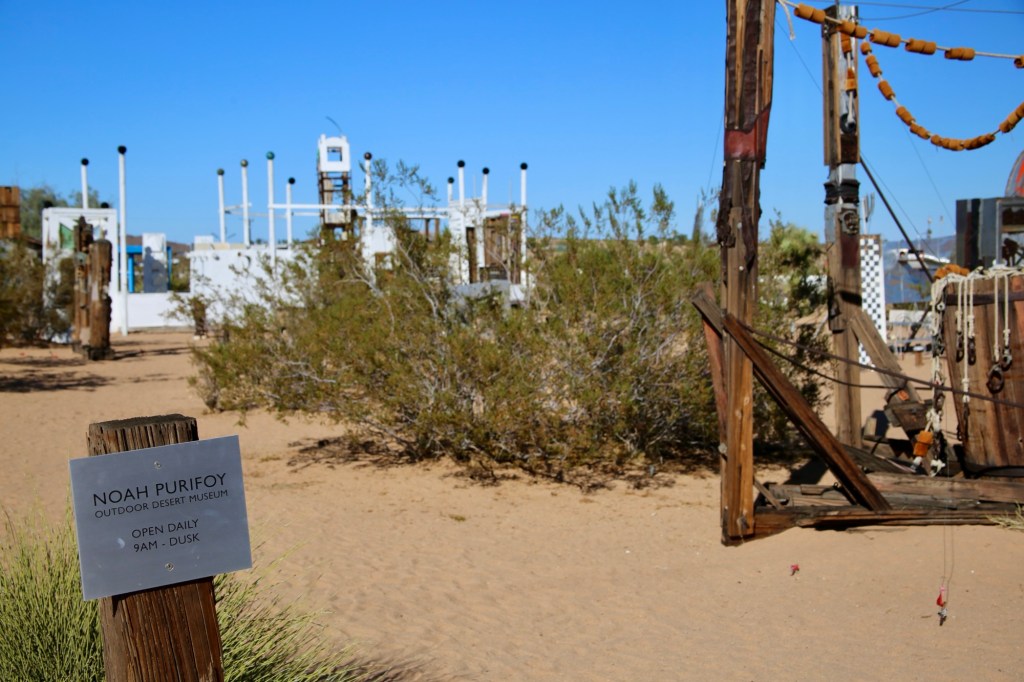
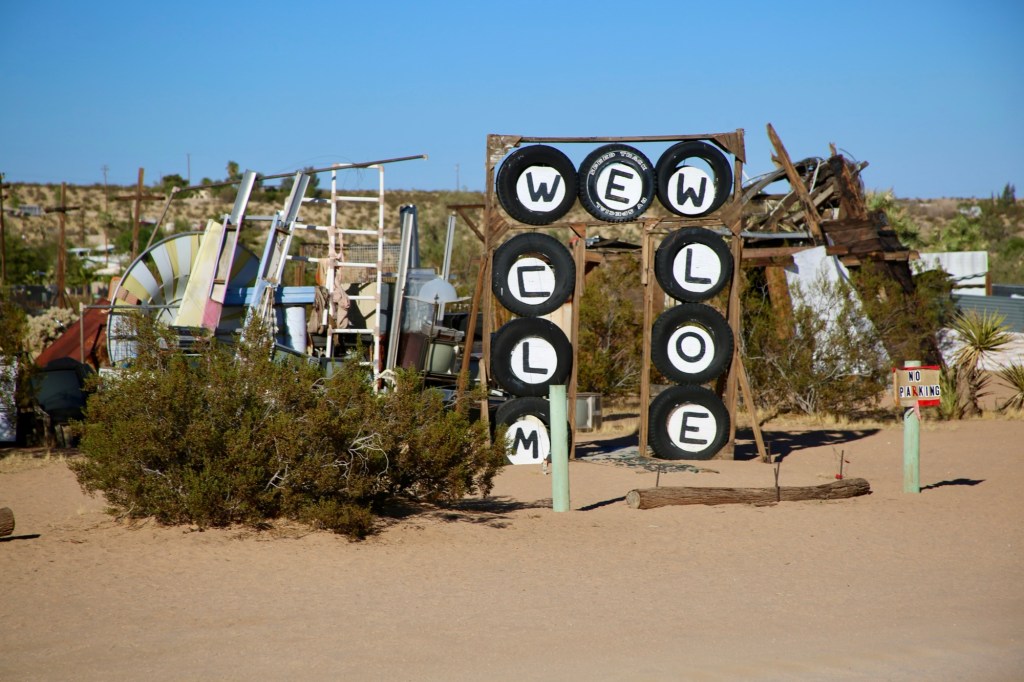
We stepped out onto the arid ground, the high desert air still cool but warming under the early afternoon sun of a late November day. We began to scatter, to wander and meander—exploring in coupled conversations or, more often, in silence.

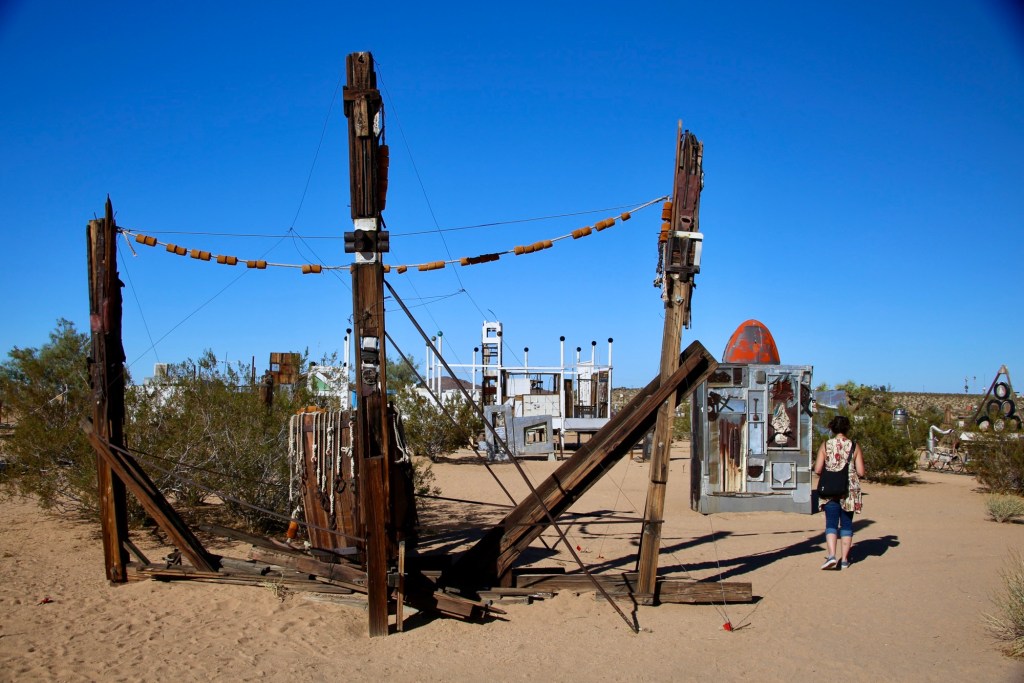


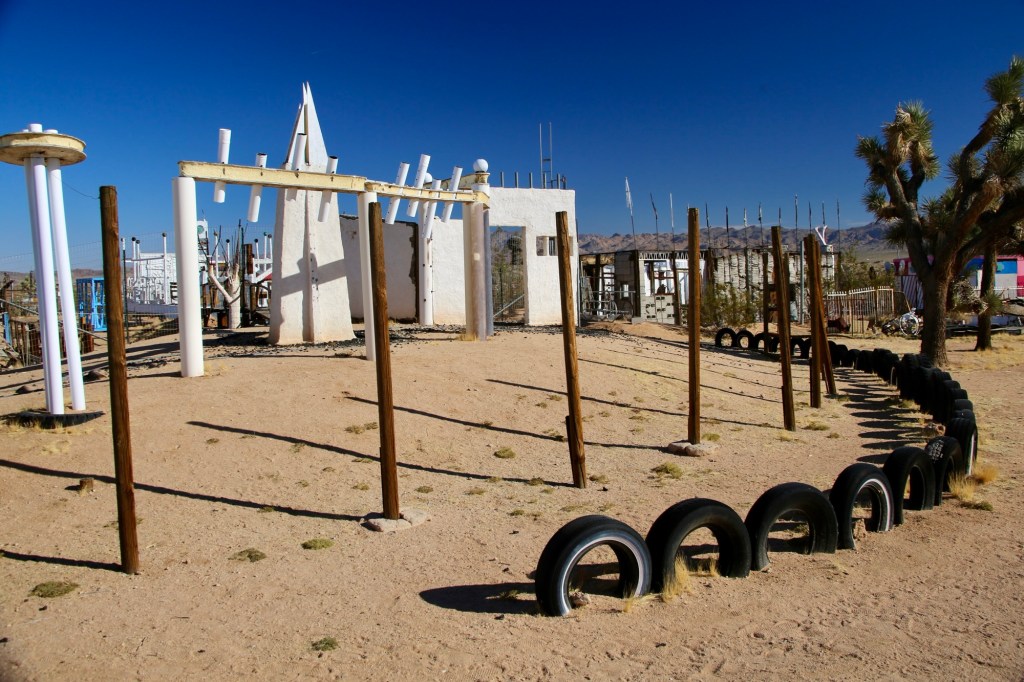
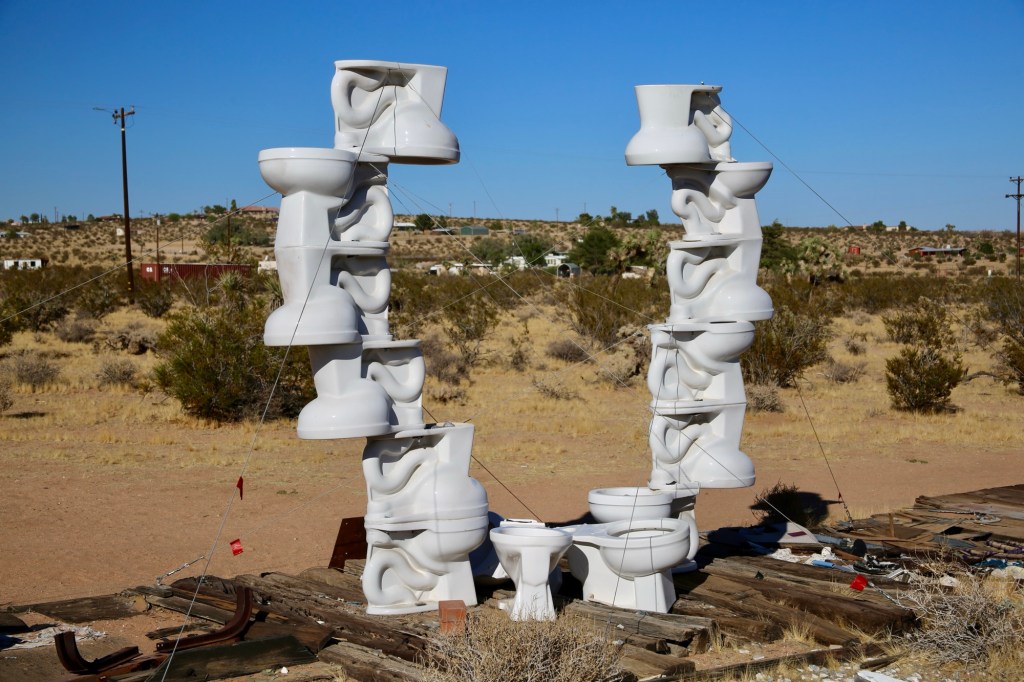
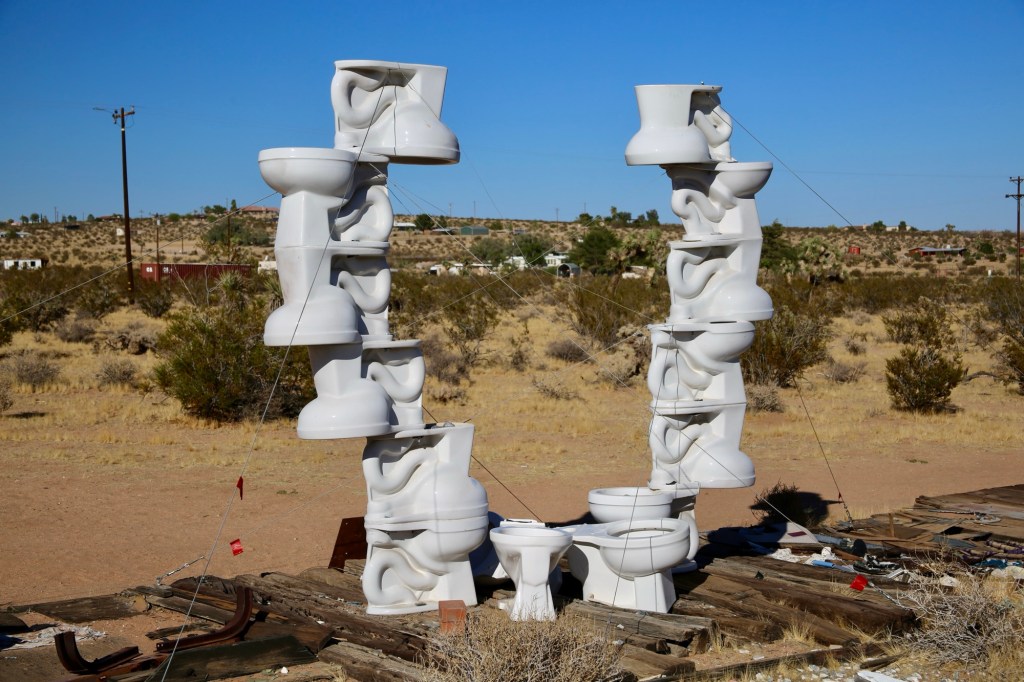
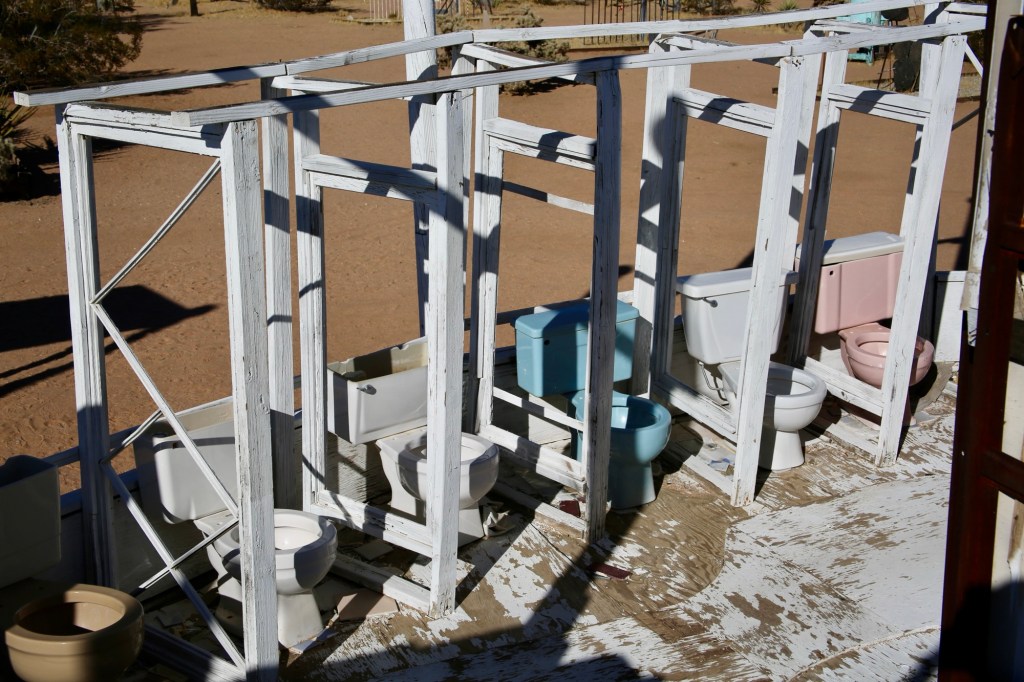
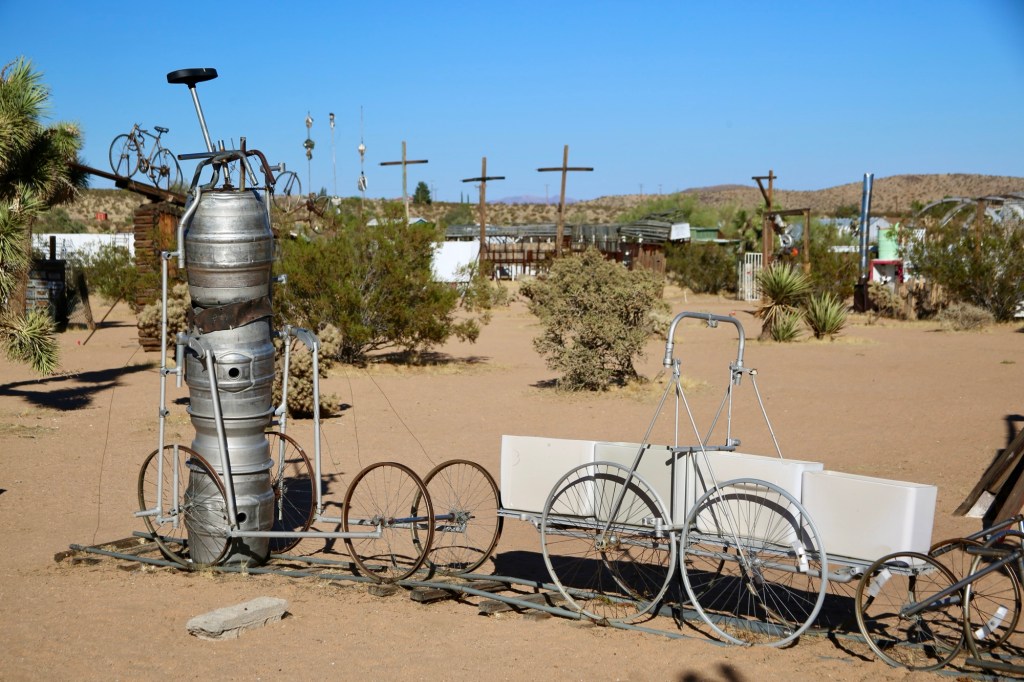
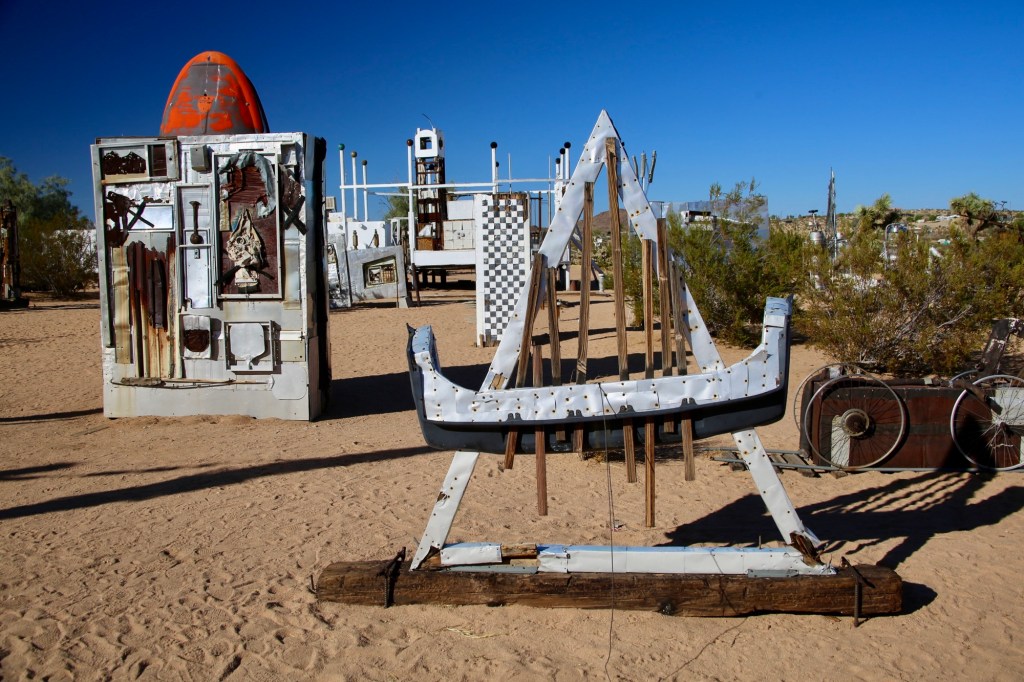
Noah Purifoy was an artist who took American detritus—mangled bicycles, splintered doors, obsolete television sets, old toilets,—and turned them into profound new objects of social commentary, cultural critique, and environmental awareness. His worked focused on civil rights, racism, consumerism, war, poverty, and other societal issues. The museum isn’t just visual—it’s a deeply philosophical, political, and thought provoking landscape you can walk through.

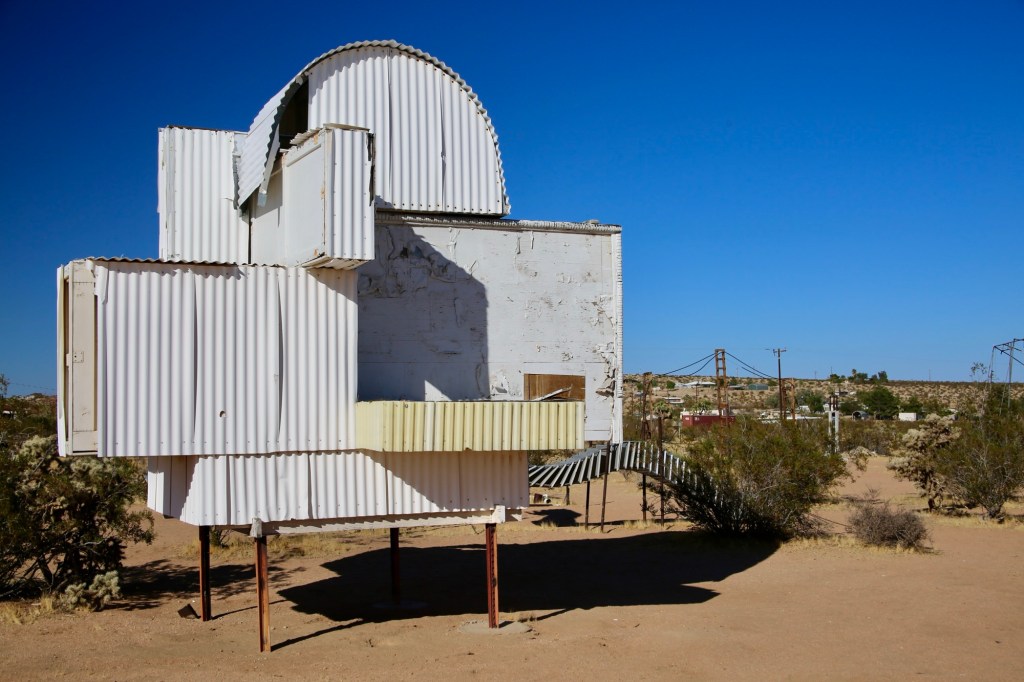
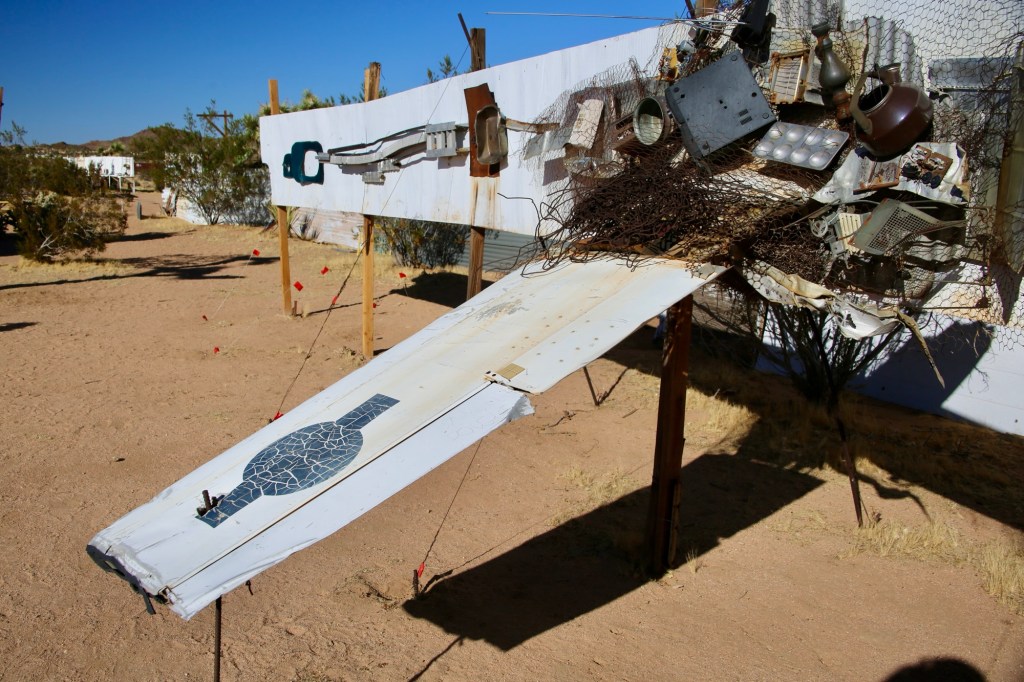
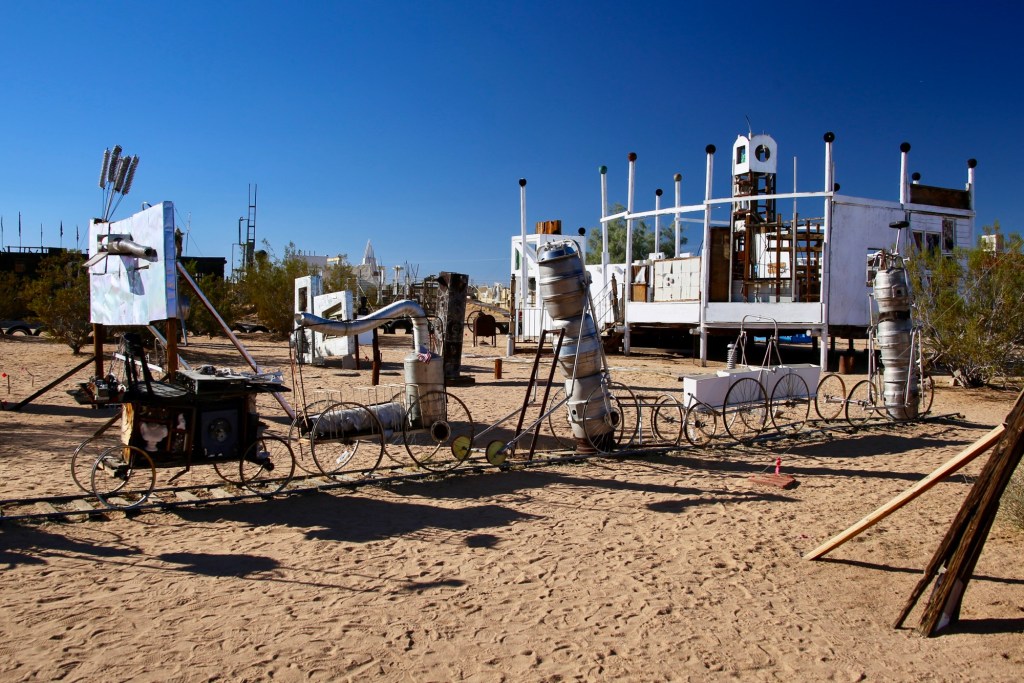
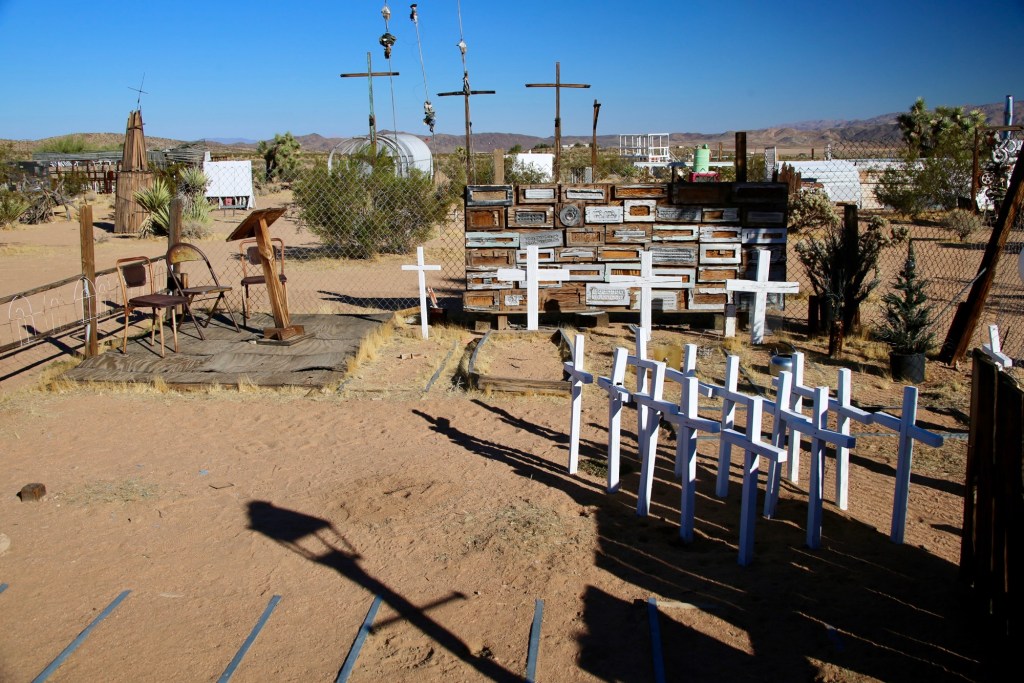


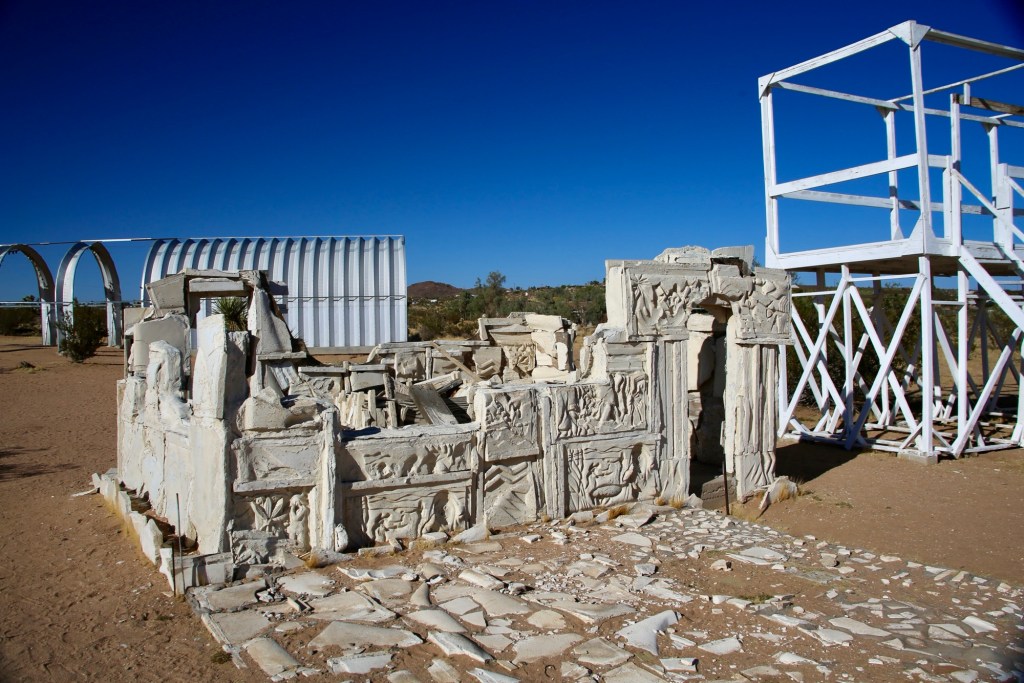
The first thing that struck me was how these assemblages belong to the landscape. A great skeletal arch of toilets rises up ahead. Something indescribable—forged from twisted metal and forgotten dreams—invites you to explore it, carefully. A house, or the memory of one, stands in the distance, its walls patchworked together from planks and scraps, weathered into something neither past nor present, and full of curiosities. The sculptures are monolithic, yet intimate, with subtle details. They invite silent contemplation, intense debate, and, more often than not, a chuckle or a nod to an inside joke realized—or a message received.
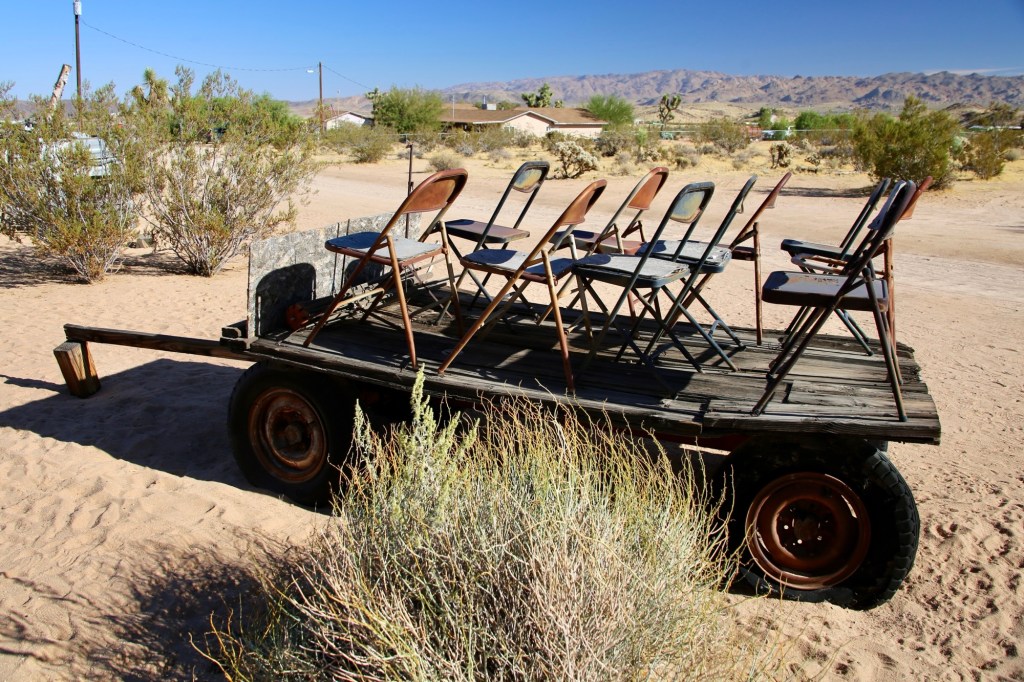


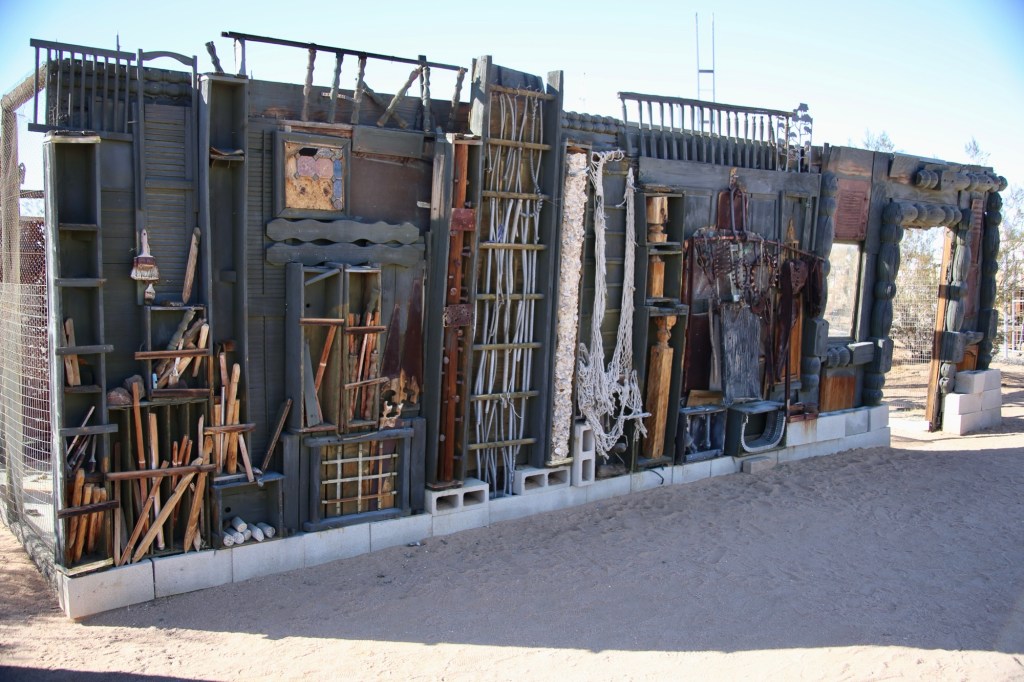


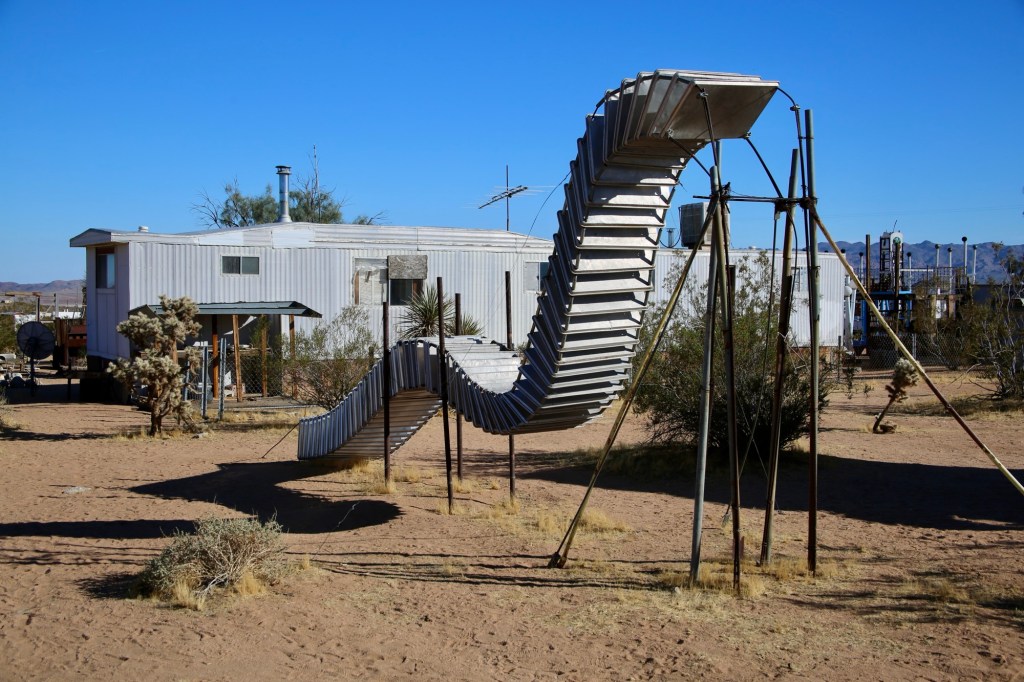
We spend a few hours drifting through the open-air expanse. The desert is a perfect gallery. There are no labels, no polite little plaques explaining meaning or intention—just the raw presence of objects that refuse to be discarded, collected and reconstructed into purposeful pieces for your consideration. We stand inside a sculpted labyrinth—a desert maze of objects—each door opening to reveal… nothing. Or maybe everything. The absence of function and utility becomes its own commentary, a whisper about the excesses of consumption and decay.
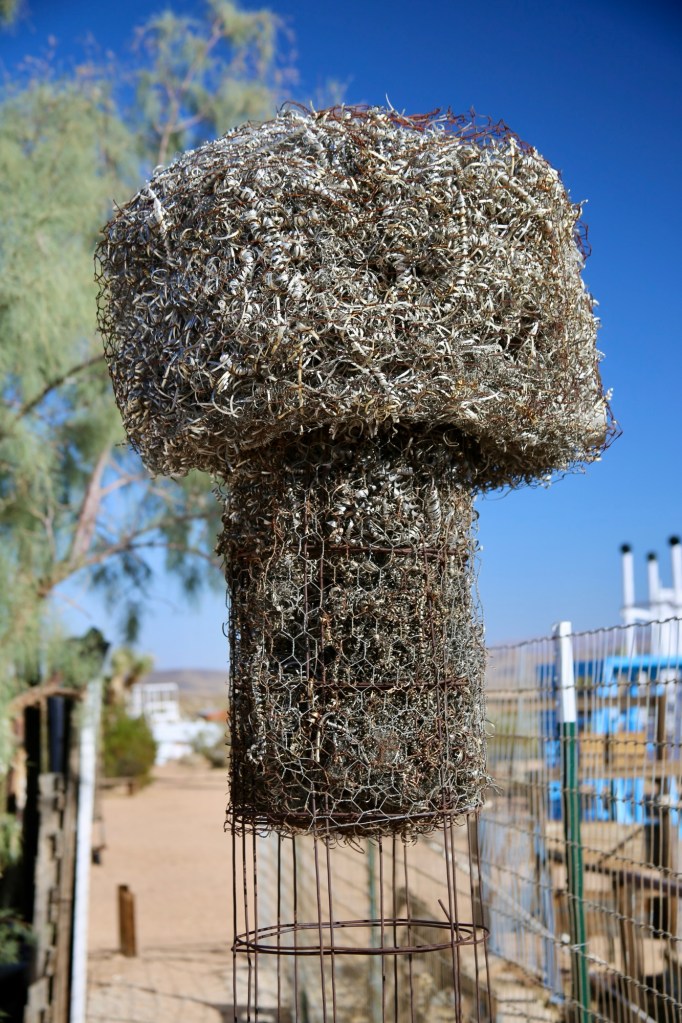


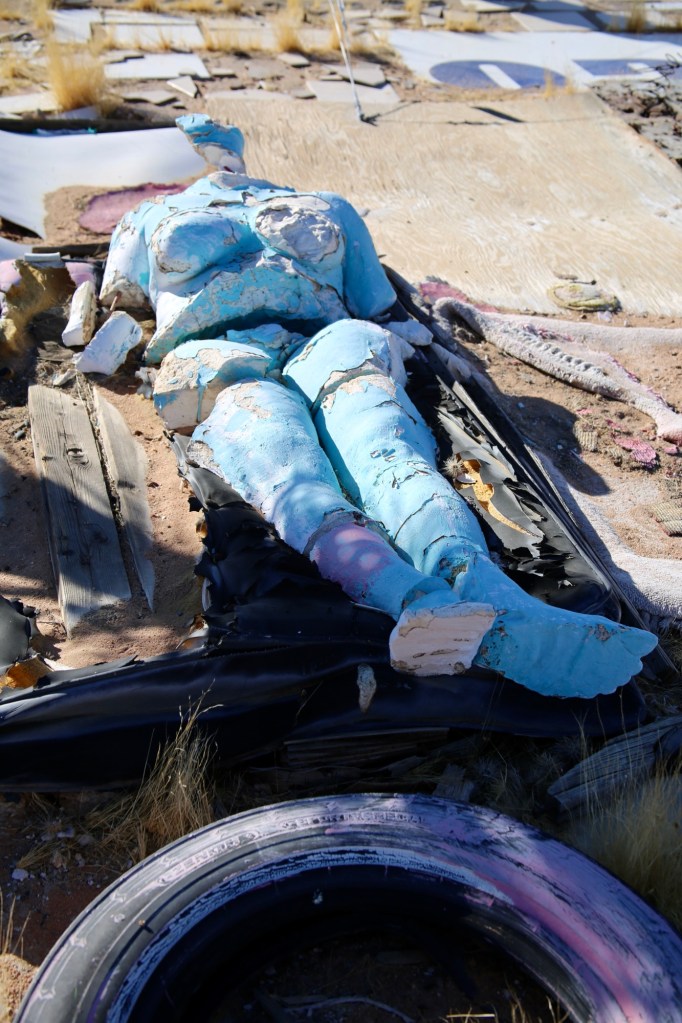
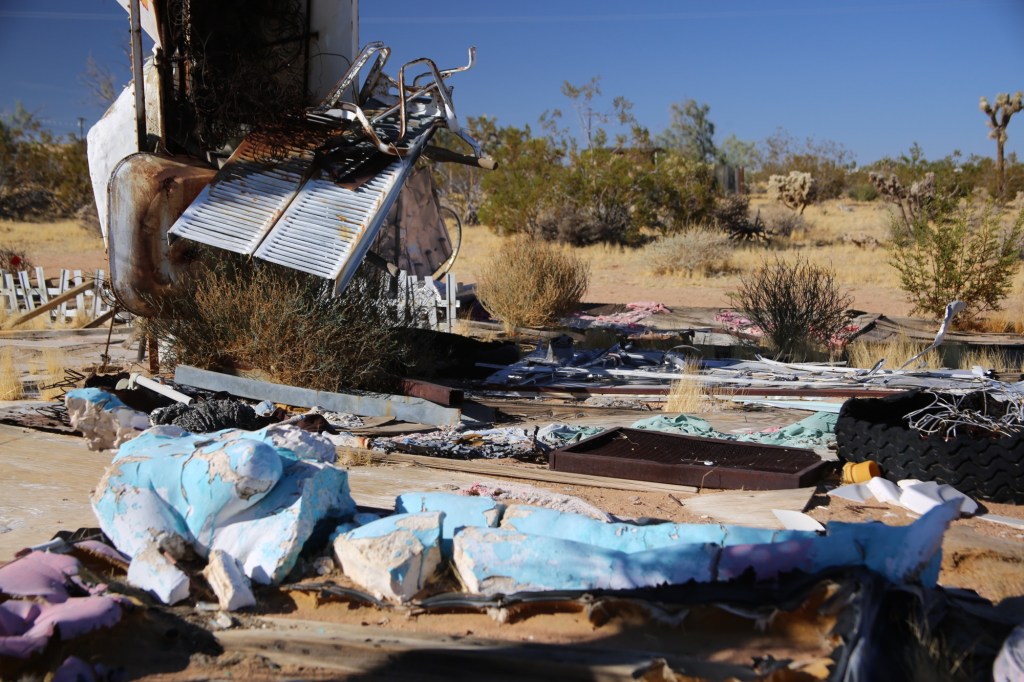
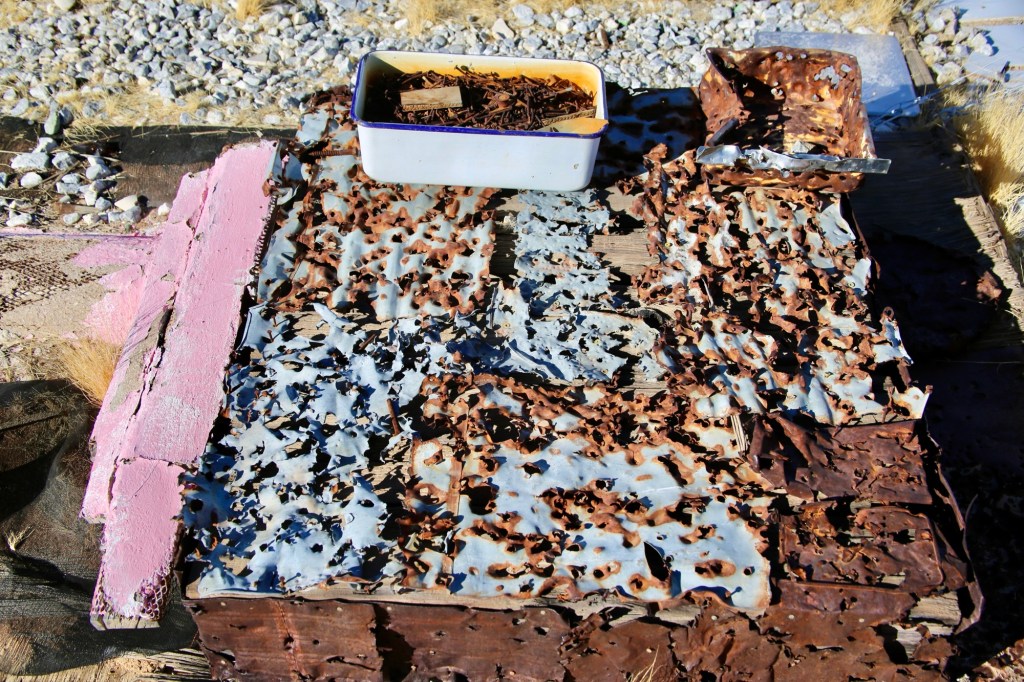
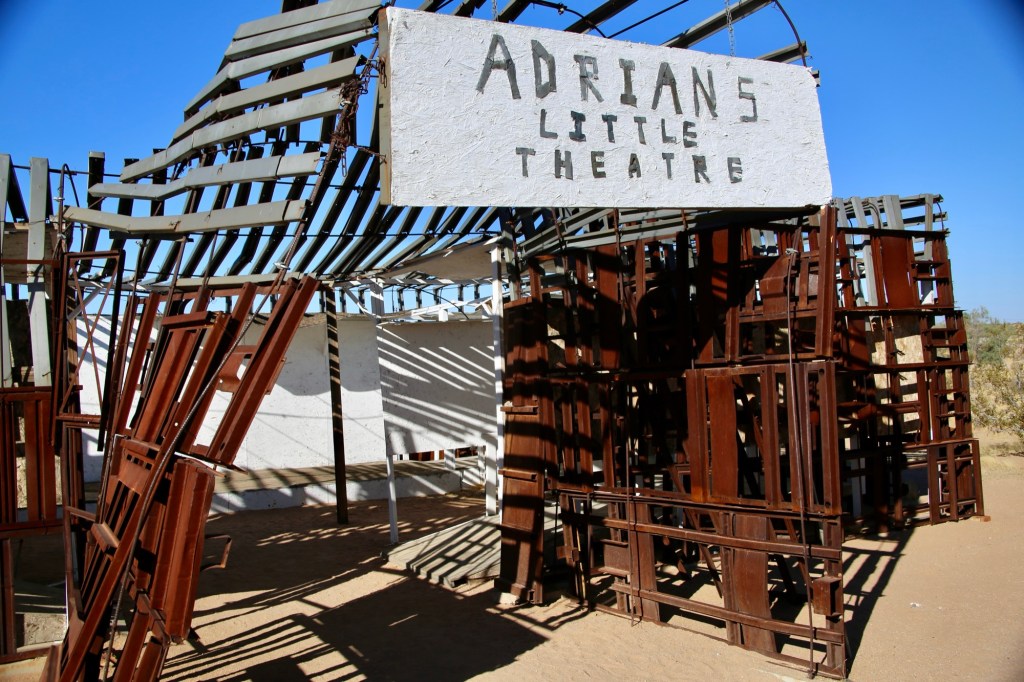
As the sun softened into late afternoon, we gathered again near the party bus, beside the skeletal remains of what may have once been a carousel—or perhaps it never was. That’s the nature of Purifoy’s work: a gesture toward meaning and interpretation, but never insisting, allowing you your own connections and conclusions.
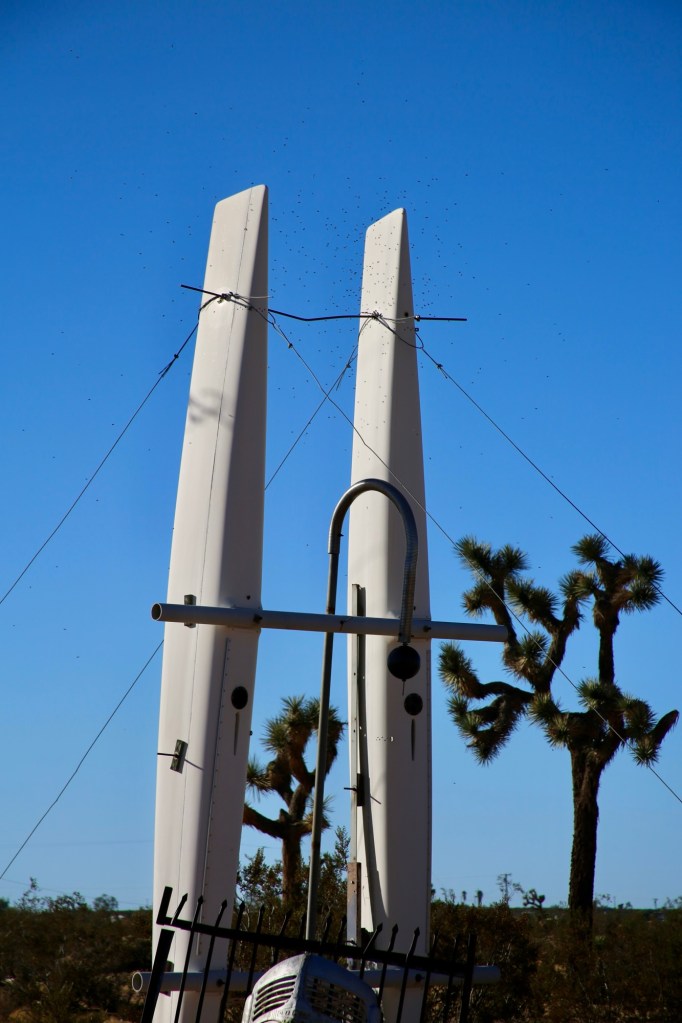
Overhead, two kayaks hung improbably in the air, tangled in the outstretched wires of a weathered telephone pole. A low hum filled the space. An interactive sculpture? No—a living one. A beehive, massive and thrumming. I caught myself thinking, “And the bees made honey in the kayak’s hull,” a quiet echo in my mind of the slow-metal band Earth’s album The Bees Made Honey in the Lion’s Skull, itself a nod to Judges 14:8; the story of Samson who killed a lion with his bare hands only to later find bees had made a hive and honey in the carcass. It seems to me to symbolizes that strength (the lion) can lead to something new and sweet (honey), even from a place of death and decay. That seemed a good insight and omen to draw from the day.




We gathered around and traded quiet observations—favorite pieces, moments that made us stop in our tracks. As we watched shadows stretch long across the desert floor, listening to the breeze whistle through hollow spaces and the buzz of bees overhead, we realized we needed to get to our second stop, the Integratron… for our scheduled sound bath.


 Sabbatikos
Leave a comment