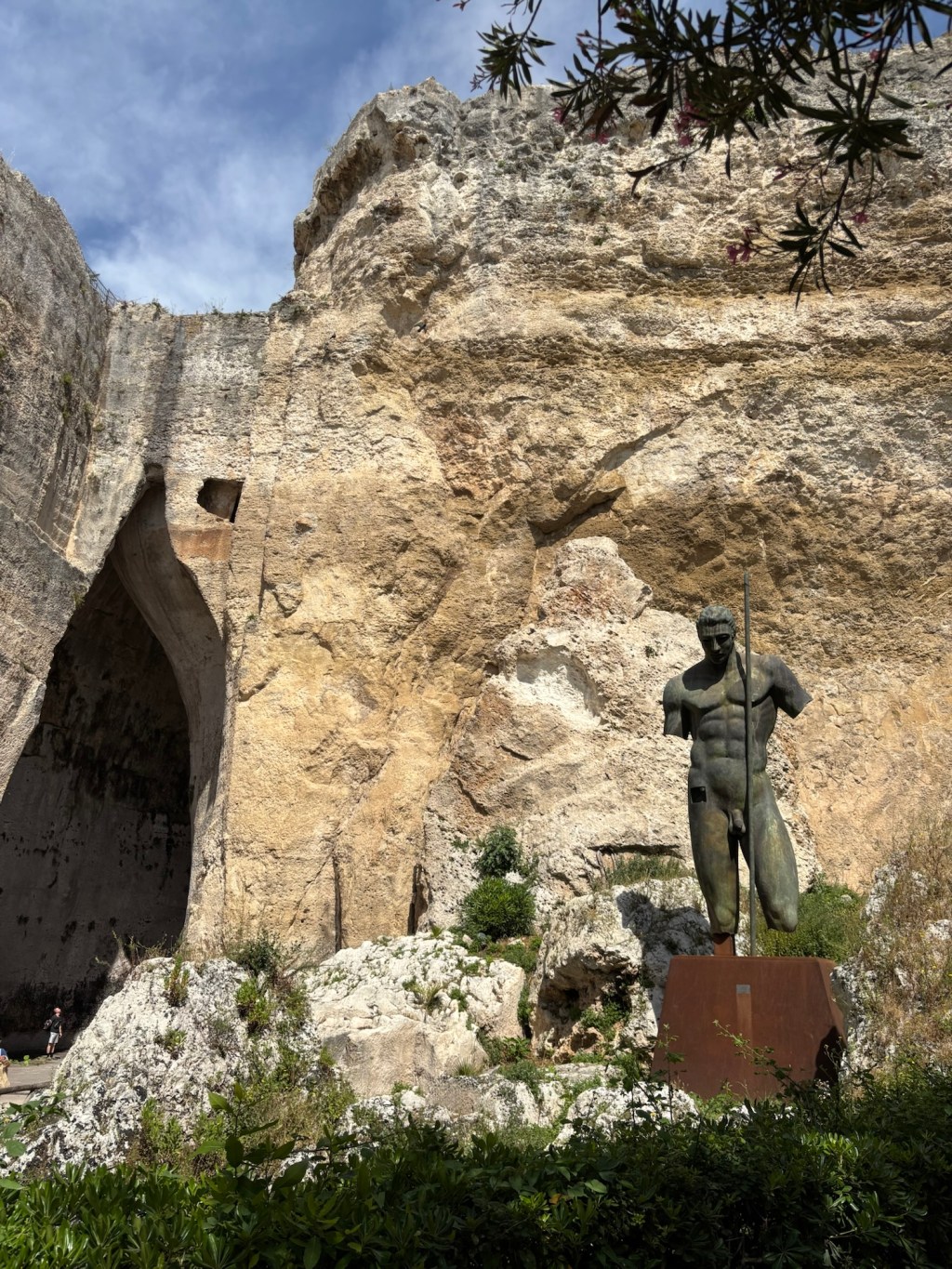
Excited to explore Sicily, we met our private guide with great anticipation for a walking tour through the ancient wonders of Syracuse and Isola di Ortigia (Ortigia Island). Our first destination was the Parco Archeologico, the main archaeological site of Syracuse and home to some of the most remarkable and largest remnants of the ancient world; the Greek Theater of Syracuse and the Ear of Dionysius.
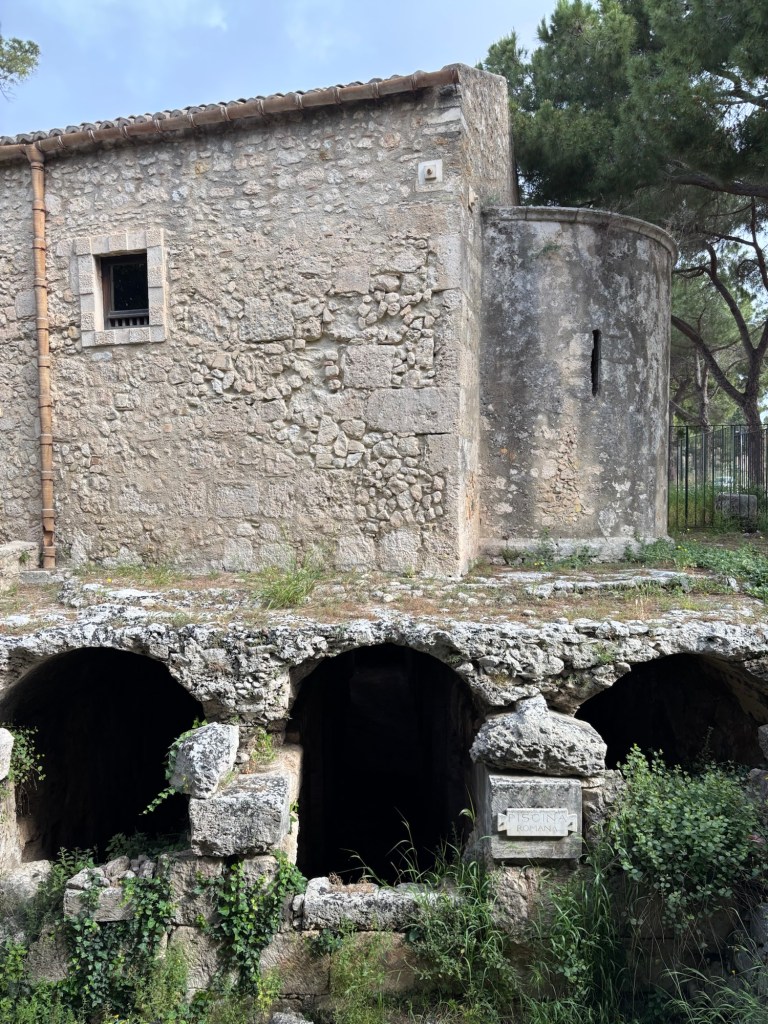
We entered the park and learned about its history, including the Altar of Hieron, the largest stone altar built in the Greek world. Dedicated to Zeus, it was used for large-scale animal sacrifices. Measuring almost 200 meters in length, the altar could accommodate the sacrifice of hundreds of animals at a time.


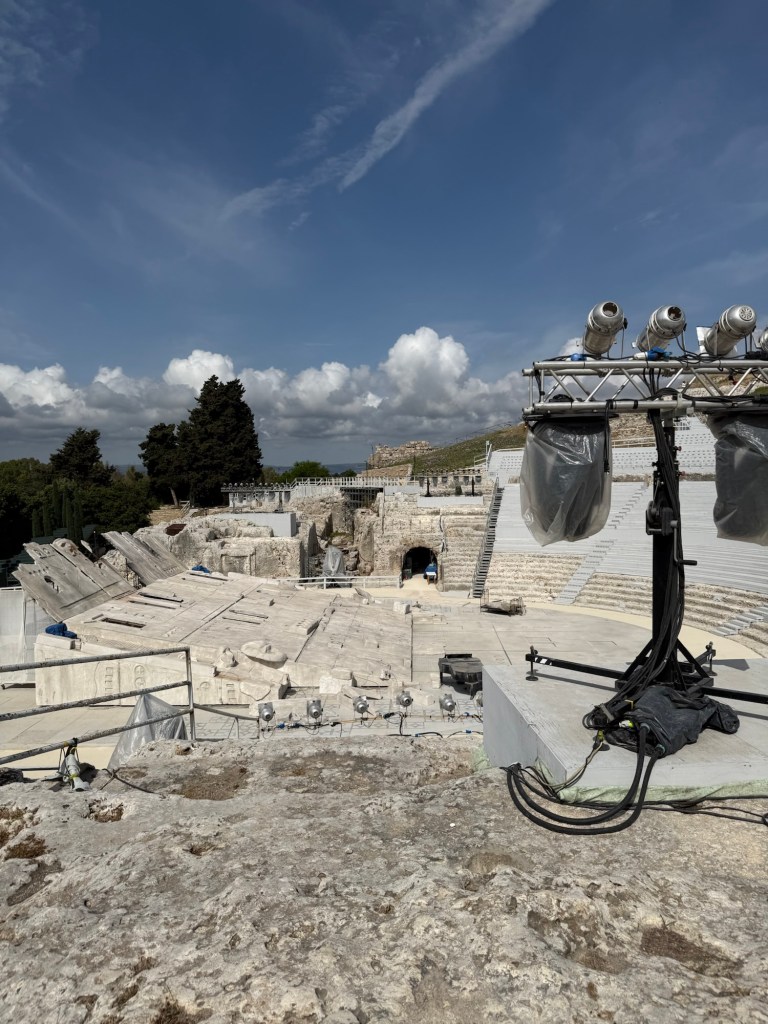
Next, we climbed the hill to the Greek Theater of Syracuse, one of the largest ancient theaters ever built and still in use today. Standing before this massive, 2,500-year-old amphitheater, we couldn’t help but feel awestruck. Designed with sweeping panoramic views, the theater was constructed to accommodate up to 15,000 spectators. In its prime, it hosted dramatic performances, political gatherings, and religious ceremonies, serving as both a cultural and civic hub.
The limestone seating, much of it covered for the theater season by wooden platforms to protect the original stones, seemed to carry whispers of past performances on the wind. Our guide painted vivid images of the ancient audience (mostly men of import), explaining how the theater served not just as a place of entertainment but as an educational space. Tragedies were crafted to convey moral and philosophical lessons, inviting contemplation and reflection. This thoughtful purpose contrasted sharply with the Roman theater’s focus on “Bread and Circuses,” which aimed to distract rather than enlighten. The Greek Theater of Syracuse remains a place for cultural reflection.



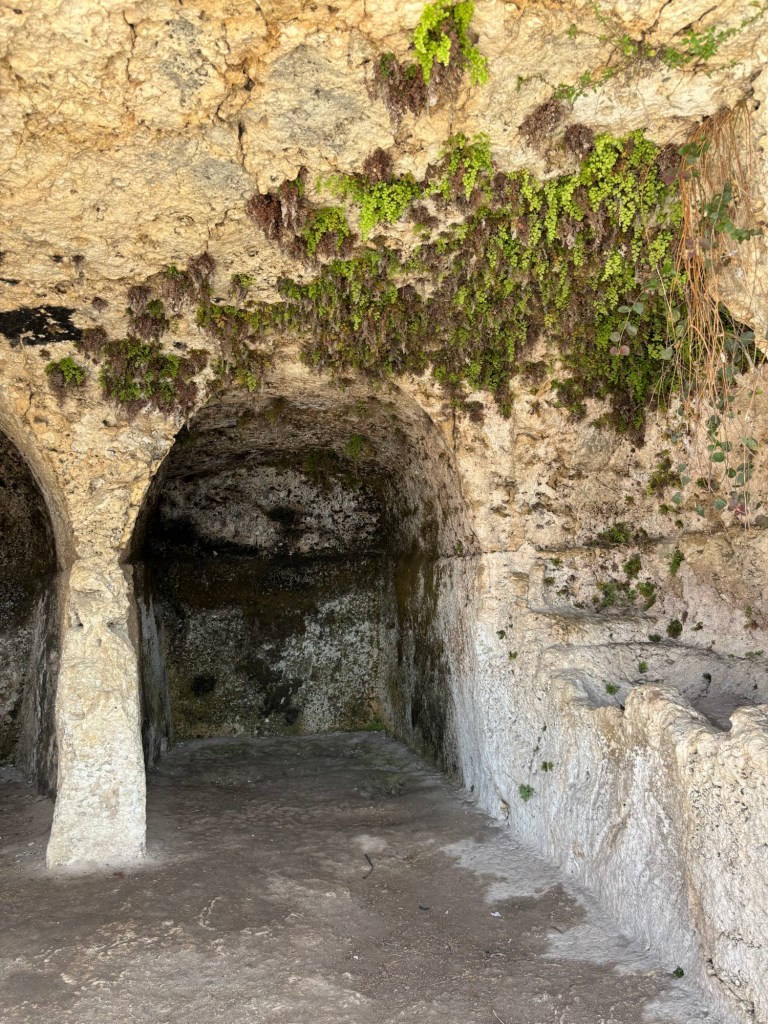
Nearby, the ancient quarries known as the Latomia del Paradiso were once the primary source of stone for Syracuse’s grand structures. These quarries, originally carved out by enslaved workers and prisoners of war, have since been transformed into gardens and historical walking paths where tourists and now trees coexist.
One of the most striking features on display here is the collection of contemporary bronze sculptures by Polish (near Krakow) artist Igor Mitoraj, whose artwork is showcased at the site until October 2025. His sculptures, depicting fragmented mythological human forms inspired by Greek stories, are thoughtfully and contemplatively placed throughout the quarry and in Ortigia. The juxtaposition between this ancient site and Mitoraj’s modern artistic interpretations of mythology creates a powerful and compelling and dichotomy about how history repeats itself in art and in action.
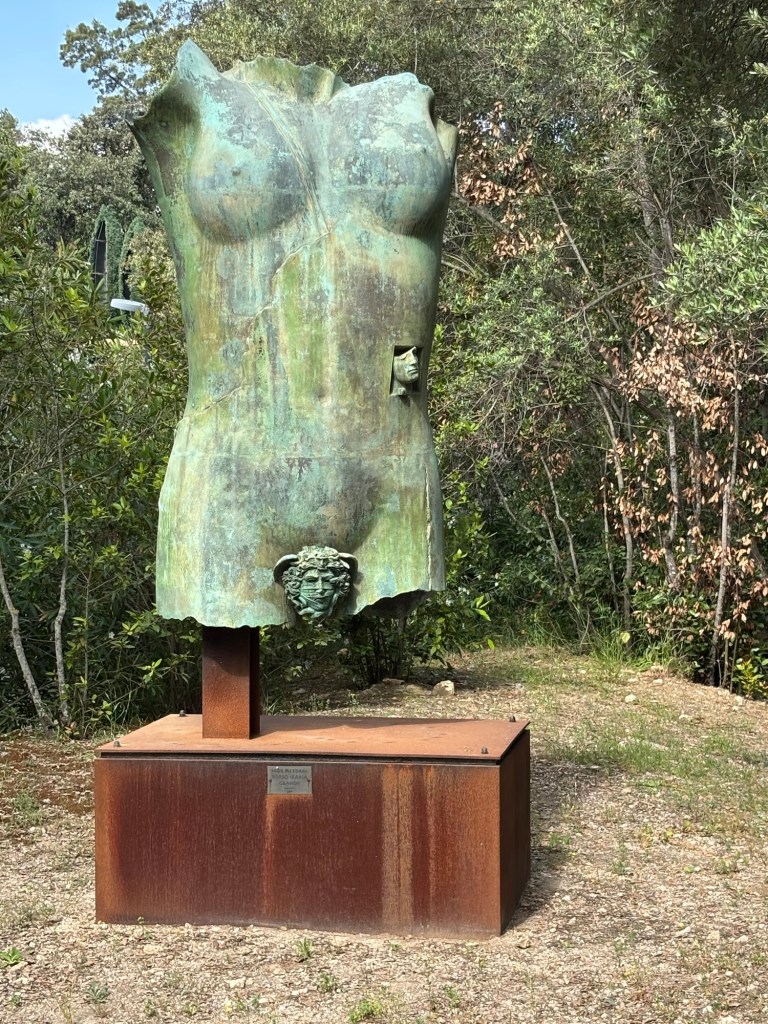


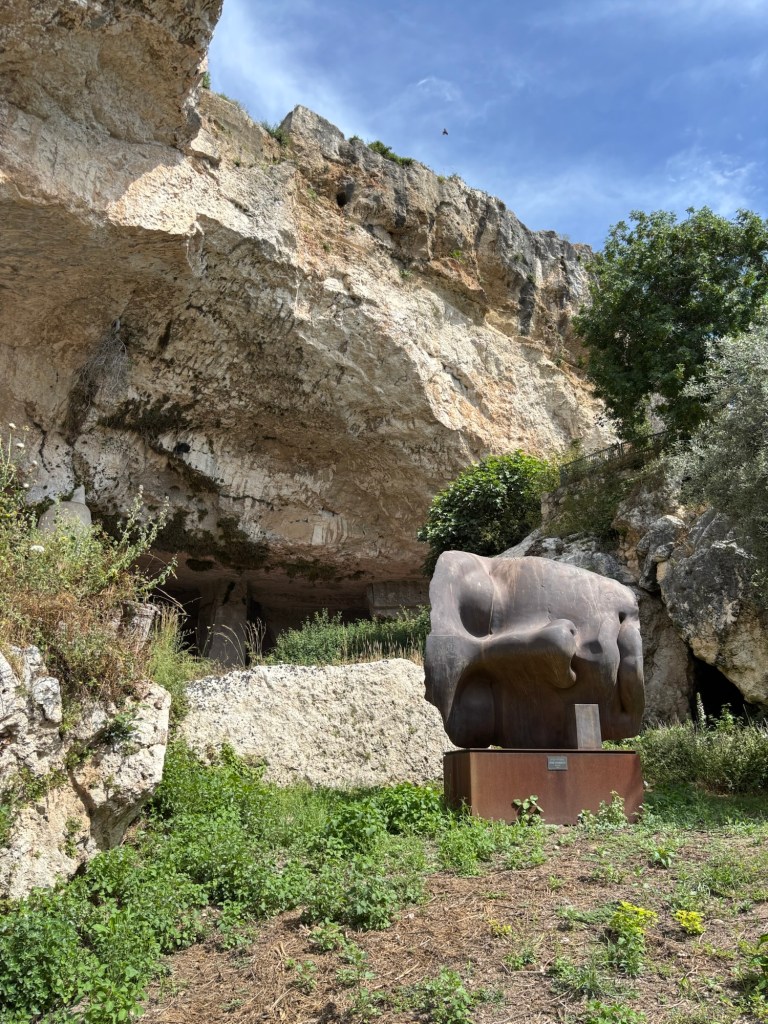

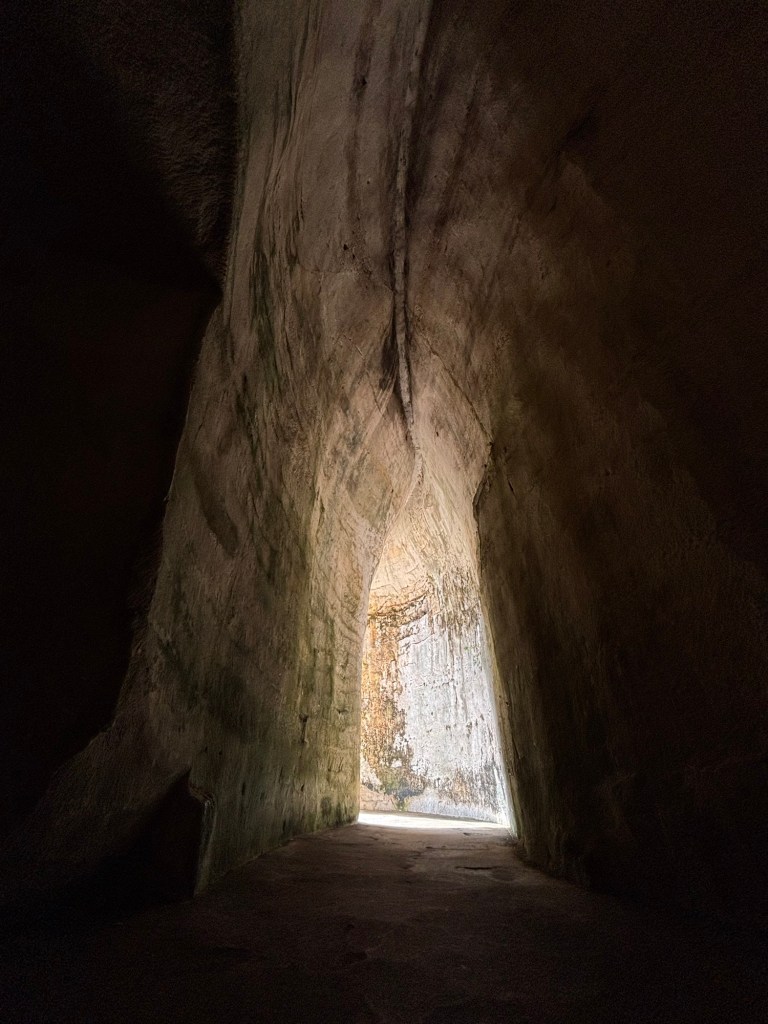
From the quarry, we continued to one of Syracuse’s most intriguing landmarks: the Ear of Dionysius. Apparently the name was given it by Caravaggio (who we planned to see in Rome) in 1608. This slender, arch-shaped cave, carved into the rock face of the old stone quarries, has a legend tied to it. According to our guide, Dionysius the Tyrant used this echoing cavern as a prison for his enemies, exploiting its perfect acoustics to eavesdrop on whispered conspiracies. The cave’s unique shape amplifies sound, making even the quietest whispers resonate. We stepped inside and tested the echo for ourselves, amazed by the cave’s eerie ability to magnify even the subtlest of sounds, such as bird wings flapping or pigeons eerily cooing while flying in and out of the cave.
The cave’s unnatural awe, created by human hands during the quarrying process, is enhanced by one of Mitoraj’s evocative sculptures situated at the back of the cave. The artwork adds a layer of contemplation to the space, as do the ancient chisel marks etched into the walls, bearing silent witness to the slave labor and toil that shaped it.


With the morning’s ancient history lesson behind us, we crossed the bridge back to Ortigia, the historic heart of Syracuse. The island has a history of Greek, Roman, and Norman influences, with understated Baroque architecture. Wandering again through narrow alleys, we felt the layers of history beneath our feet and now had a guide to tell us more about what we had seen yesterday.
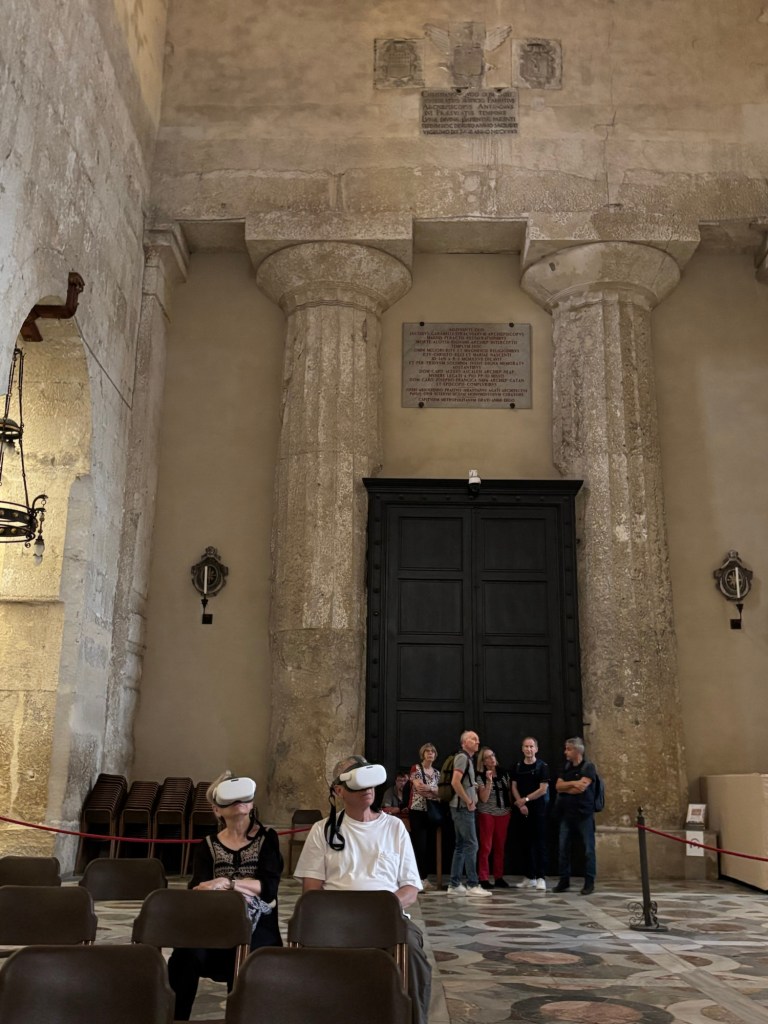
Our next stop was the crown jewel of Ortigia, the UNESCO-listed Cathedral of Syracuse. Originally the Doric Temple of Athena, built in the 5th century BC, it was later repurposed as a Christian cathedral. Its opulent Baroque facade, added in the 18th century, serves as a testament to the rich layers of Sicilian history, much like a tiramisu of architectural and cultural influences.
Stepping inside, our guide pointed out how the ancient columns of the Temple of Athena had been ingeniously incorporated into the cathedral’s structure. These pagan columns stand as a reminder of the building’s original purpose and ancient origins.

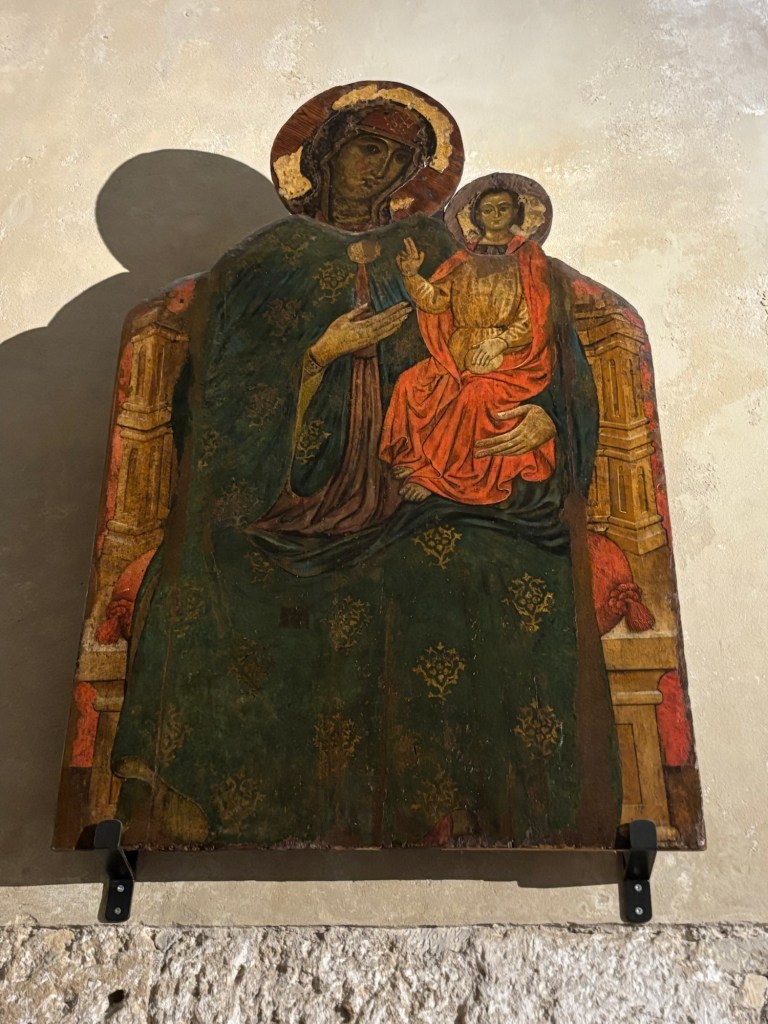
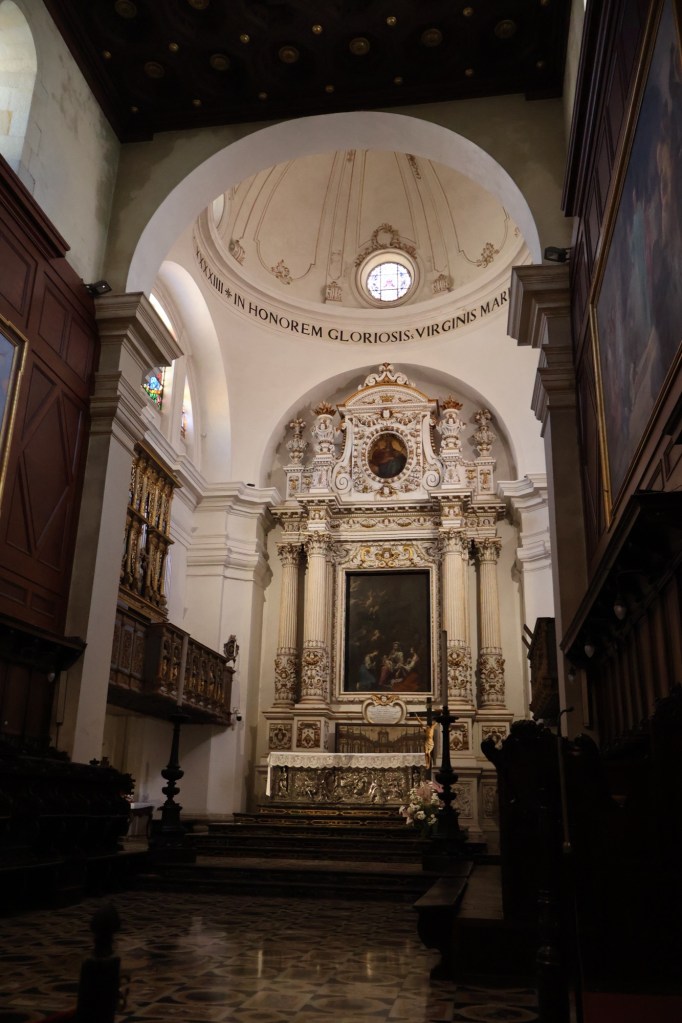


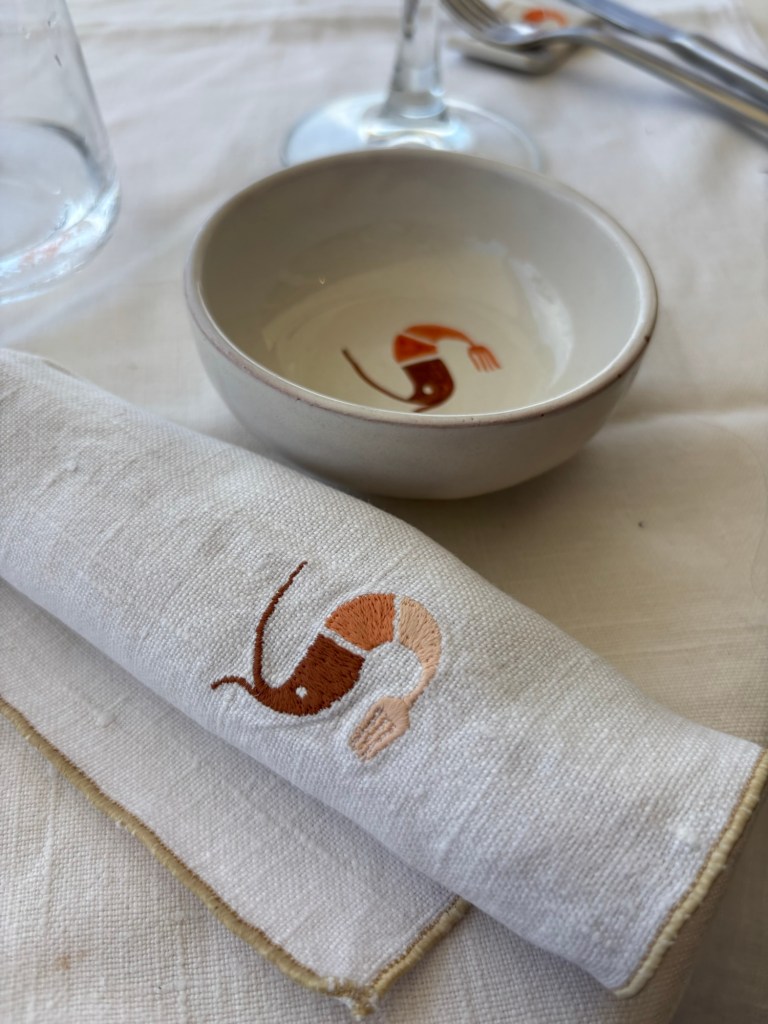
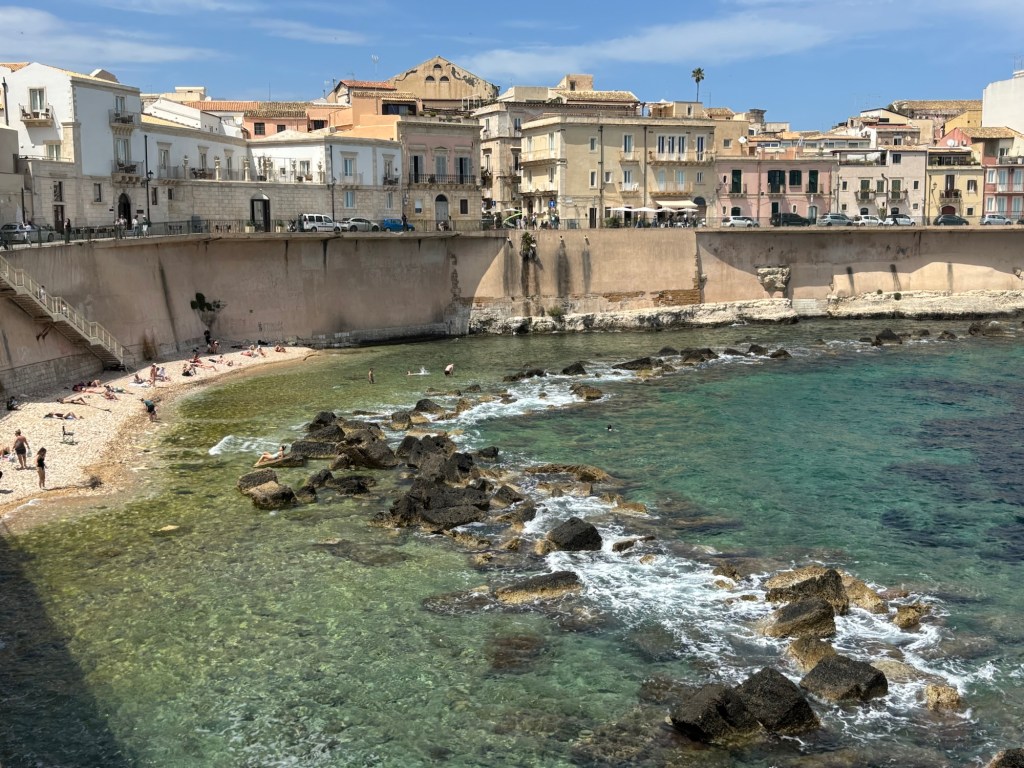
The tour concluded with a leisurely stroll through Ortigia’s picturesque squares, where modern cafes sit alongside centuries-old palazzi. We then wandered around town on our own, taking in the sights and following our guide’s lunch recommendation. We enjoyed a meal with a spectacular view of the water at Sorelle a Mare.


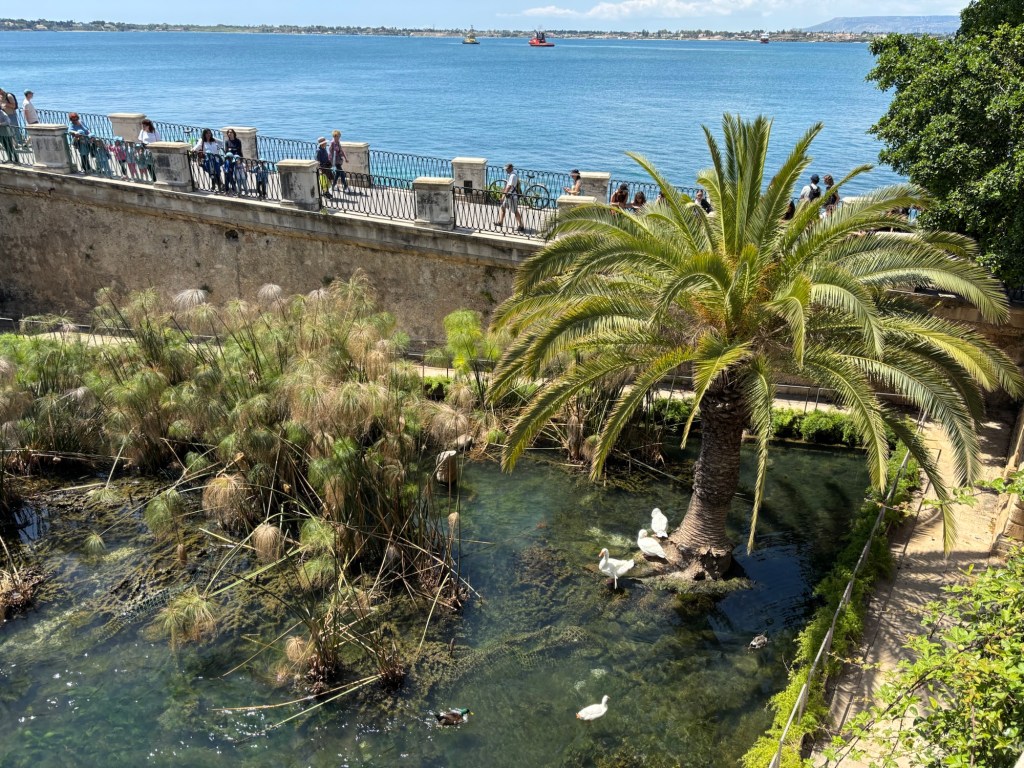


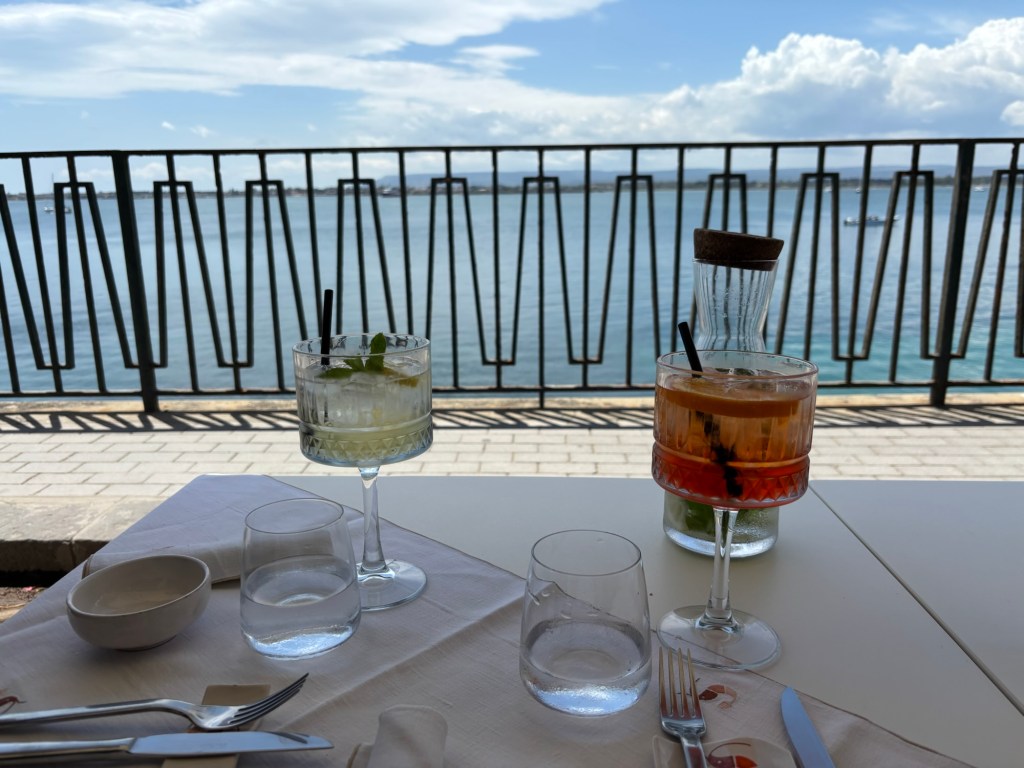
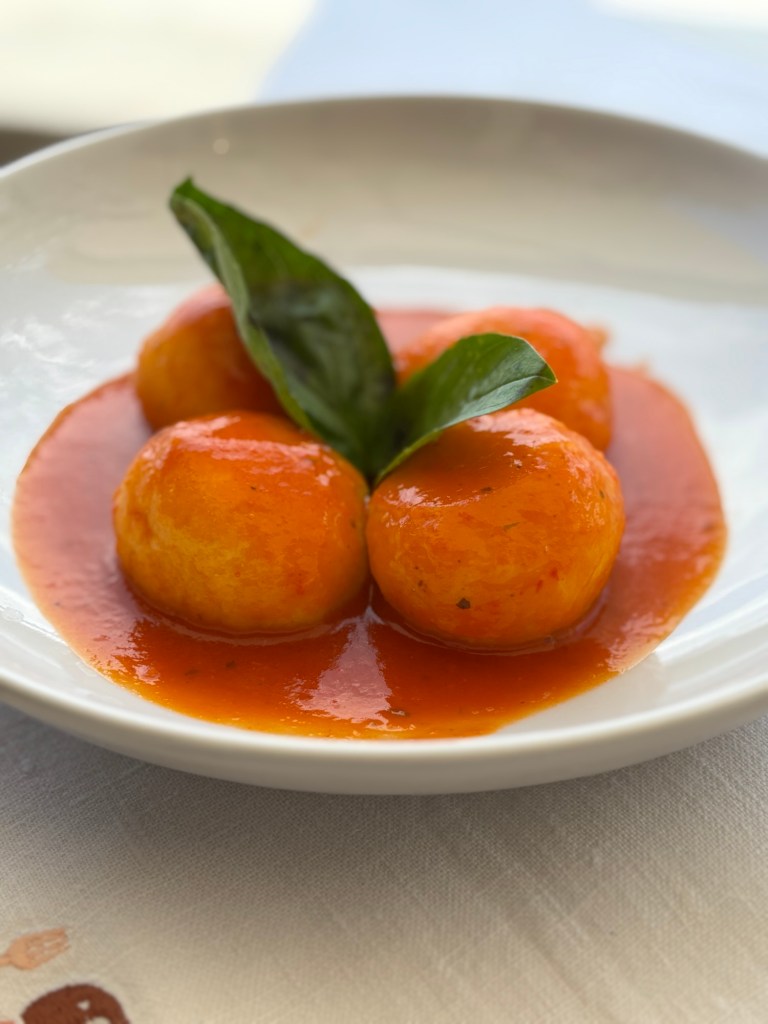
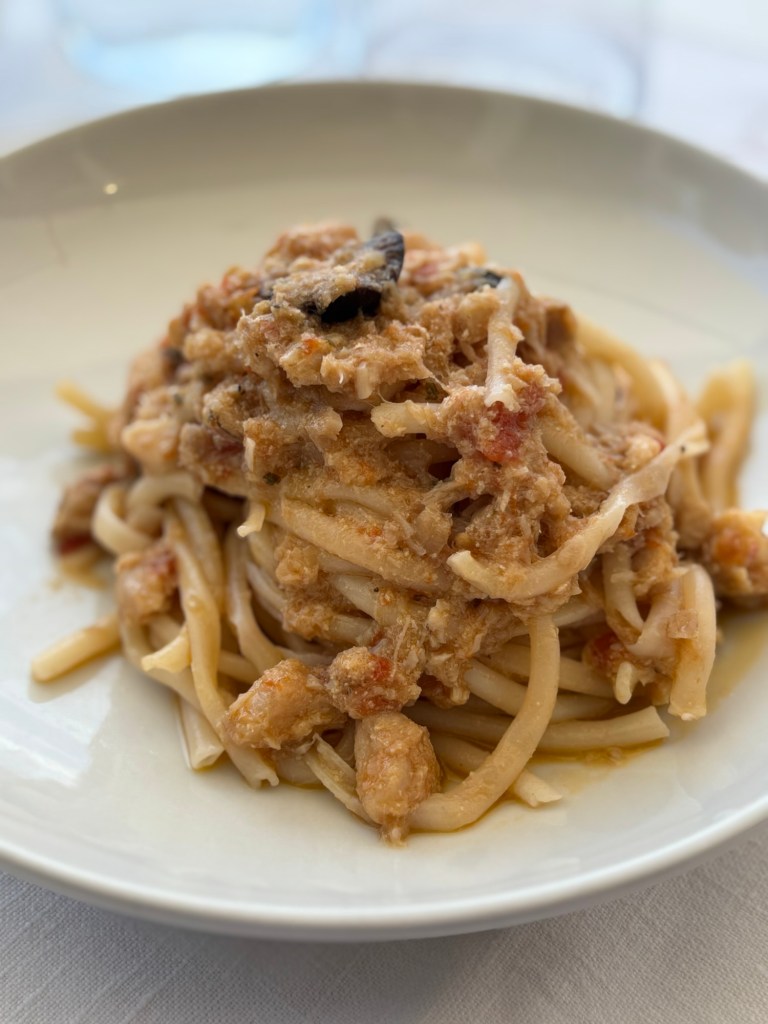
We continued to wander through Ortigia, and the island revealed herself slowly with each corner we turned, as we moved from narrow alleys into sunlit piazzas and occasionally popped into a shop. As we explored, it became clear that we had only just begun to scratch the surface of Sicily.
We eventually made our way out to Castello Maniace and were pleasantly surprised to find another of Mitoraj’s sculptures. Our guide had mentioned this one earlier, explaining that it was inspired by Icarus.

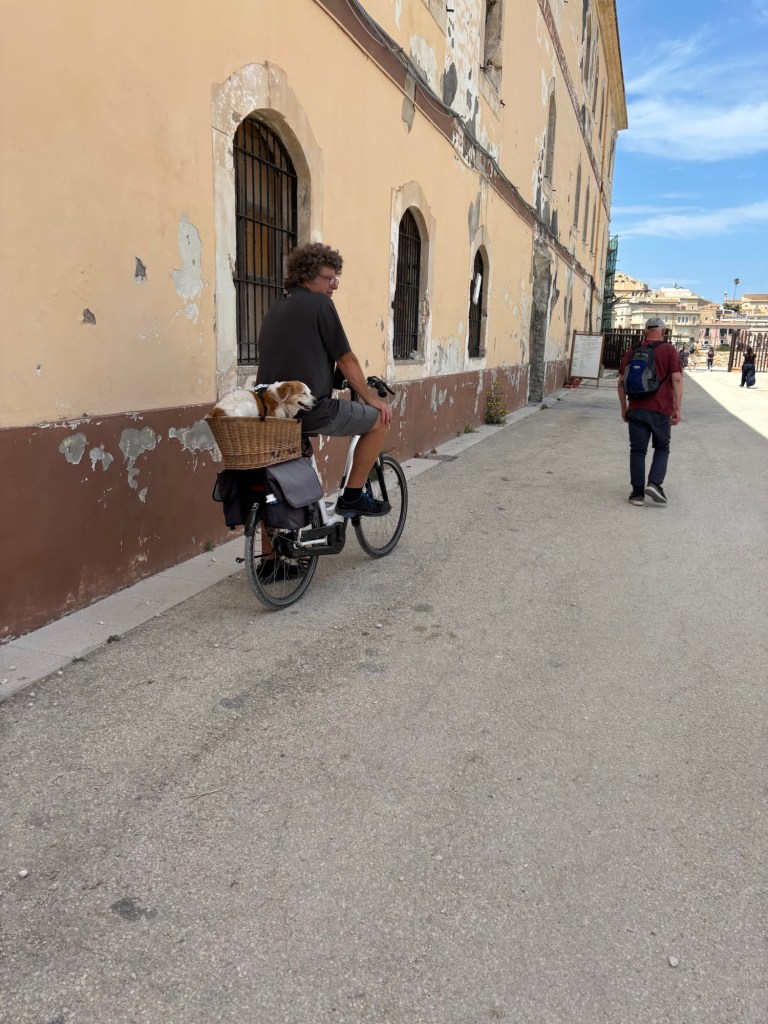




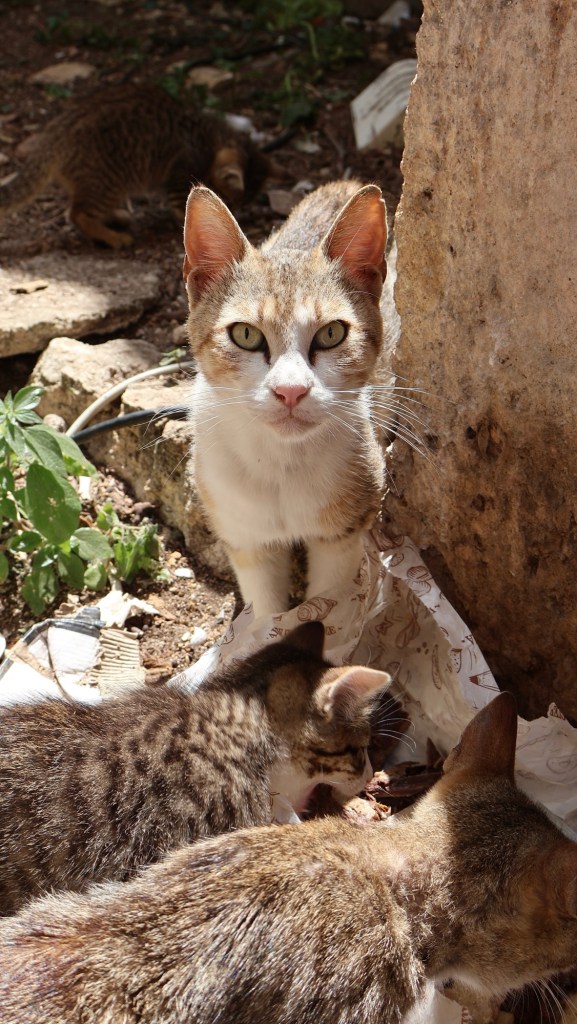
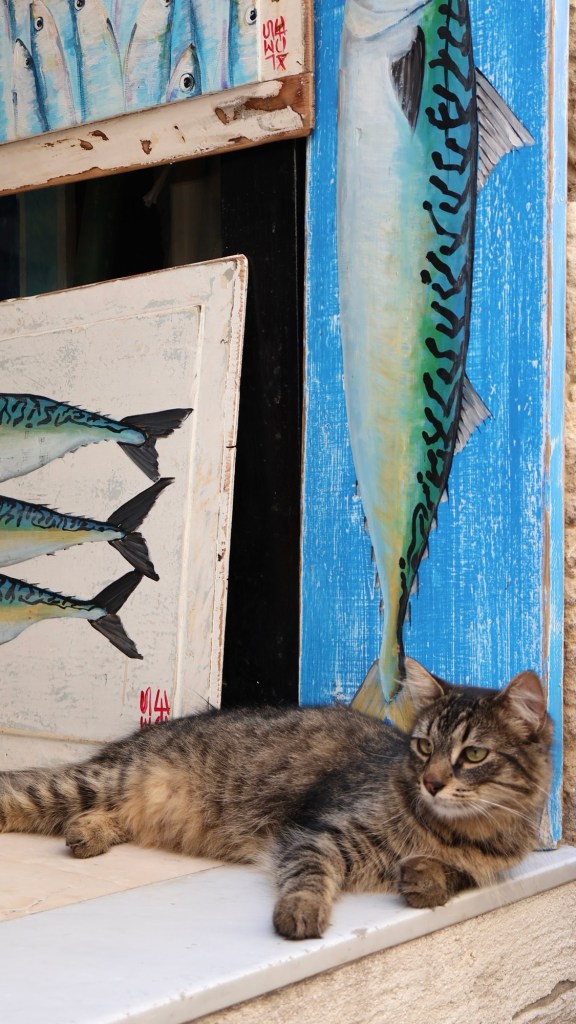
We wandered into a small fish shop, where a few cats lounged inside, seemingly surprised to find that the fish were actually beautifully painted ceramics. We picked out several to take home for ourselves and friends. We bought so many that the shop owners invited us back for a free drink later that night.



Soon after leaving the shop, rain began to fall. We quickly ducked into a nearby restaurant, deciding to wait it out with a drink and a tiramisu. Unfortunately, it turned out to be the worst tiramisu we had ever tasted. As the first one we tried in Italy, it set the bar pretty low for future desserts. Feeling unsatisfied, we headed back to our hotel to sit out the afternoon rain.
The downpour was intense, but from our hotel window, we had a great view of the storm. As the rain fell we took advantage of indoor hotel pool to go for a swim. Thankfully, the rain was short-lived. The sky brightened, a rainbow appeared, followed by sunbreaks that made the evening smell fresh and inviting.


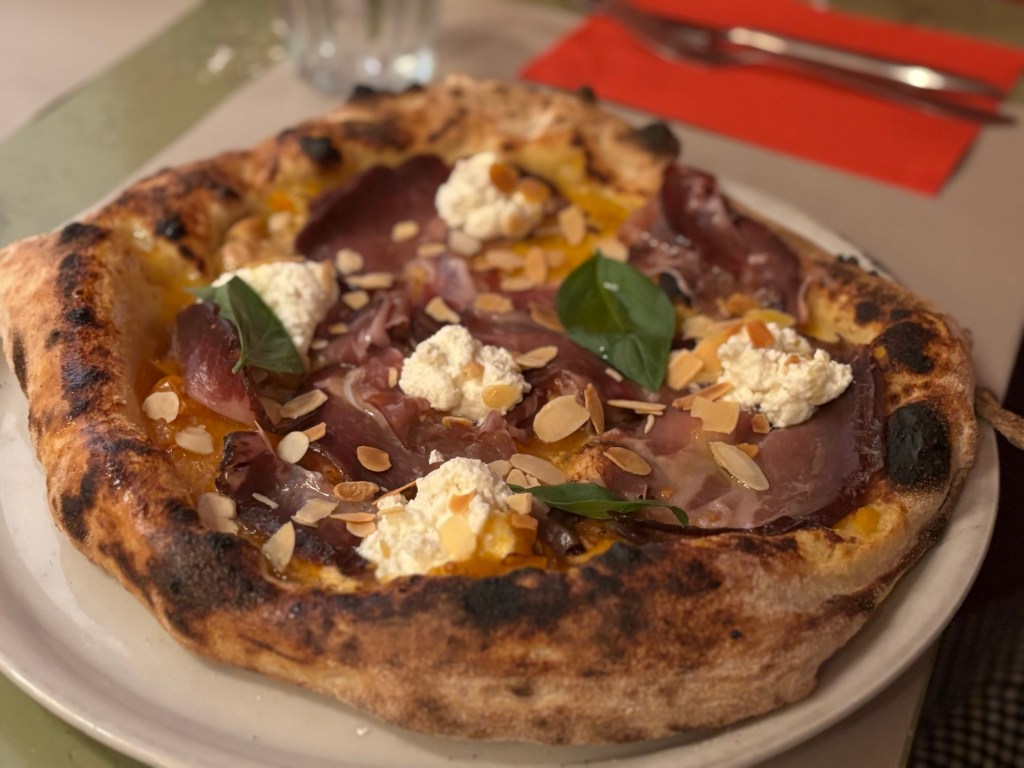
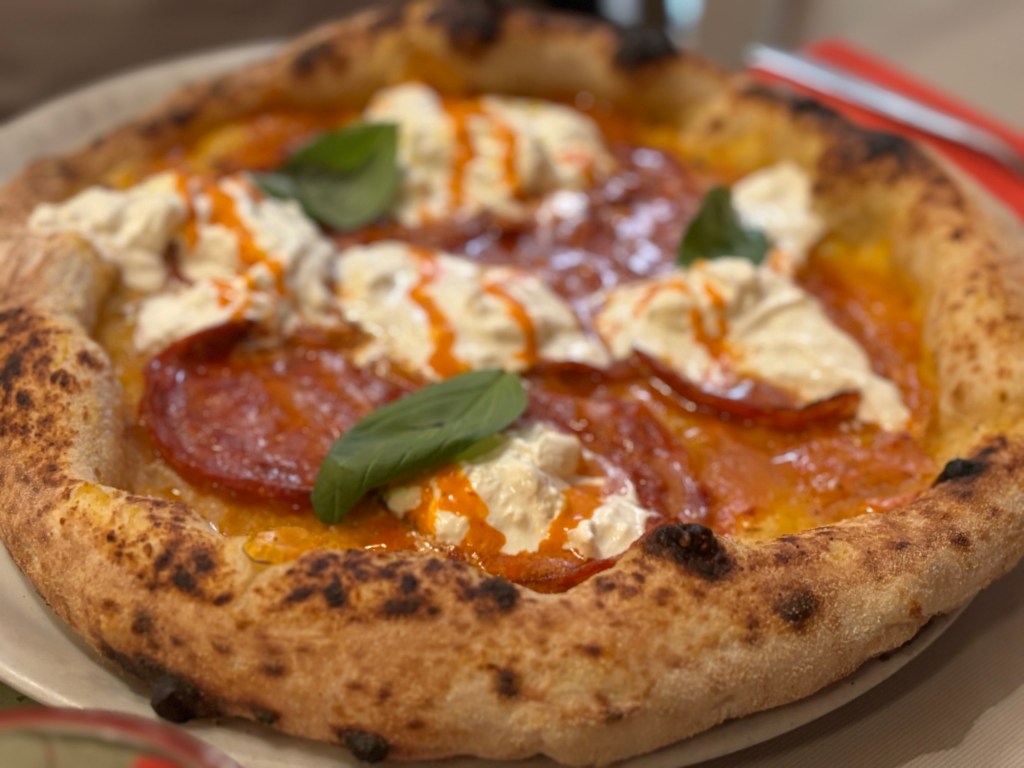
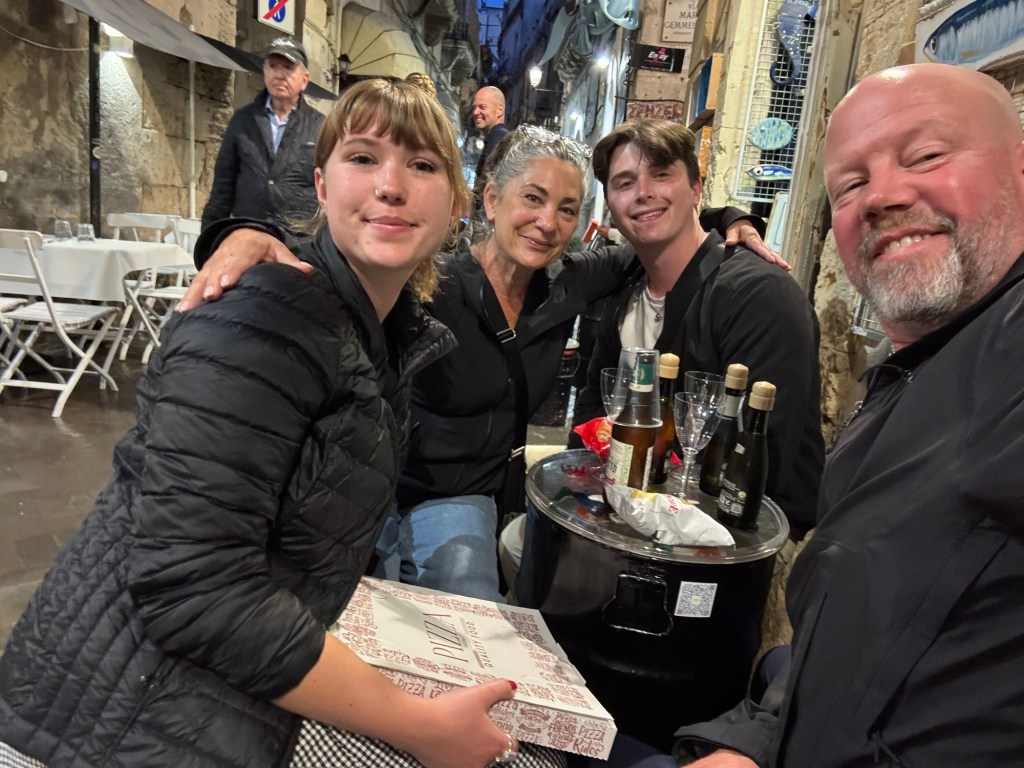
Feeling re-energized, we decided to head out again in search of dinner. We ended up at Pizzeria Schiticchio, where we enjoyed some fantastic pies. To our surprise, it was right across the alley from the Fish Art Store, so we stopped by for our complimentary nightcap after dinner.
Afterward, we took a leisurely walk back to our hotel, reflecting on the day’s unexpected turns and looking forward to our next adventure in Taormina tomorrow.





 Sabbatikos
Leave a comment