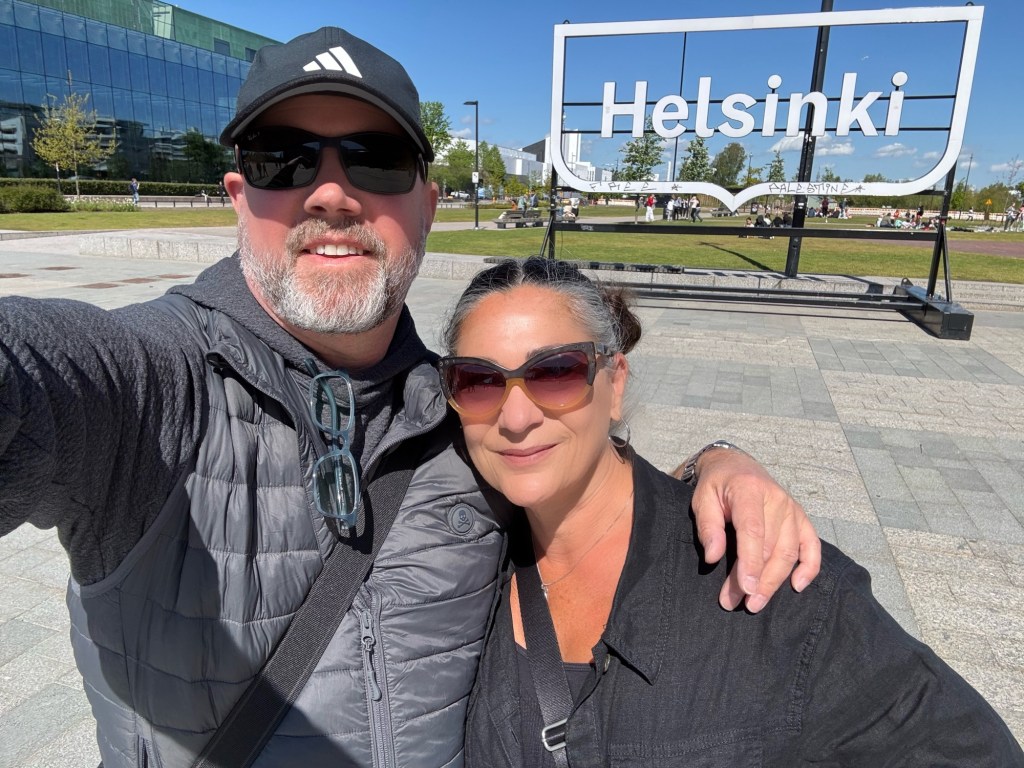
Welcome to HEL. That is the airport code for Helsinki, that greets you the moment you land. We had one full, long spring day in the Finnish capital as a layover before heading home. Our visit to HEL was far from infernal. In fact, it was the opposite. We woke to a clear, crisp day filled with plans to visit Helsinki’s famous churches, admire Finnish architecture and design, and enjoy some classic Finnish dishes.
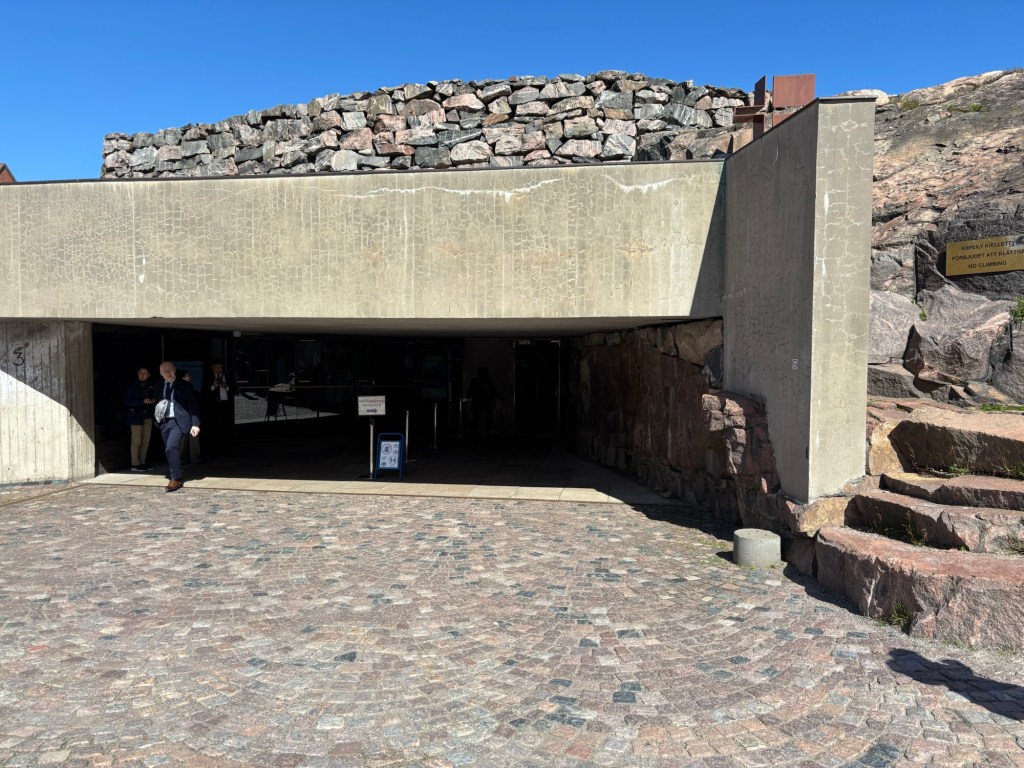
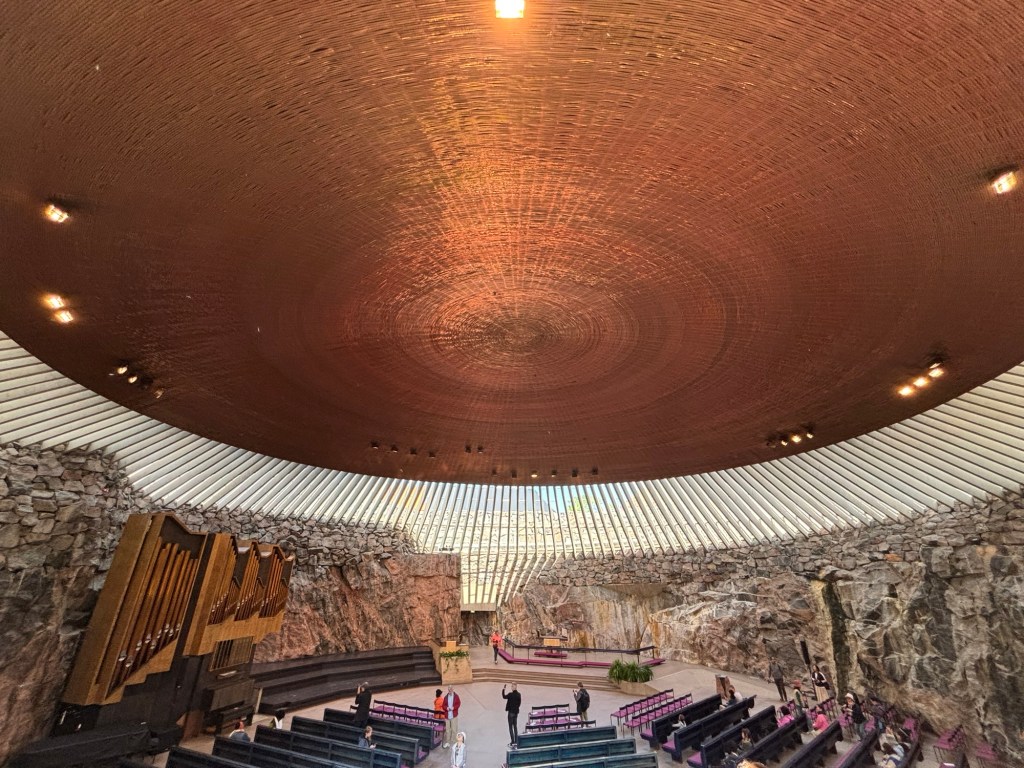
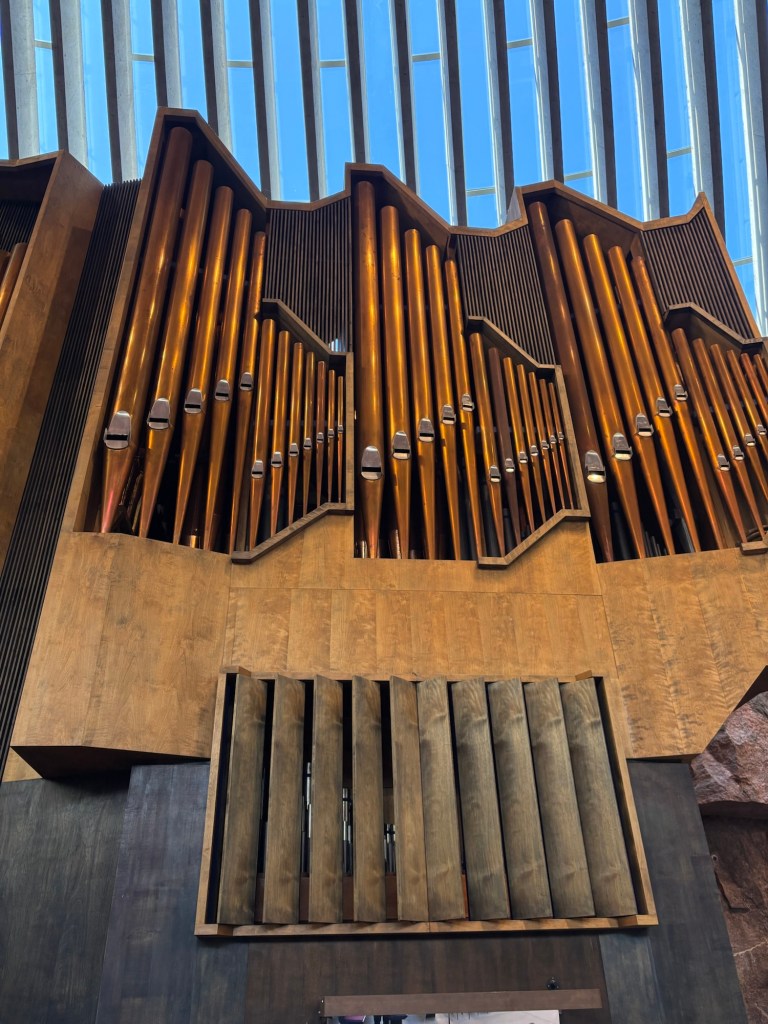
We began our morning at Temppeliaukio Church, better known as the Rock Church, a marvel of 1960s modernism built directly into solid bedrock. Designed by architects Timo and Tuomo Suomalainen and completed in 1969, this Lutheran church feels like a juxtaposition between ancient cave and mid-century chapel. Morning sunlight poured in through the windows, reflecting off the copper-domed ceiling and the massive copper pipes of the pipe organ.



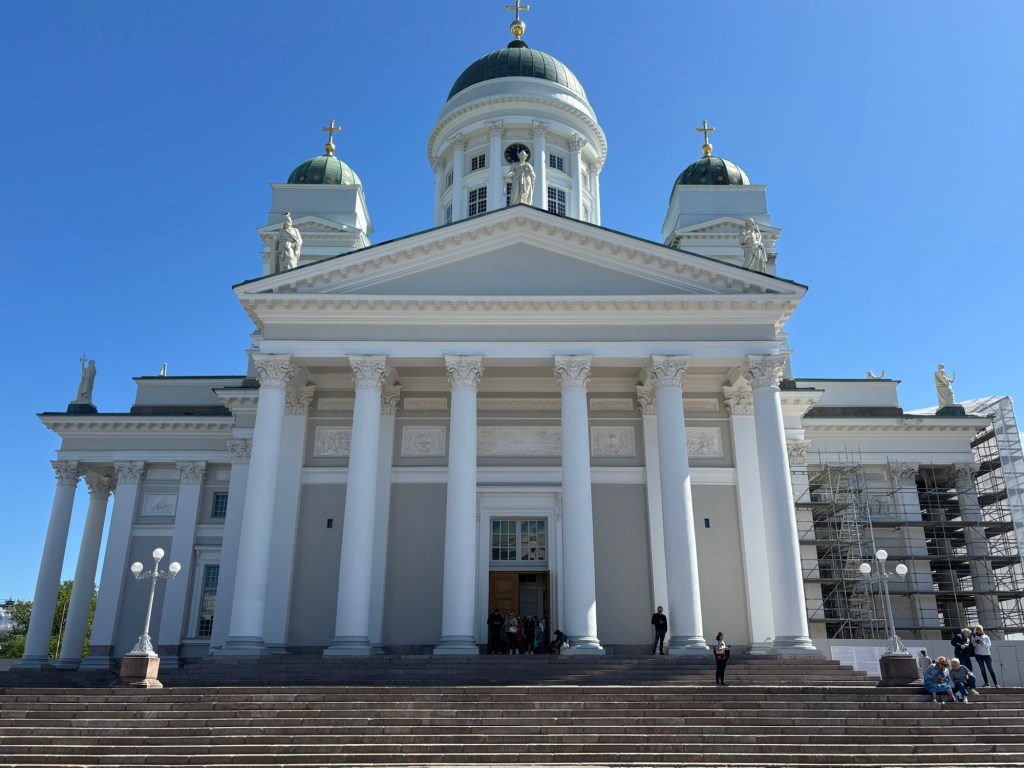
From Temppeliaukio, we walked down the gently sloping streets of central Helsinki toward the brilliant white Helsinki Cathedral, a neoclassical landmark that dominates the skyline above Senate Square. Completed in 1852, this Evangelical Lutheran cathedral was originally built as a tribute to Tsar Nicholas I of Russia. Its soaring green dome and the twelve apostles standing guard on the roof gave it a mighty presence. Inside, however, the space is nearly bare and austere, with little of note to photograph.
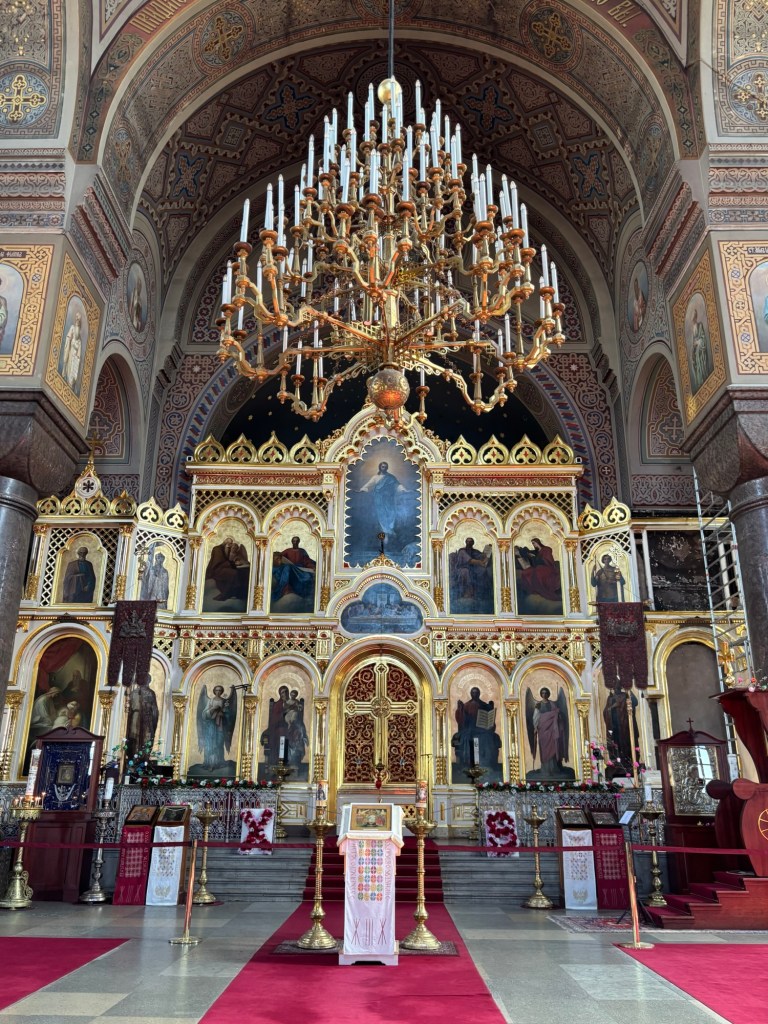
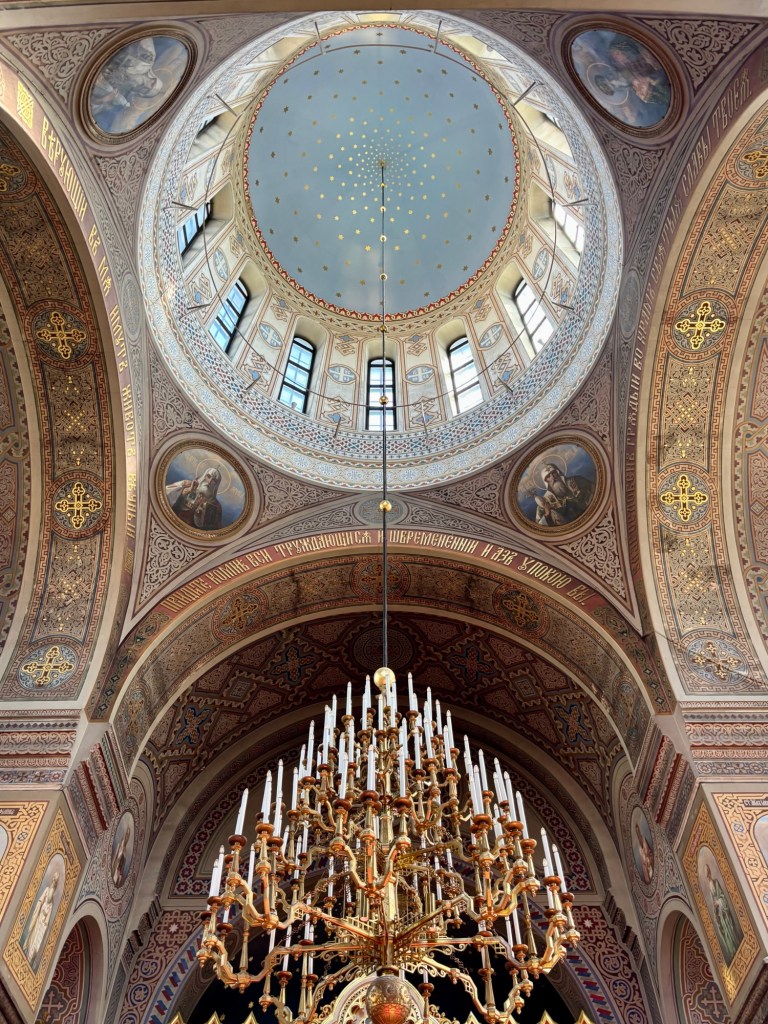
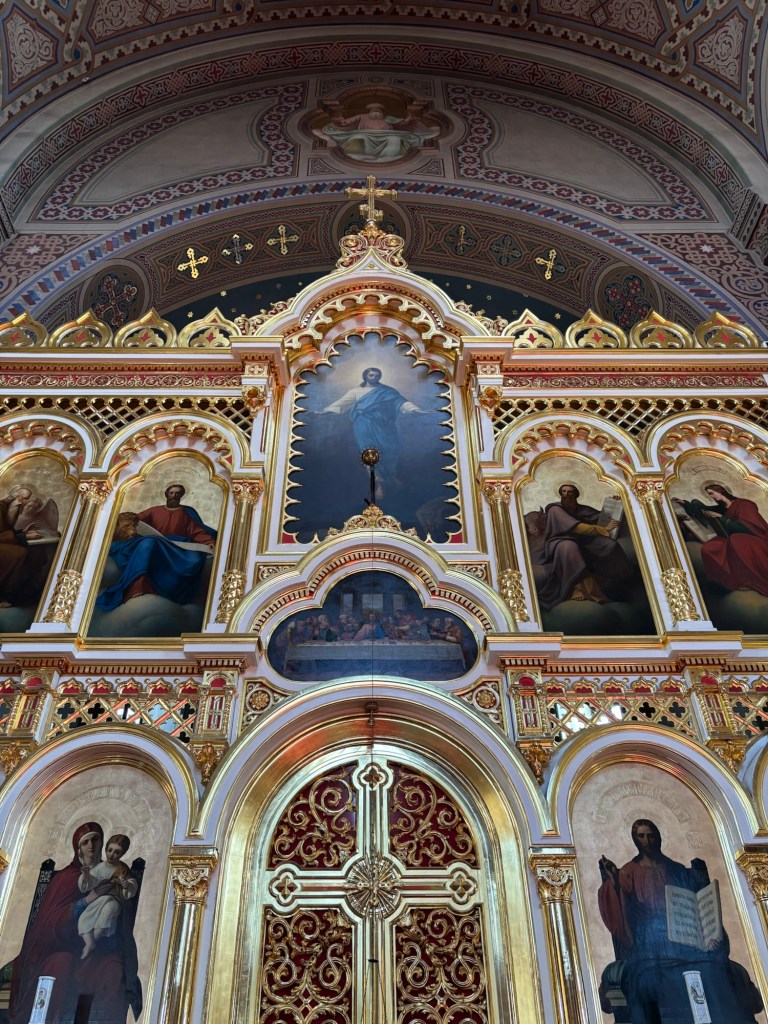
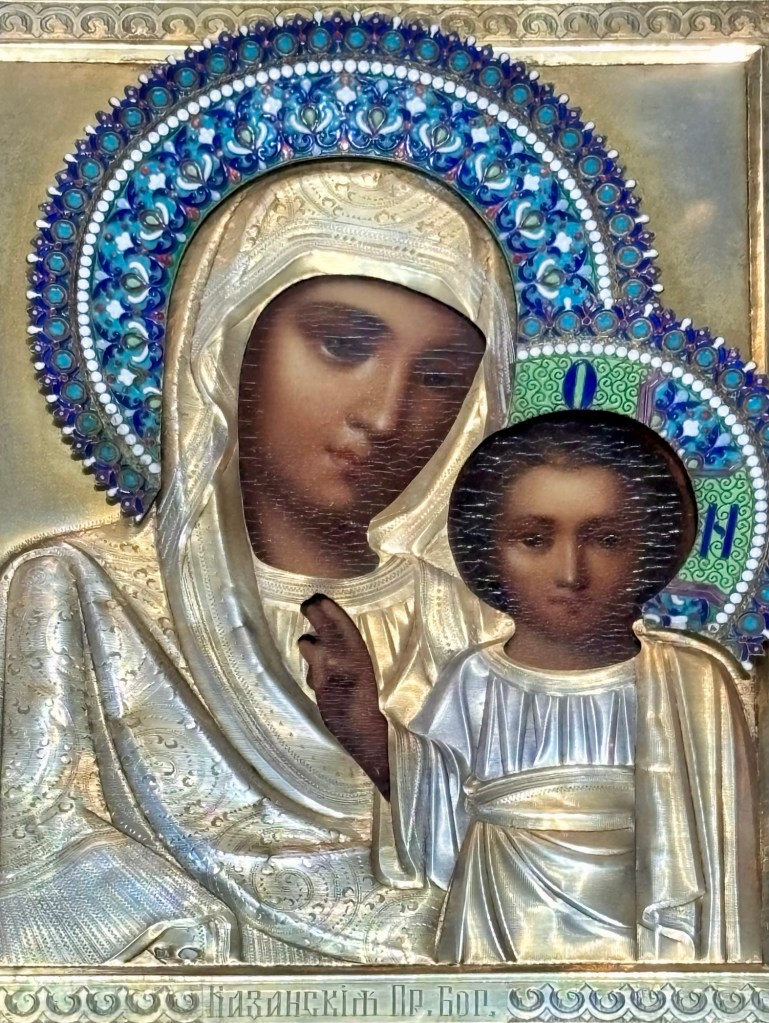
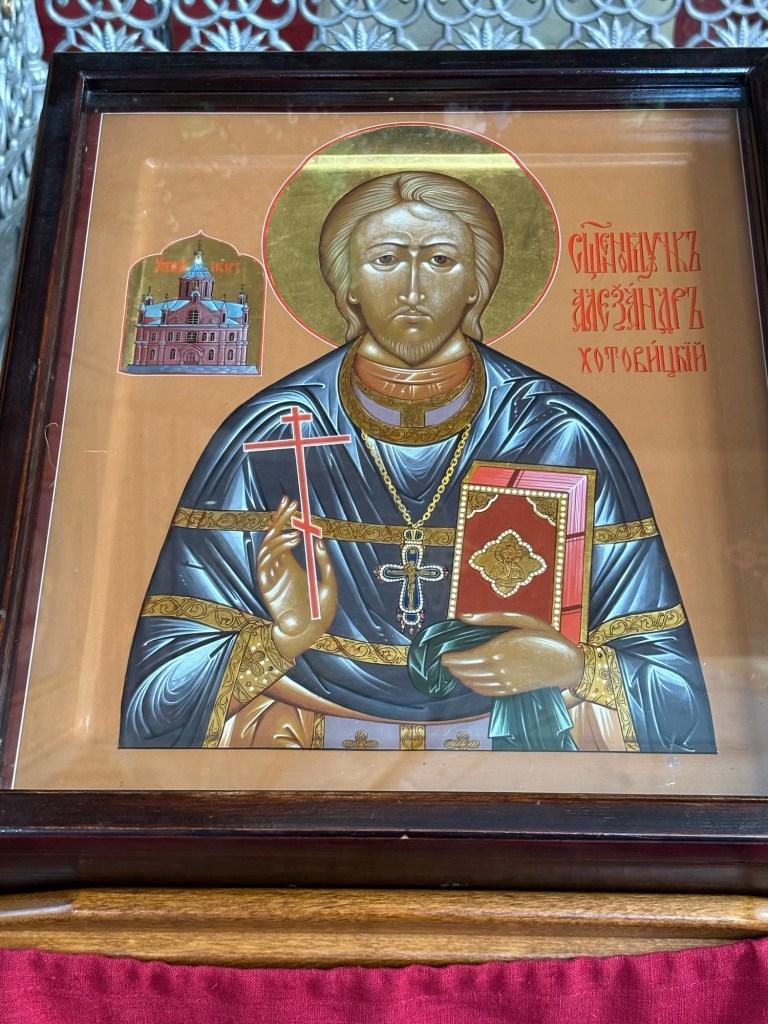
We continued on toward Uspenski Cathedral, a short walk to the harbor and a complete contrast in both aesthetic and opulence. Built in 1868, this red-brick Eastern Orthodox cathedral is the largest of its kind in Western Europe. Inside, gold icons glimmered in candlelight beneath its thirteen green domes, representing Christ and the twelve apostles. The interior was filled with grandeur and religious art. We spent a good amount of time walking in a circle around the sanctuary, pausing to take in the symbolic artwork at each station.




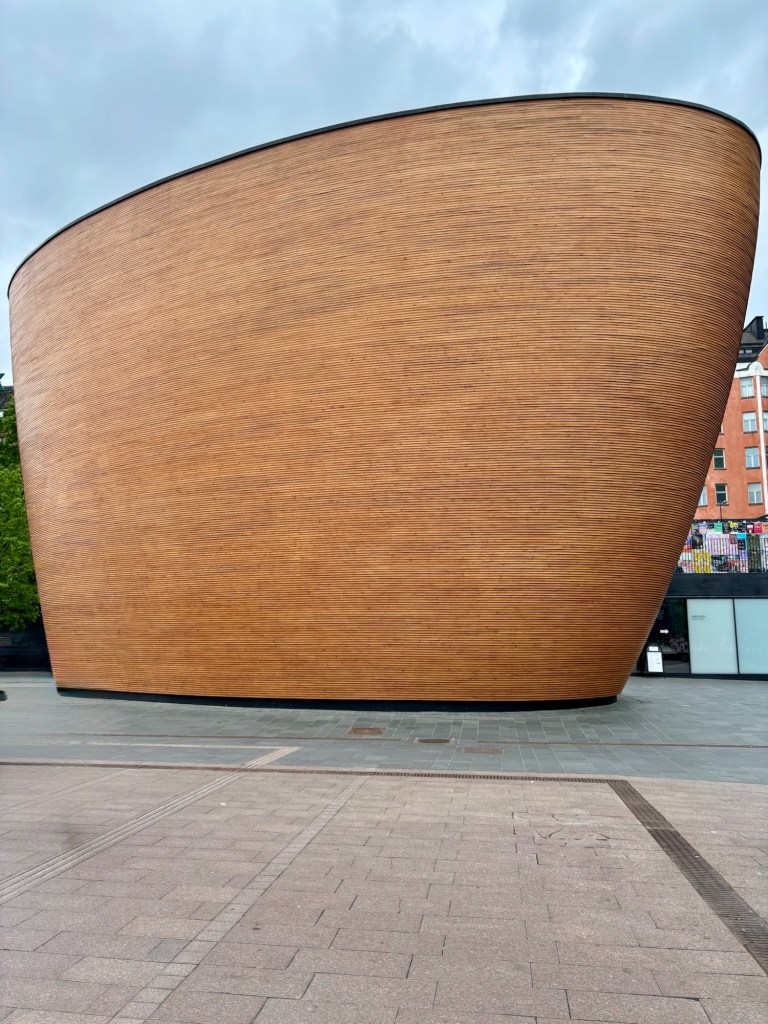
Our final spiritual stop was Kamppi Chapel, also known as the Chapel of Silence. Constructed from warm, curved wood to absorb the noise of the city surrounding it, it was completed in 2012. This nondenominational space was designed as a refuge from the rush of daily life, and it offered us a profound stillness. There was no stained glass, no ornate artwork, and, unfortunately, no cameras allowed inside. It was just silence in the heart of Helsinki.

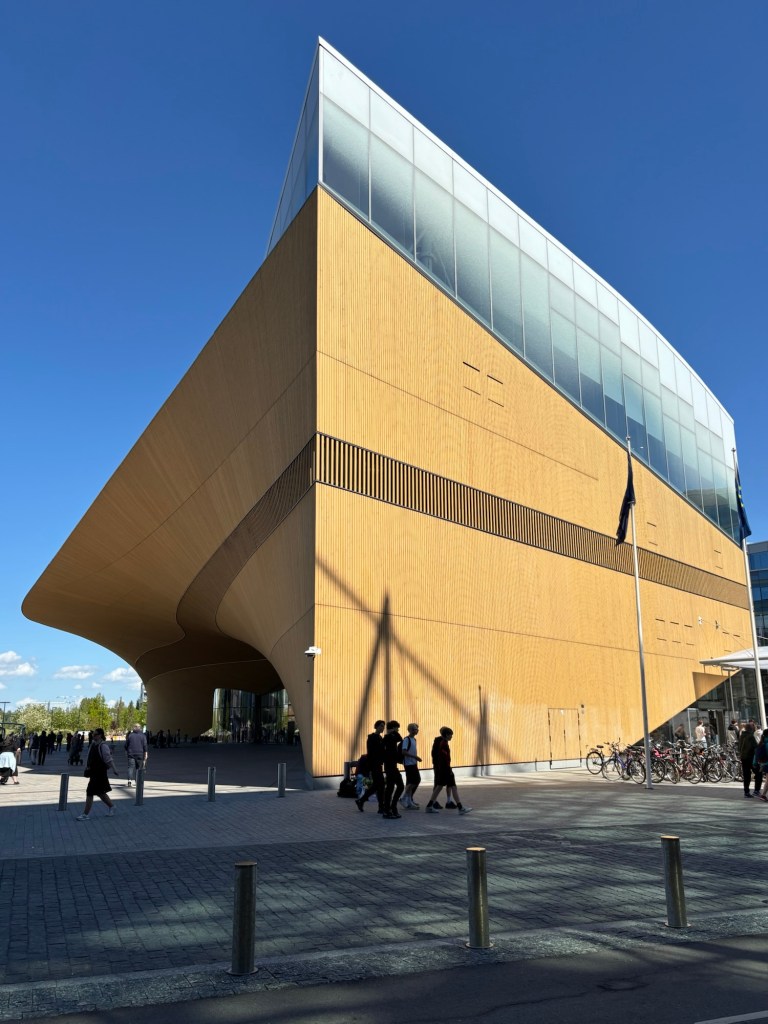
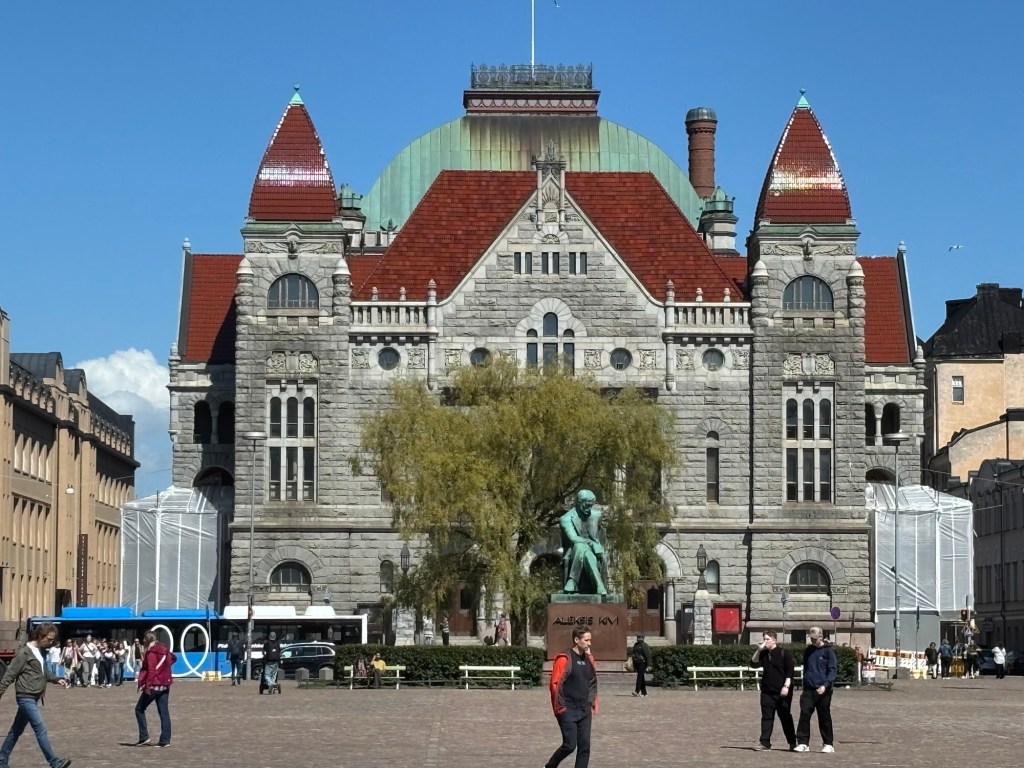
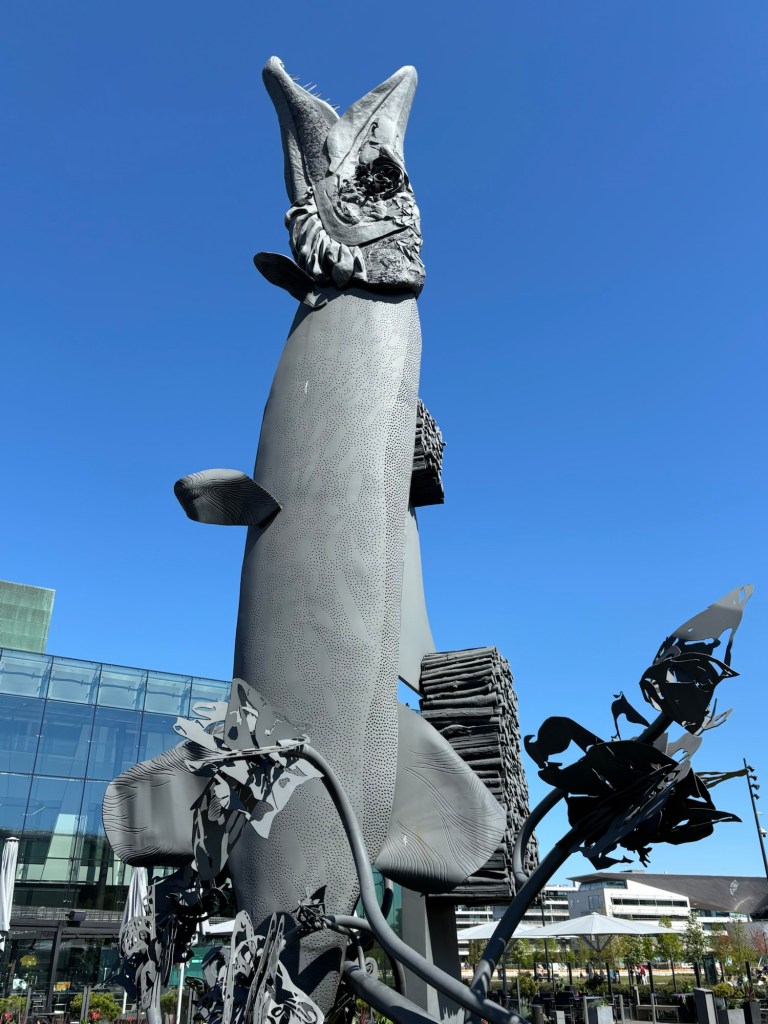
During our long walk across Helsinki, the city unfolded before us like a gallery of public art and architecture. We admired the sweeping shape of Helsinki Central Library Oodi, which felt like a gift to public space as Finns gathered on and around it. Nearby, we passed Helsinki Central Station, a striking example of Art Nouveau design, its exterior guarded by the Lyhdynkantajat, Finnish for “the lantern bearers.” Everywhere we turned, we encountered sculptures, art murals, and thoughtful design that, in perfect Scandinavian style, made the functional both beautiful and intentional.






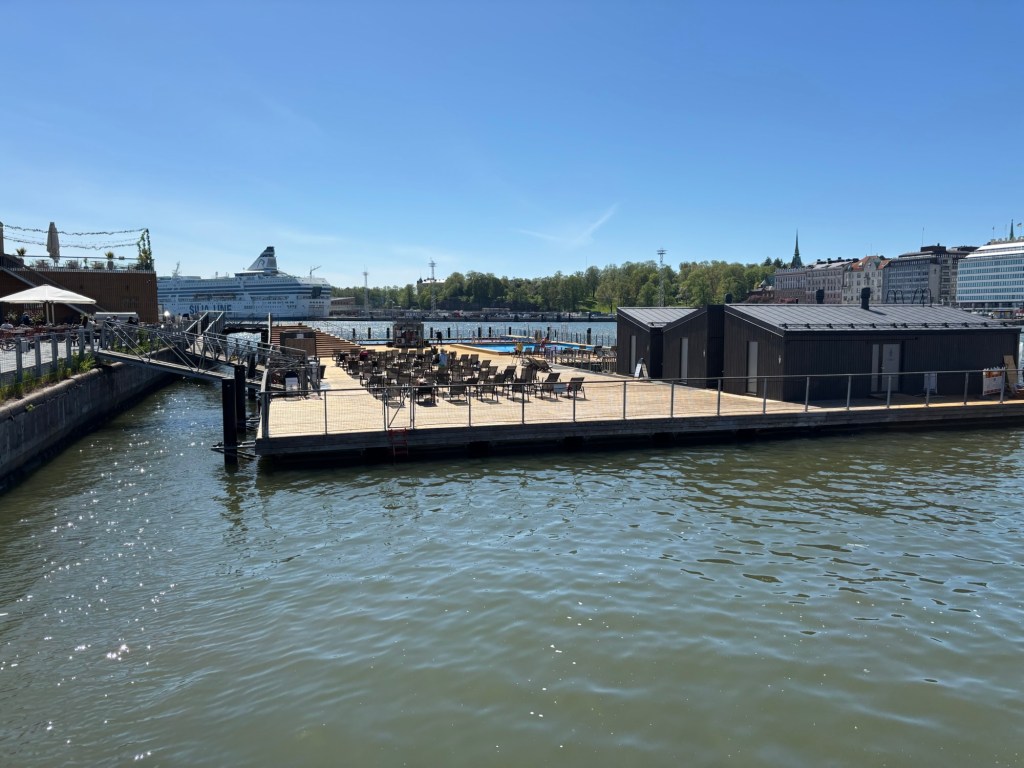
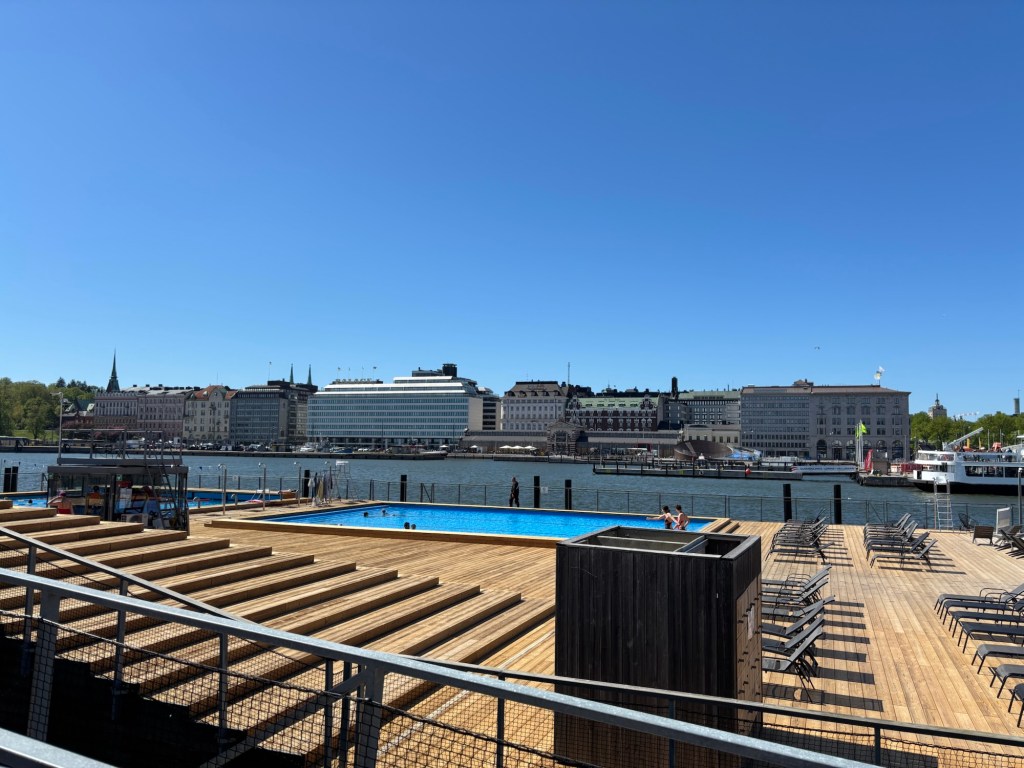
For lunch, we stopped outdoors at the Allas Sea Pool, where we sat bundled up while eating sandwiches and watched hardy Finns sunbathing in the sunny but brisk spring weather. Some dipped into the sea. Some swam in the pool. Others warmed themselves in the sauna before beginning the whole cycle again. There were even people in bikinis and swim trunks sitting with laptops and headphones, working remotely. We watched with a mix of admiration and awe, taking in the rhythm of Helsinki on a midweek spring day.

After lunch, we wandered through the open-air harbor market looking for gifts, and then into the charming Old Market Hall, known as Vanha Kauppahalli. The stalls were a sensory overload of sights and smells: jars of cloudberry jam, stacks of smoked fish, reindeer jerky, handmade cheeses, and gleaming pink fillets of salmon. We sampled a few pastries and let the sugar carry us into the afternoon.
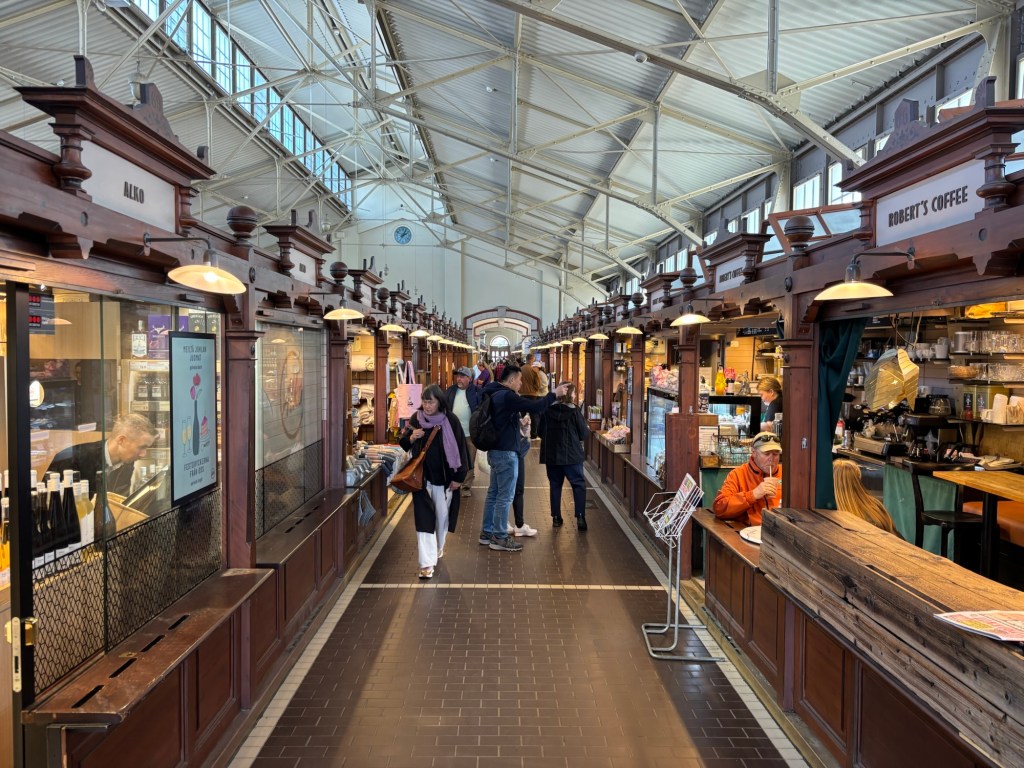
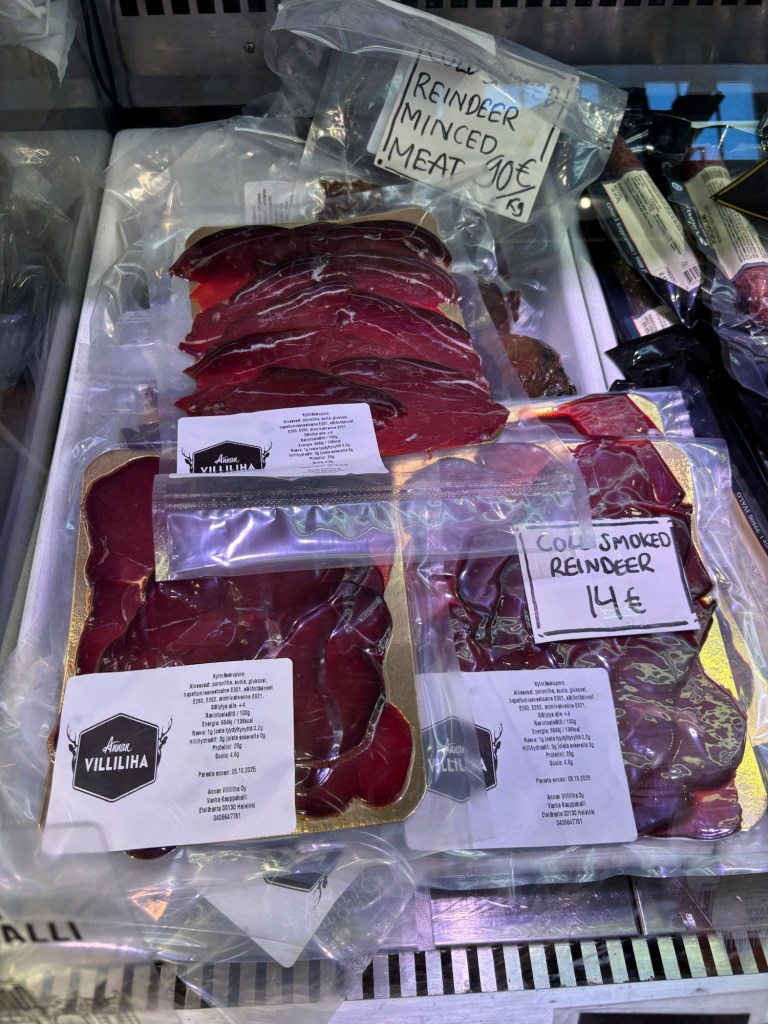


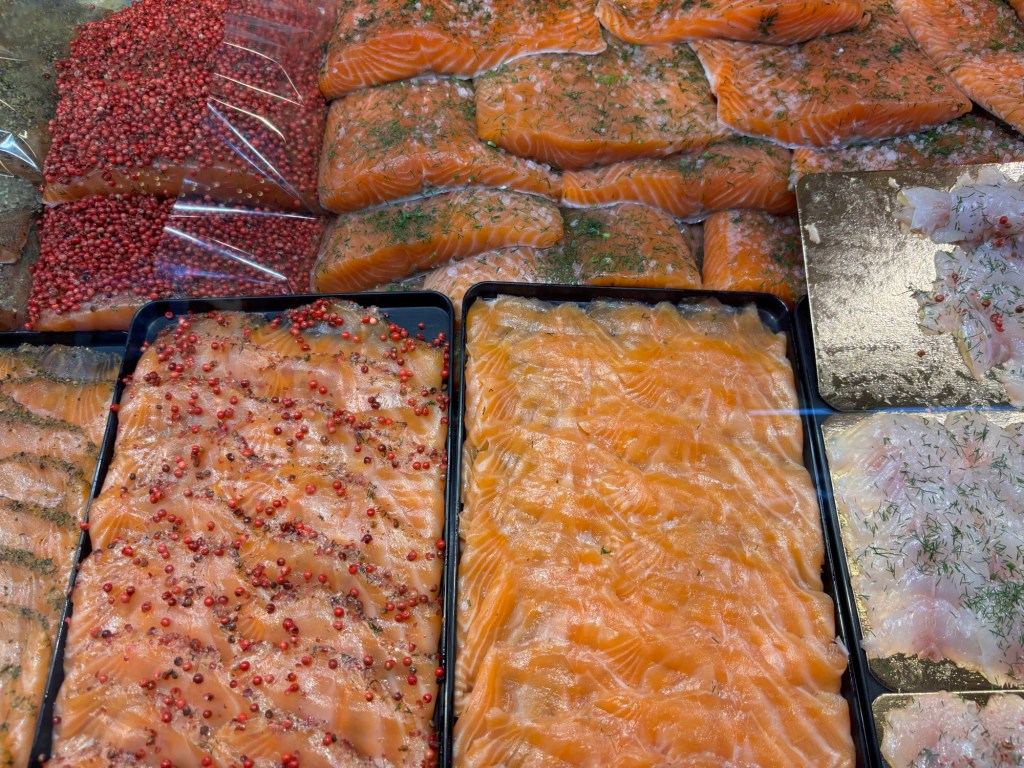

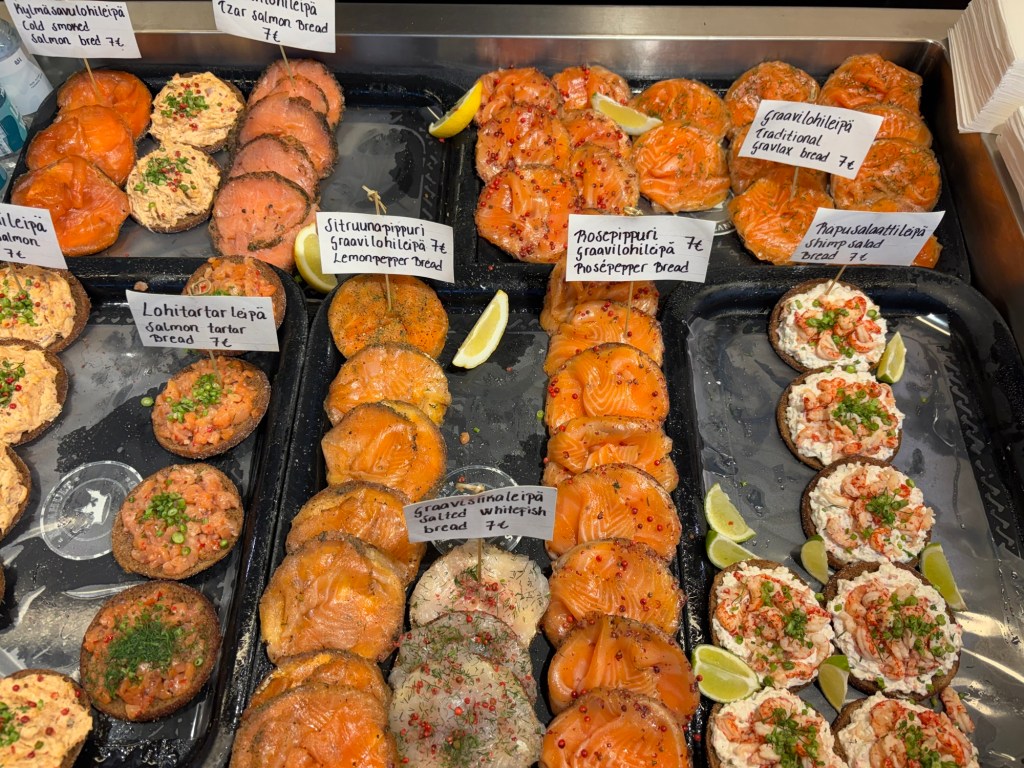


The rest of the day was spent wandering through Helsinki’s Design District, passing high-end furniture and home design stores, and popping into vintage shops and boutiques to browse, as if we could fit anything more into our already overstuffed suitcases. But one can dream.
Our long walk across Helsinki was building an appetite for a much-anticipated dinner. On a trip that had already brought us flavors from London pubs, Maltese Michelin Plates, Sicilian osterias, Roman pizzerias, and Dalmatian seafood bars, we found ourselves at what may have been one of our favorite meals of the journey. We had done our homework and landed on Ravintola Kuu, a cozy and unpretentious restaurant where the service was impeccable.
We started with lohikeitto, the famous salmon soup in dill cream, a dish that felt like it had been passed down through generations of Finnish mummus. But it was the reindeer we came for. It was rich, tender, and perfectly prepared. We had tried venison in Malta at The Golden Fork in Rabat, and it had made us wonder what reindeer might taste like in Finland. This dish was so good that even St. Nicholas, who apparently resides in Lapland, would have approved.
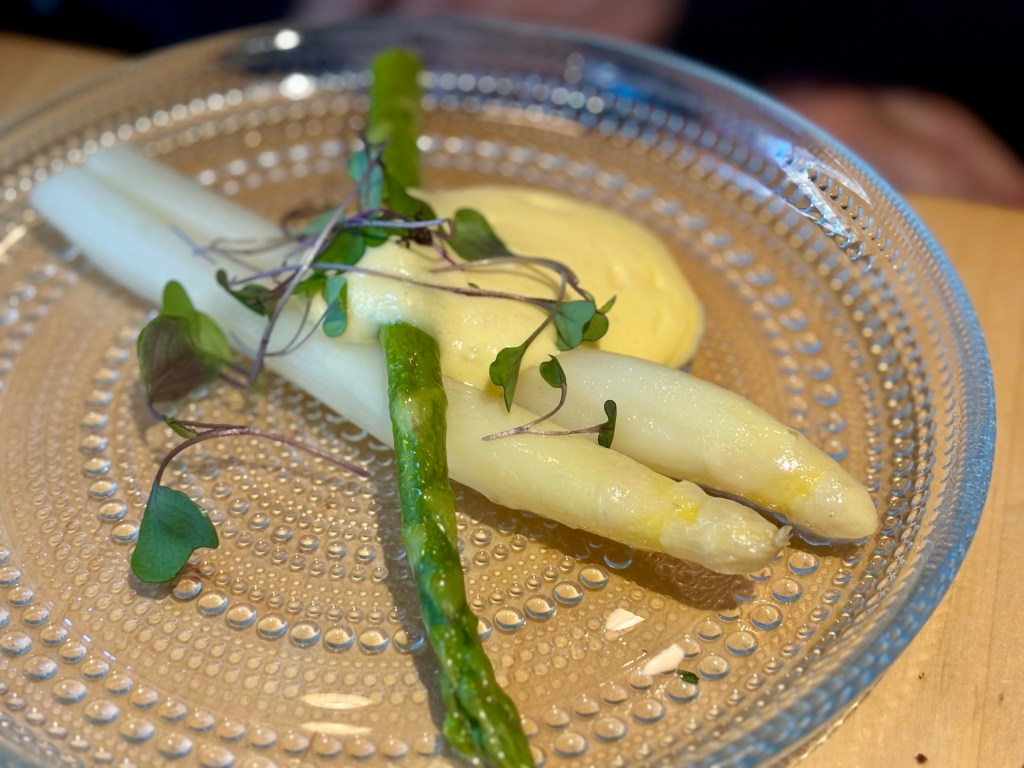

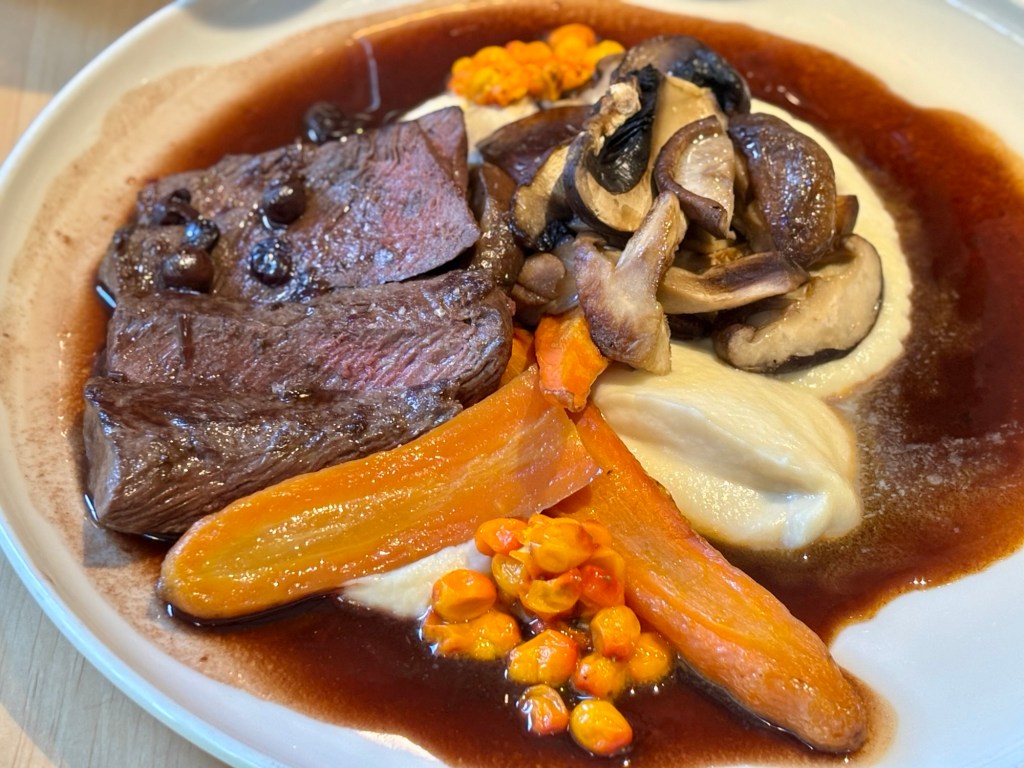

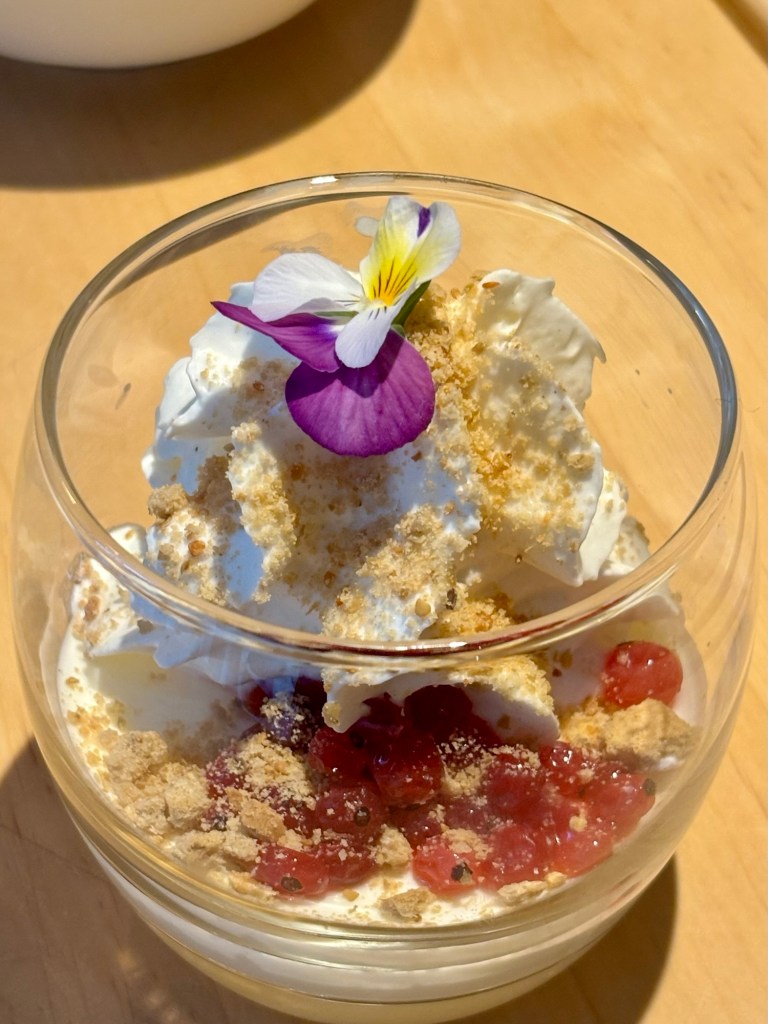
As we left the restaurant, the sky was still tinged with color. The sun had set sometime after 10:30, but the twilight lingered well past 11. We took a car back to our hotel, grateful for this final chapter. Helsinki had given us food for our bodies, beauty for our eyes, and spaces for our souls.

Tomorrow, we would return home. Full and satisfied, with a little wine in the twilight of a great northern city, we felt the quiet satisfaction of an epic vacation well traveled.

 Sabbatikos
Leave a comment