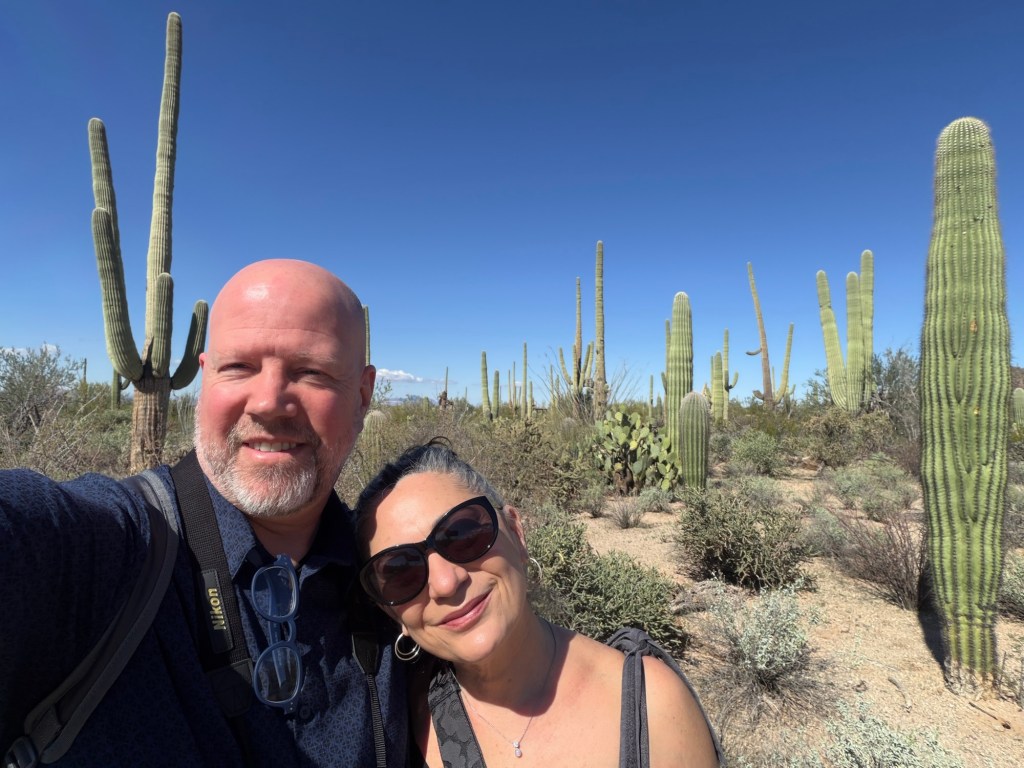
We left downtown Tucson in the morning and pointed our car west toward the Sonoran desert. The rain from the day before had passed, and the air carried a familiar freshness that shows up after a good rain, something we know all too well from living in Seattle. It was cool, bright, and clear. So bright, in fact, that I had to stop and purchase a pair of sunglasses at a gas station. The desert looked clean and newly washed, as all the dust and sand had been rinsed away.
Until that day I had never seen a true saguaro forest. I had seen saguaros before, of course. A lone cactus standing beside a road, or one planted outside a hotel in Las Vegas. Maybe a few scattered around Tucson like tall reminders of what had once been desert before being paved over.
But once you leave town and begin to approach the hills west of Tucson, the hills begin to glow green. At first it is subtle, a faint tint that seems out of place in a desert landscape. Then, as you drive closer, the slopes begin to look textured, almost fuzzy, like the hills have the whiskers of a three day beard growing across them.
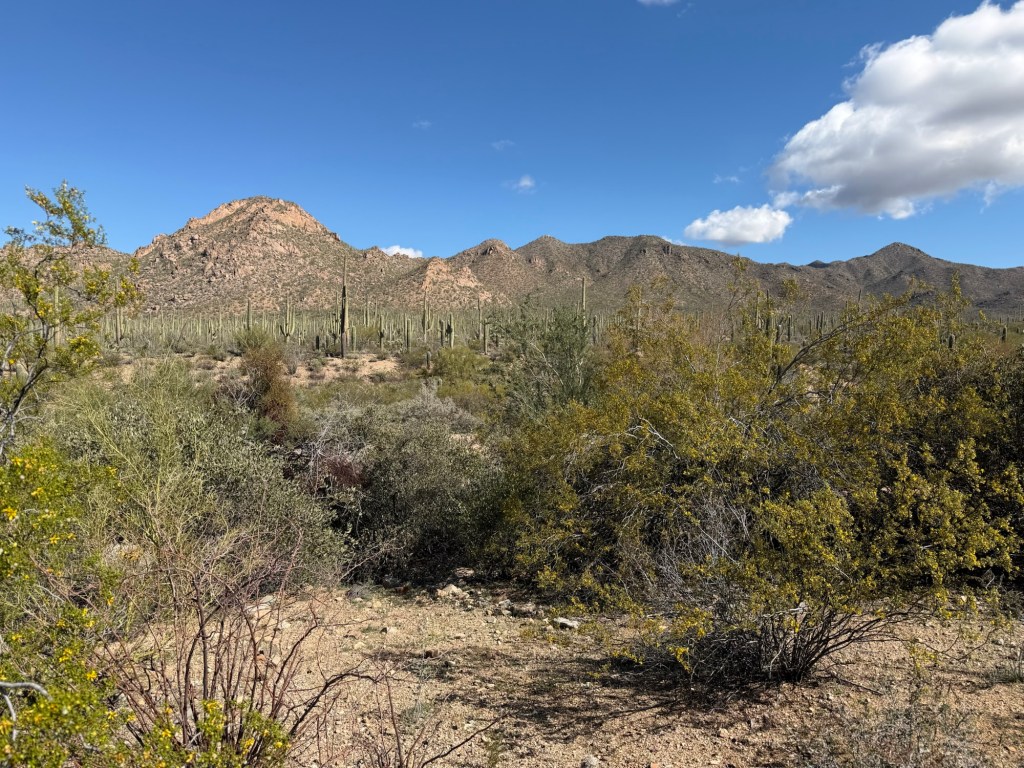
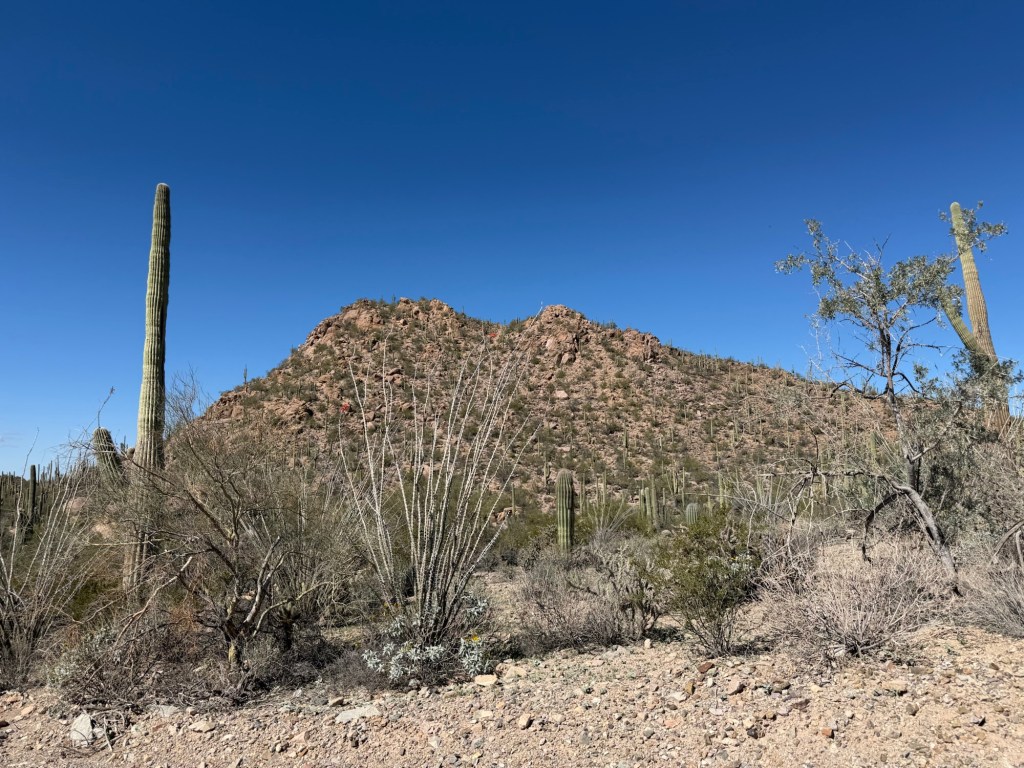
Thousands of green whiskers.
Then you realize those whiskers are trees. Cactus trees. A whole forest of them as far as you can see!
Some stand tall and straight like pillars. Others have begun to grow arms that stretch upward in the classic cactus pose that looks like the Taco Time NW logo. We later learned that saguaros spend decades simply growing taller before they begin branching. Many of the ones we saw were still young by desert standards.
The older saguaros were pocked with holes where birds and other animals make their homes to escape the intense desert heat. Woodpeckers carve cavities into the cactus, and once they move on, other birds and small animals often take over the space. The interior of a saguaro can be significantly cooler than the outside air, creating a kind of natural desert air conditioner for the creatures that live there.
We pulled into the Red Hills Visitor Center to get our bearings and decided to start simple with the Desert Discovery Nature Trail just down the road. The trail was flat and easy, a gentle introduction to these towering new friends.
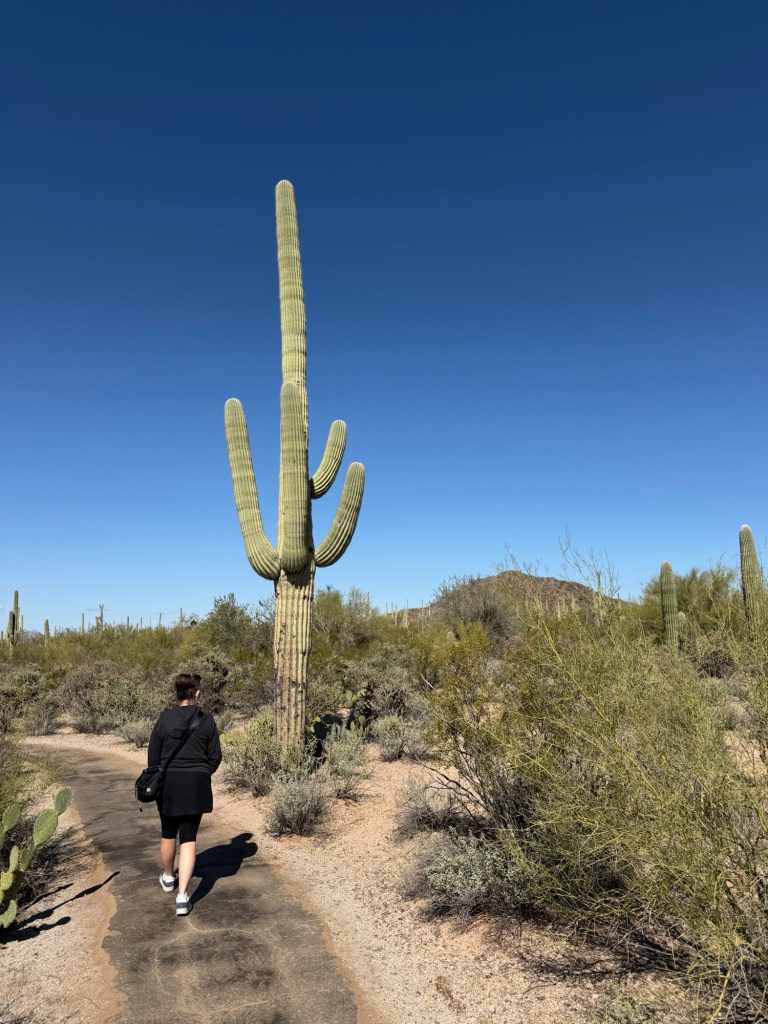
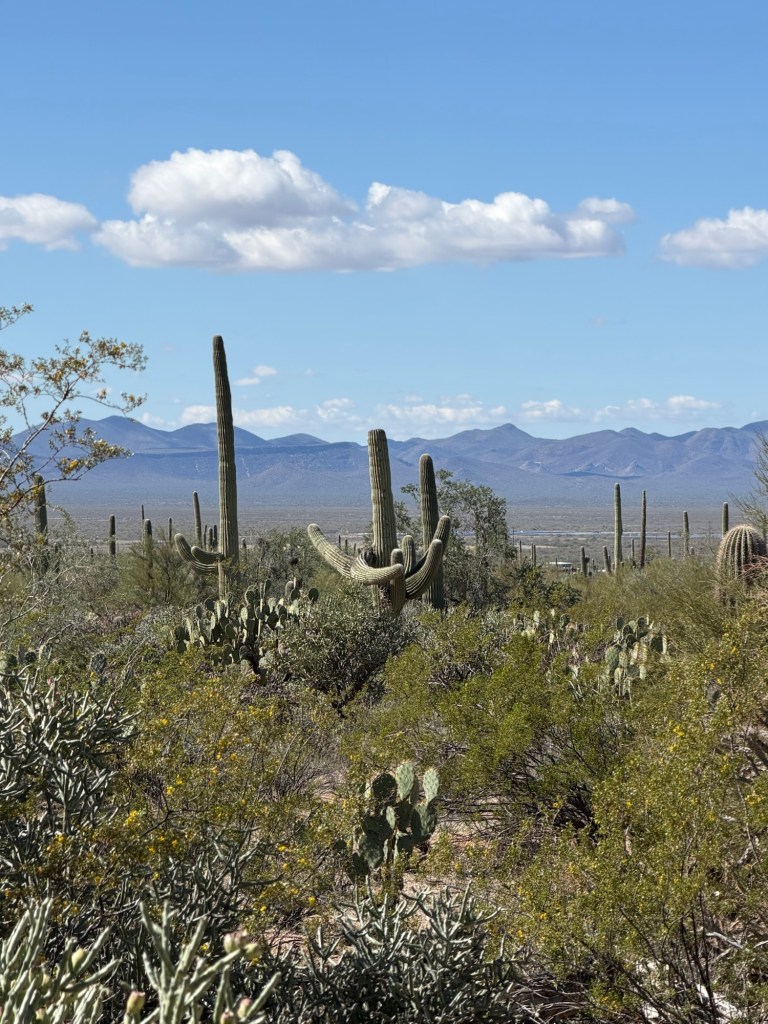
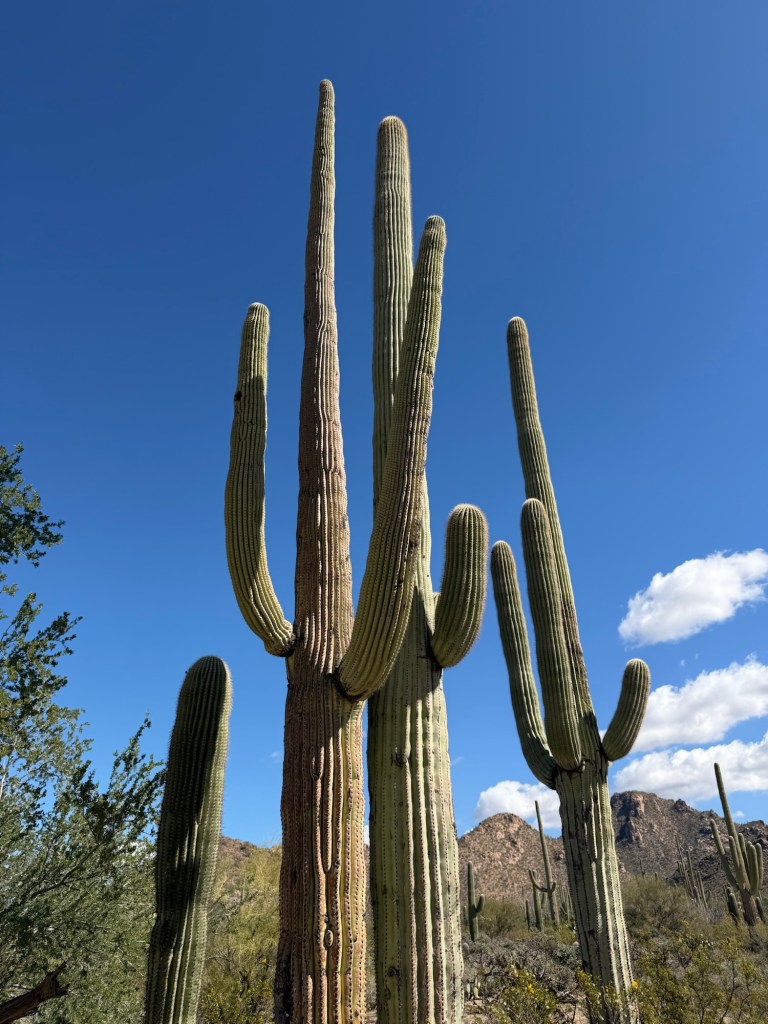
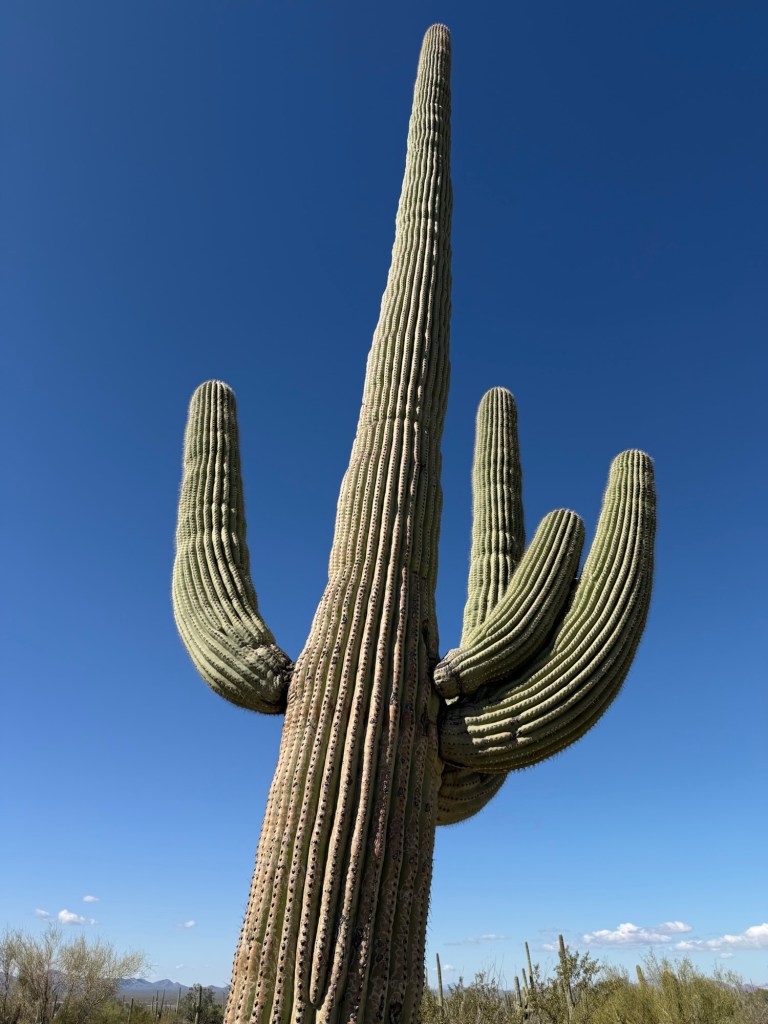
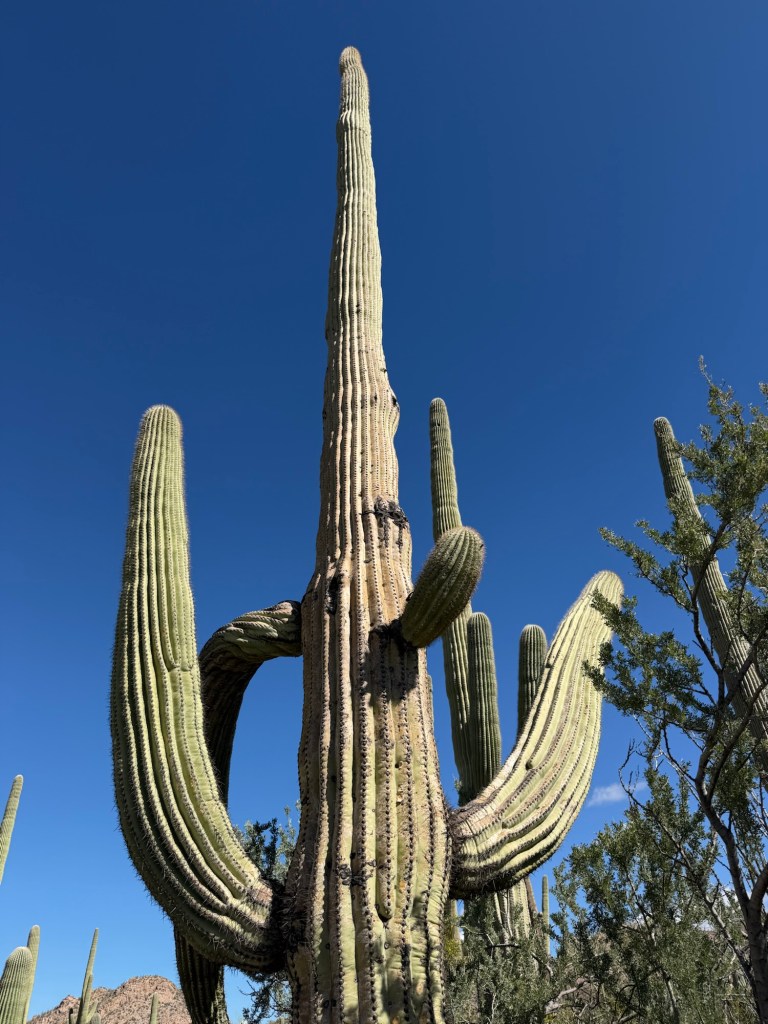
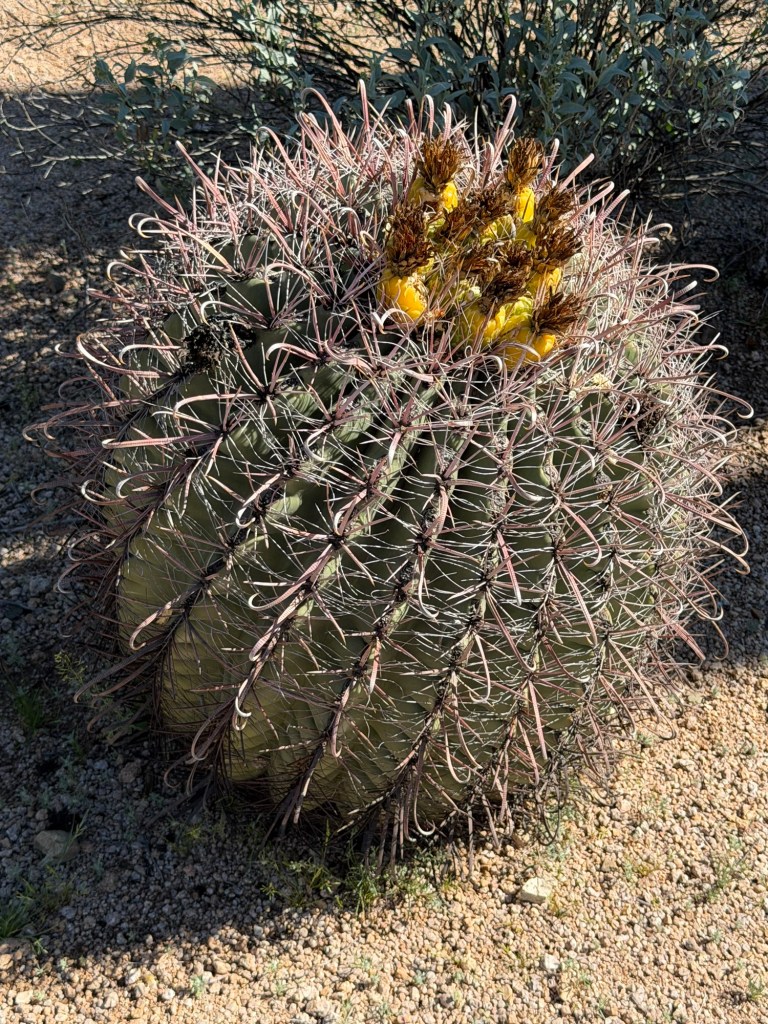
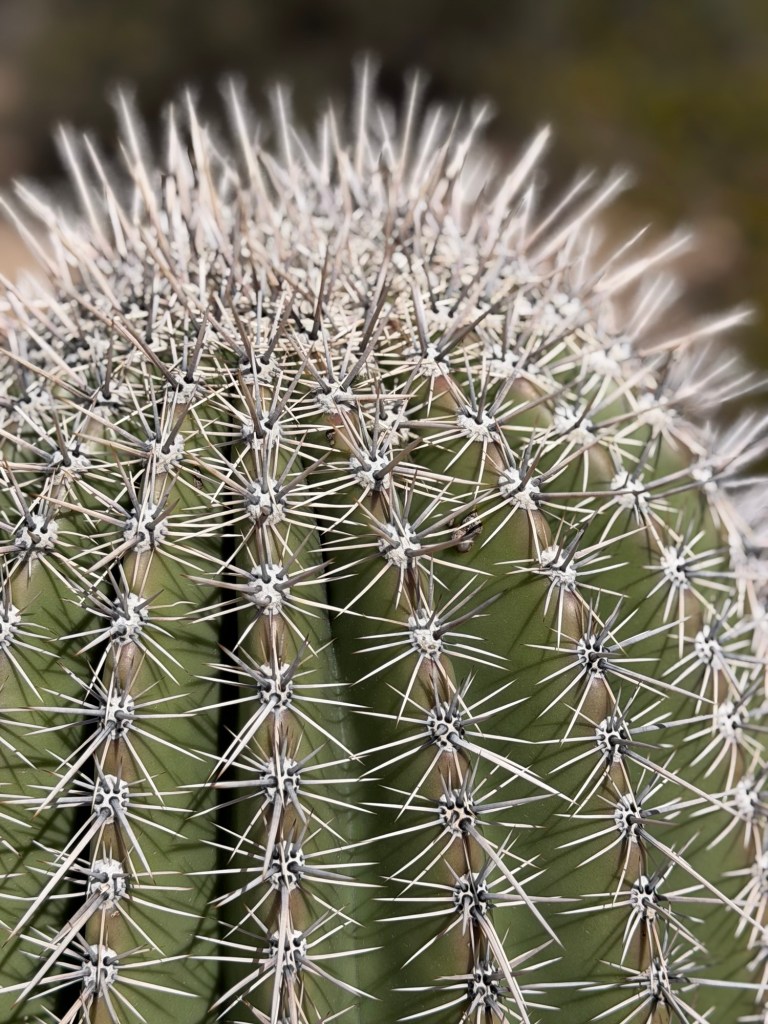
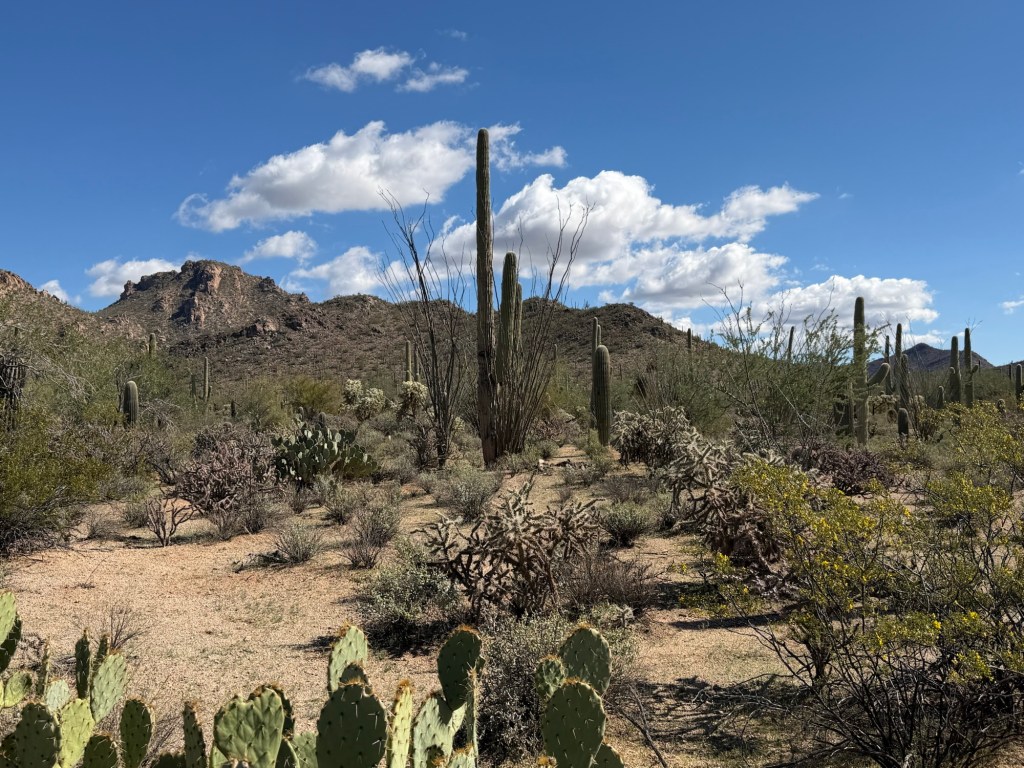
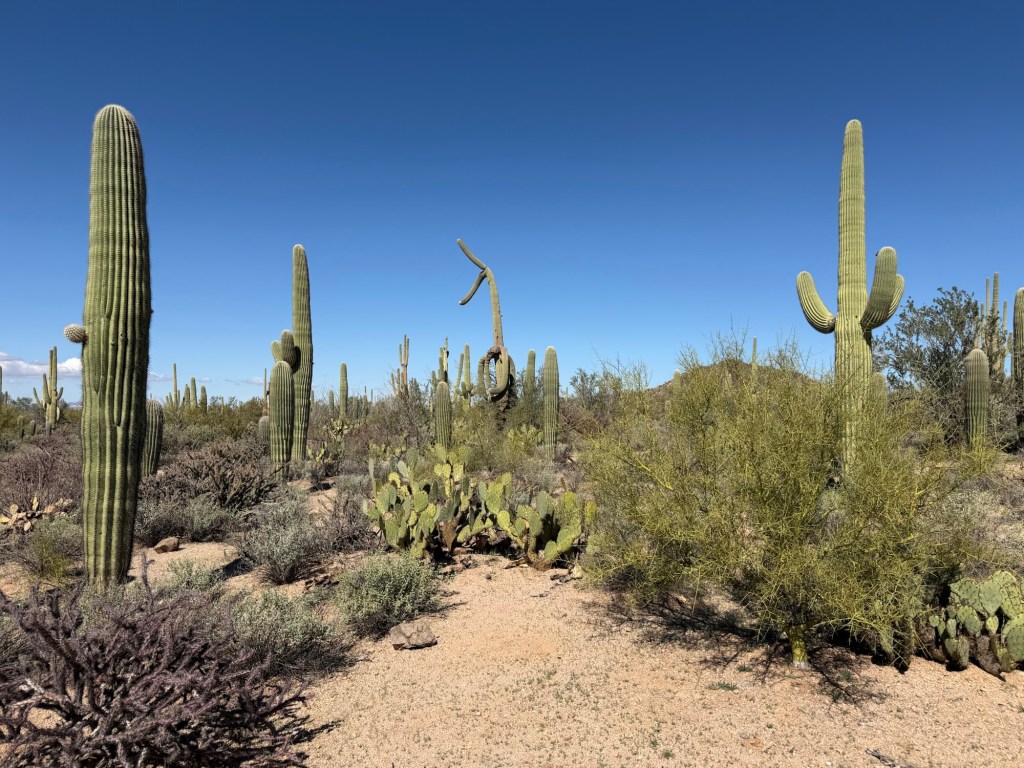
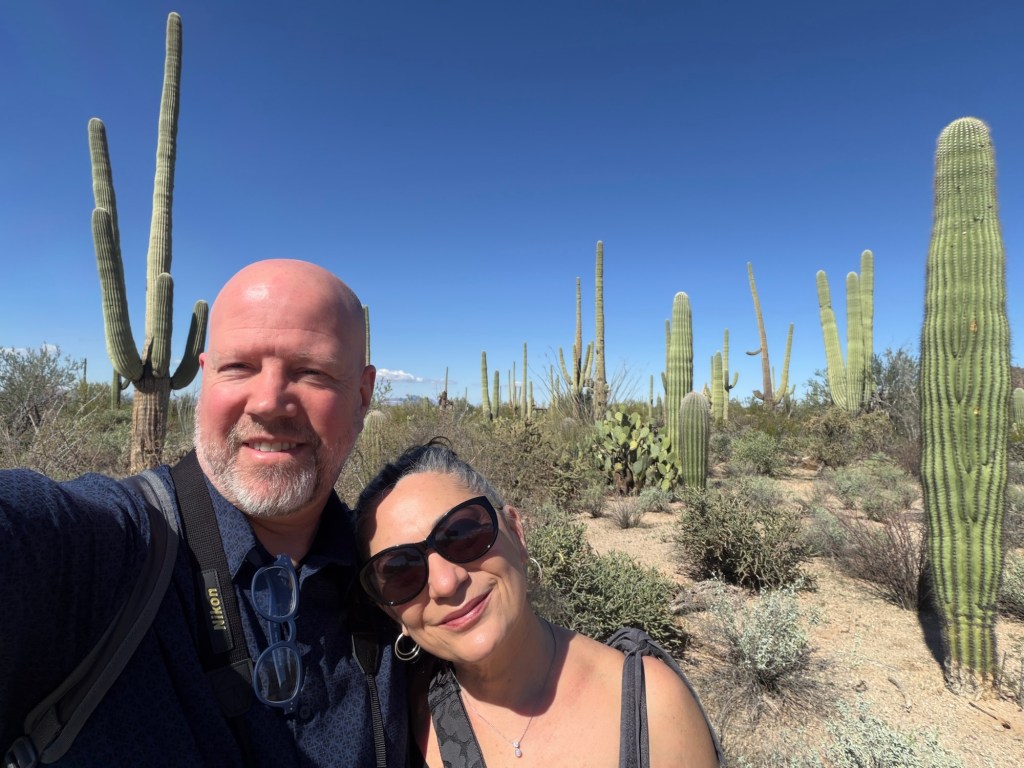
Walking in the desert among the saguaros is a strange experience. The desert is intensely quiet, and some of the saguaros are massive, taller than a two story building. They do not crowd you or each other. Each one seems to have its own designated space to grow, branch, and provide shelter for other creatures.
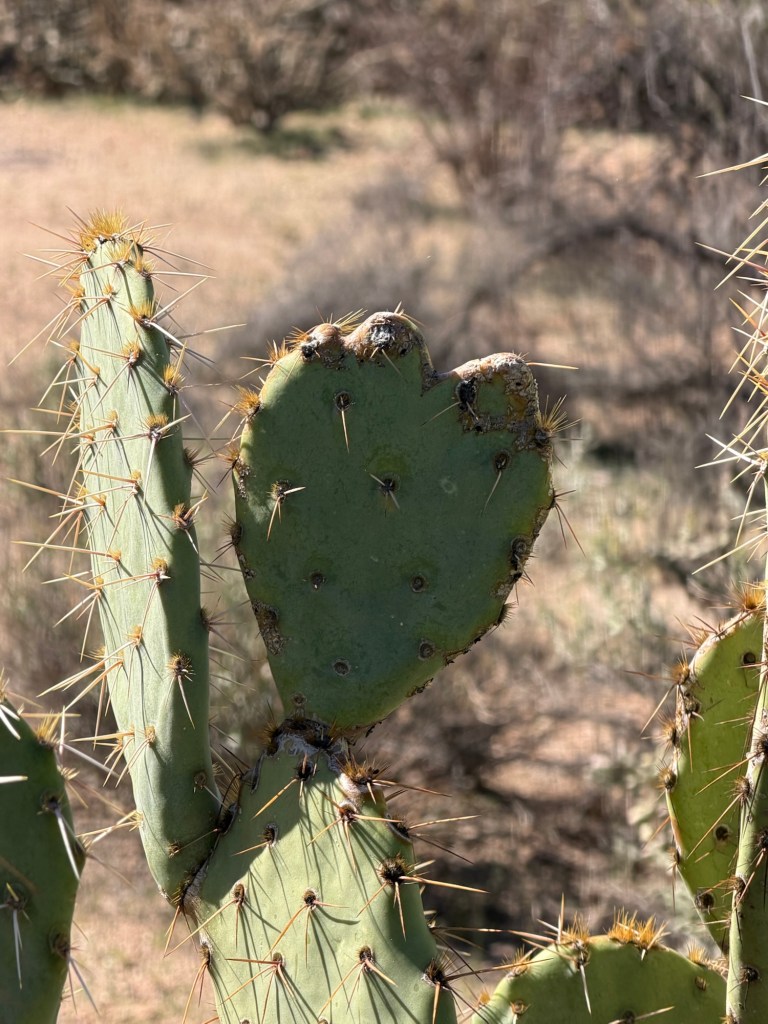
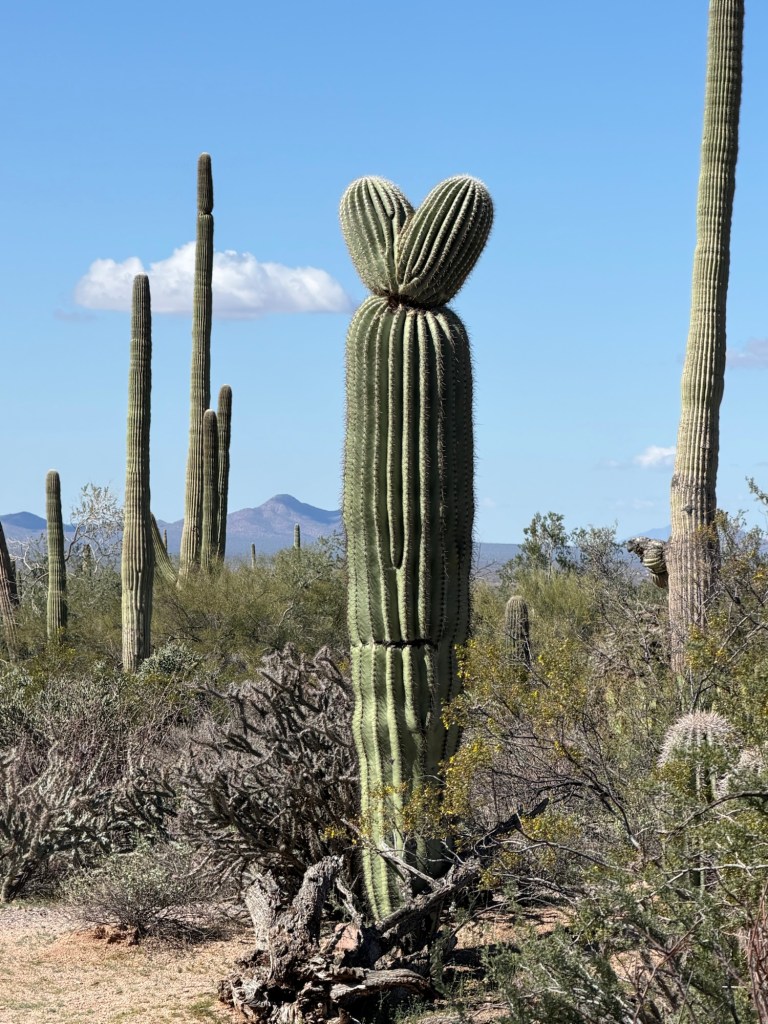
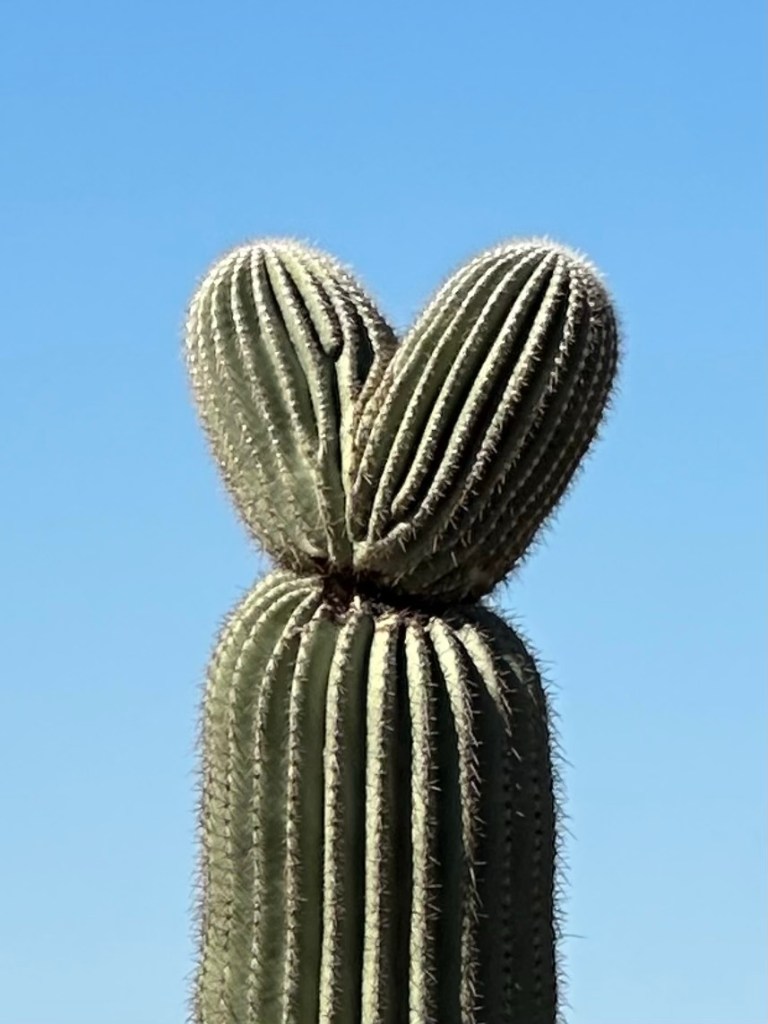
It was also Valentine’s Day, which the desert seemed eager to acknowledge. Along the trail we encountered several heart shaped cacti.
From there we drove the Scenic Bajada Loop Drive. It was more of a scenic drive than a hiking expedition because parking was scarce and several trailheads were closed due to aggressive bees, preventing us from seeing some petroglyphs. So we admired what we could from the road, which was plenty. Every bend revealed another hillside crowded with saguaros or fresh desert flowers blooming due to the recent rains. Hence the aggressive bees.
After the park we headed to the Arizona-Sonoran Desert Museum, which is far more than a museum. It is part zoo, part botanical garden, part desert classroom, and entirely beautiful place to explore. If Saguaro National Park introduces you to the landscape, the museum explains the characters that live in it.
We wandered through trails filled with desert plants and landscapes that looked like sculptures and paintings. We saw animals perfectly evolved for this environment. Coyotes, javelina, lizards, birds of prey, and creatures that thrive in these harsh conditions.
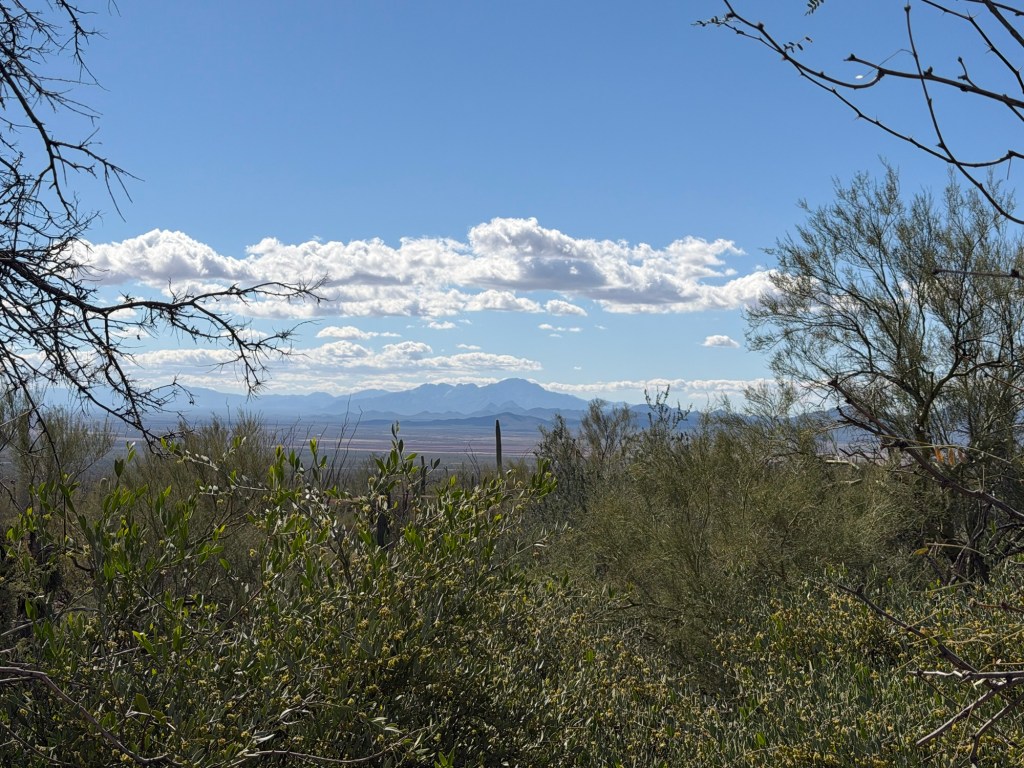
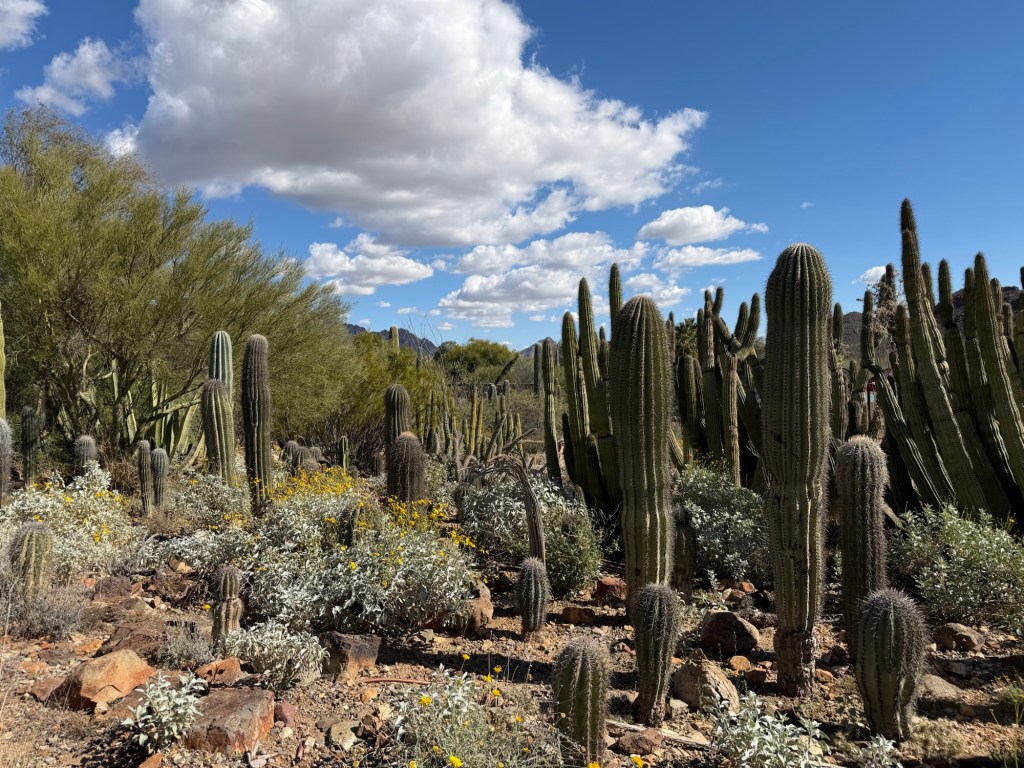
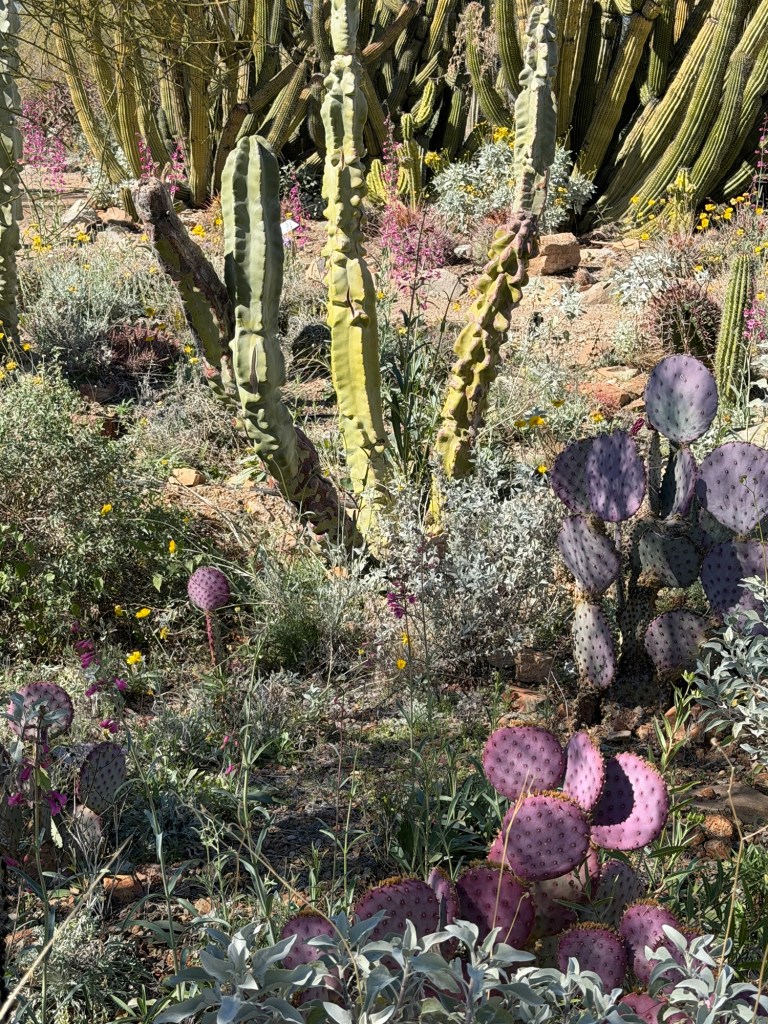
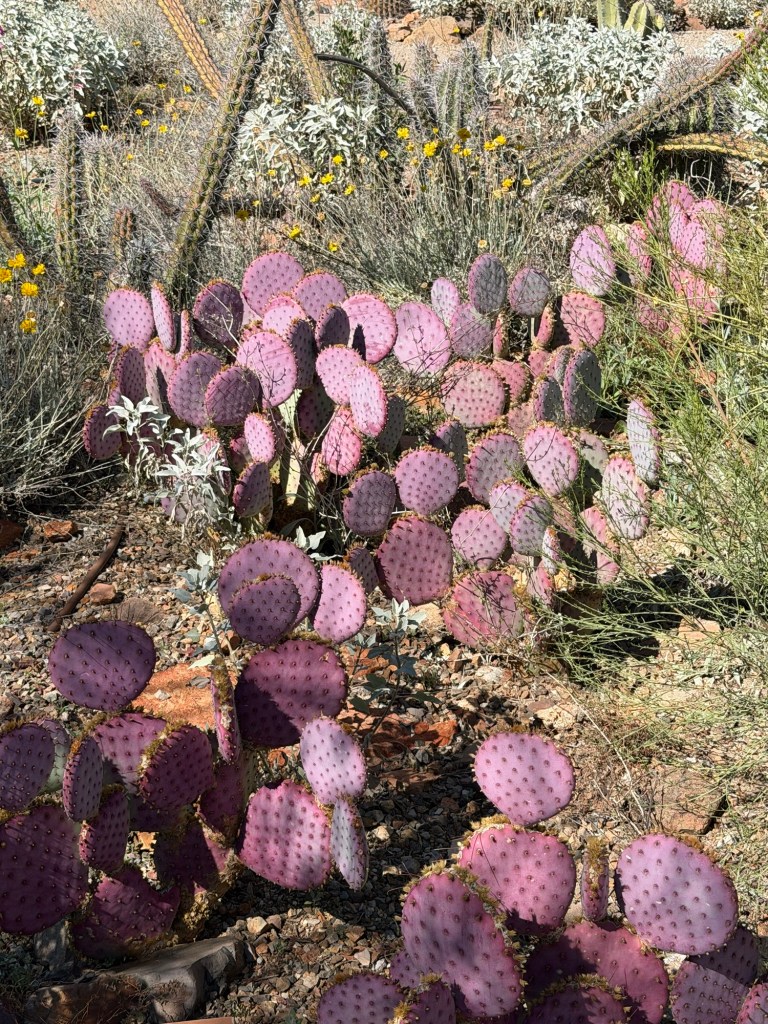
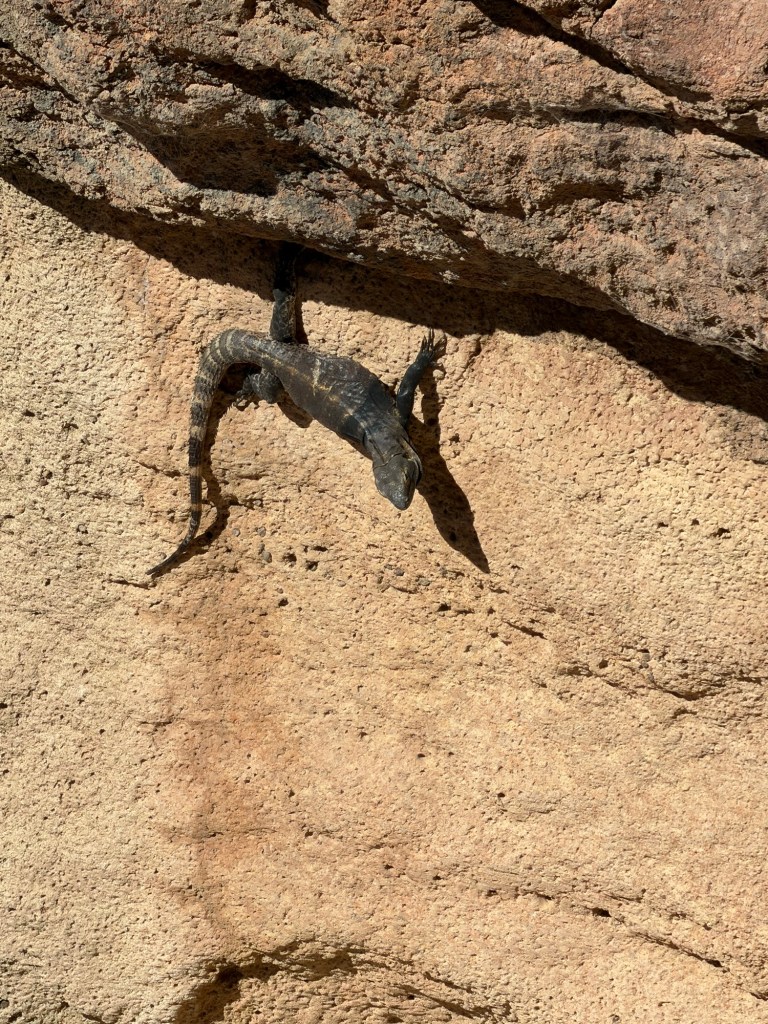
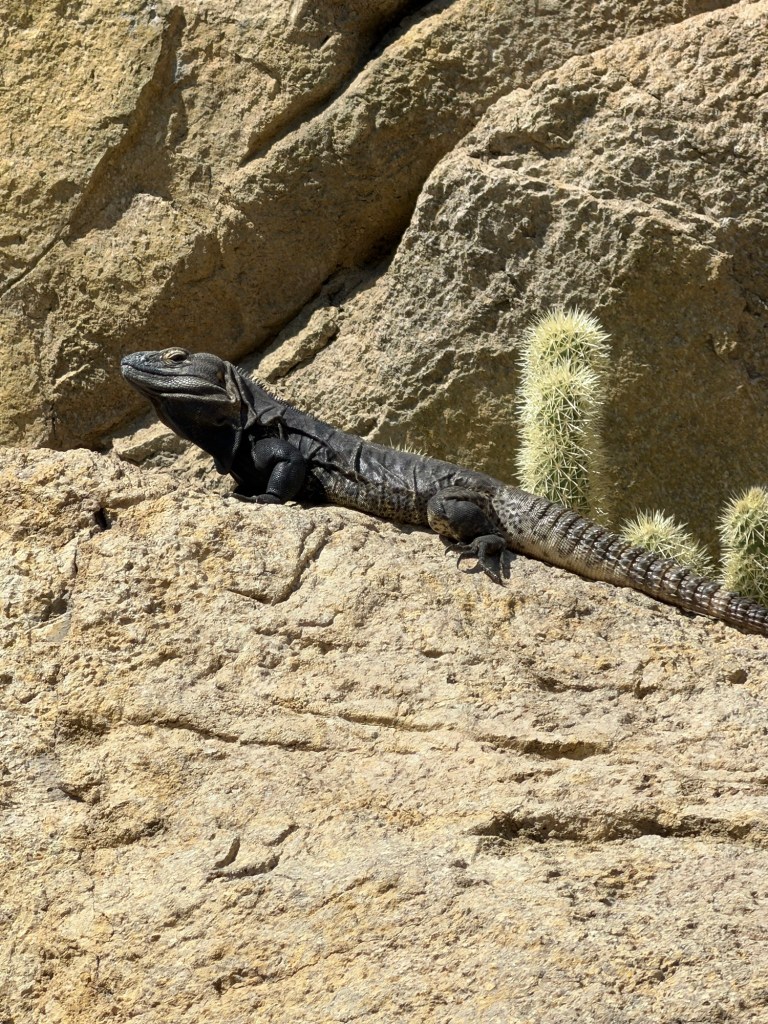
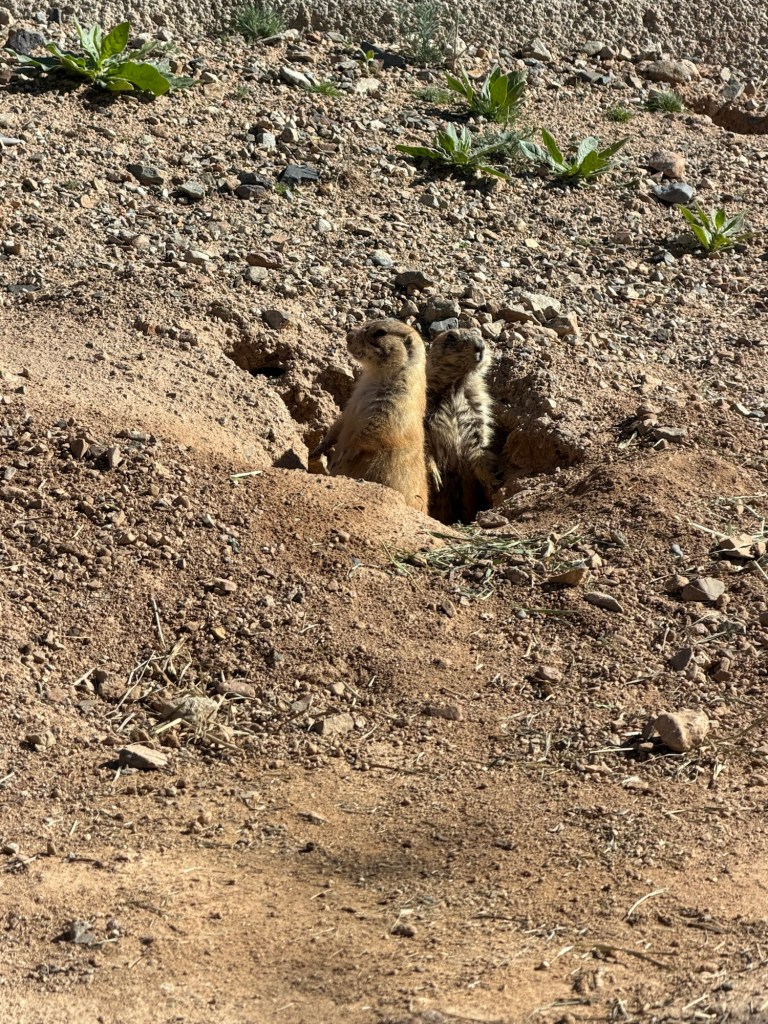
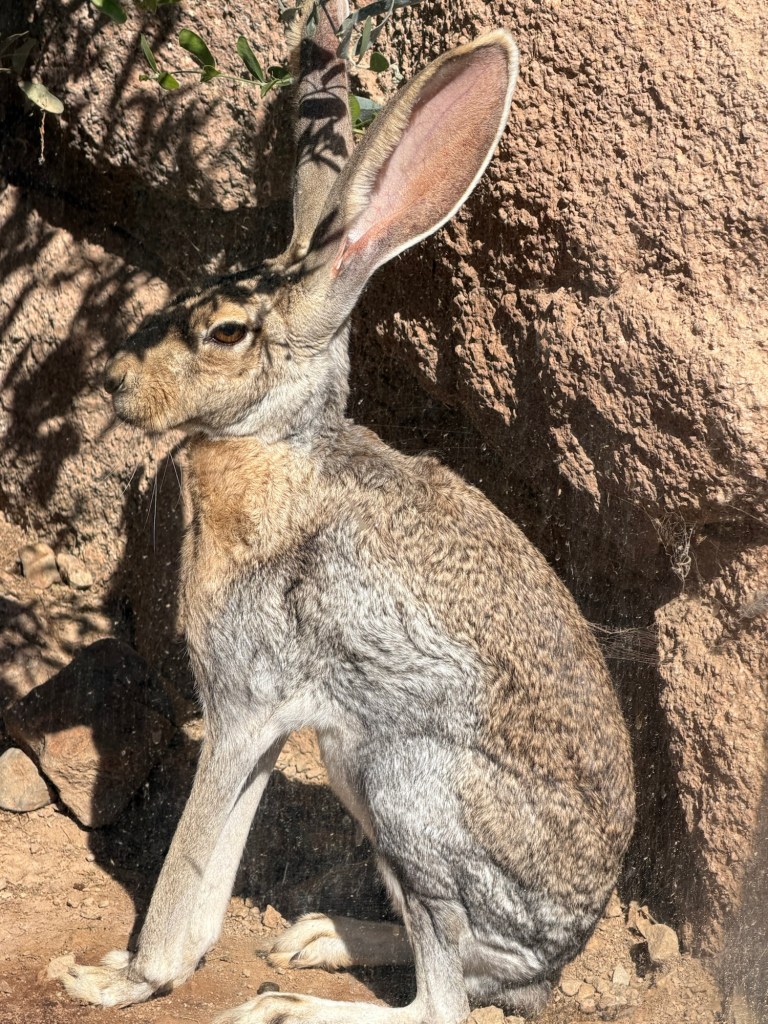
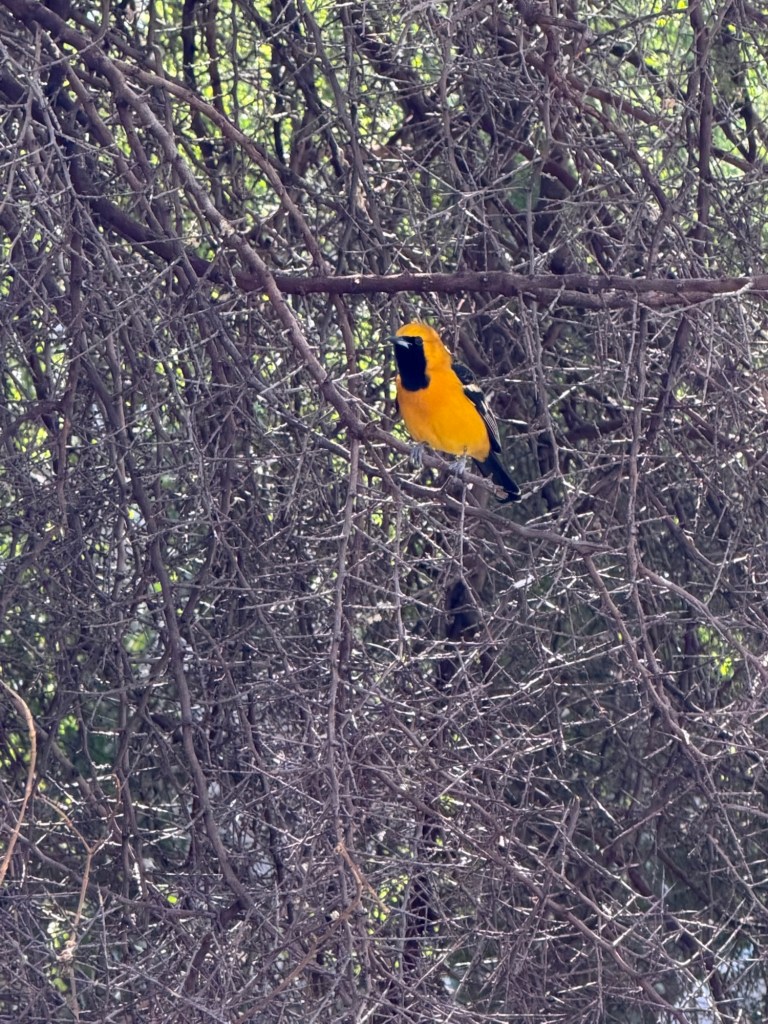
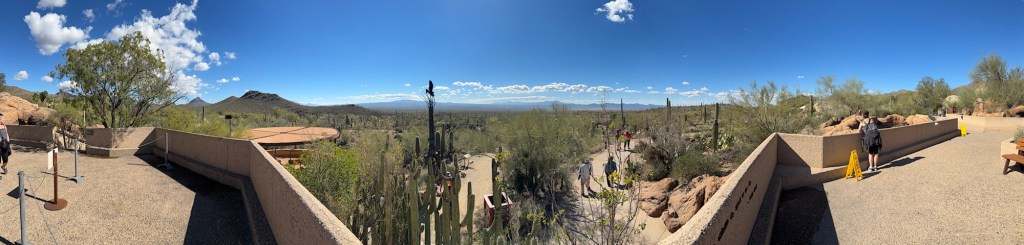
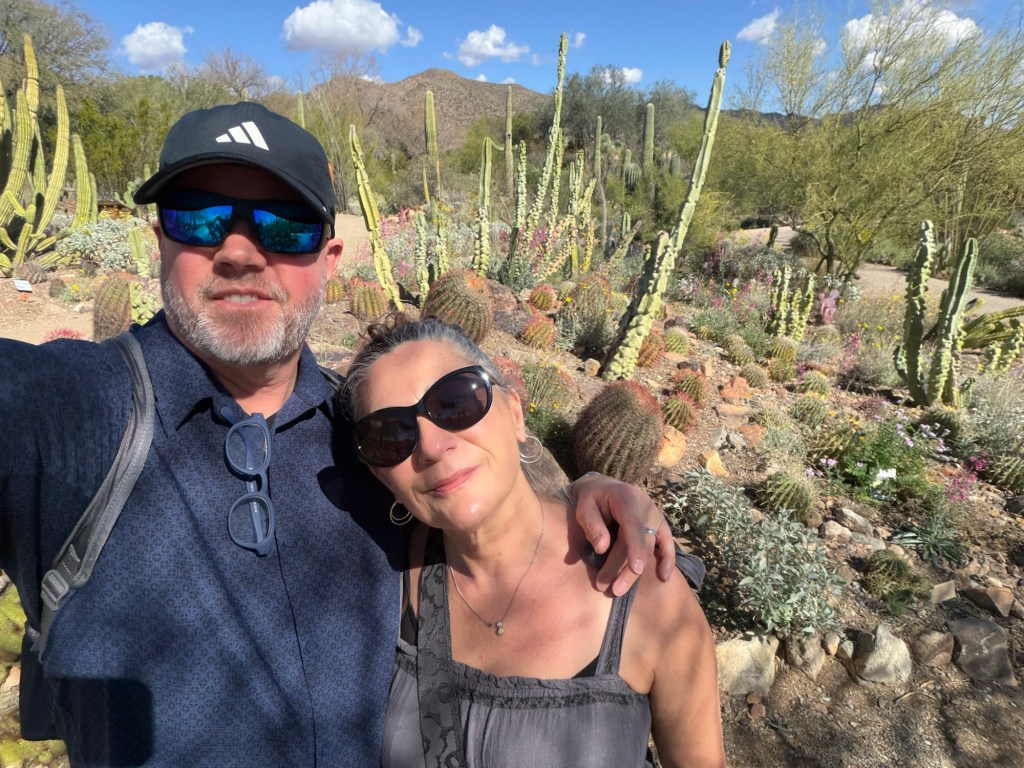
The museum also includes an old mining exhibit complete with tunnels and displays of gems and minerals. After spending the previous day wandering the Tucson Gem and Mineral Show it felt like a fitting encore.
What struck me most was the sense of diversity. The Sonoran desert is not as empty as it appears. It is teeming with life, each plant and animal perfectly adapted, and sometimes hidden into a beautiful but brutal landscape.
Late in the afternoon we started the drive back toward Tucson. We briefly considered stopping at Old Tucson, the famous western film location where countless cowboy movies were filmed. From the road it looked a bit commercialized and slightly cheesy, so we decided to pass.
Literally.
We doubled back and took the winding West Gates Pass Road toward the city. The road curves through the hills like a coiled rattlesnake, offering sweepingly dangerous views of the desert below. As the sun dropped lower, the saguaros cast long shadows that stretched across the landscape like sundials keeping desert time. Apparently this is a very popular Instagram spot to see the saguaros in silhouette, but we could not wait for the sun to set. We had Valentine’s Day dinner reservations to get to.
Back in Tucson we headed downtown for a Valentine’s Day dinner at Chela’s Latin Cuisine. The atmosphere was lively, hip, and inviting. Unfortunately the food did not quite live up to the mood.
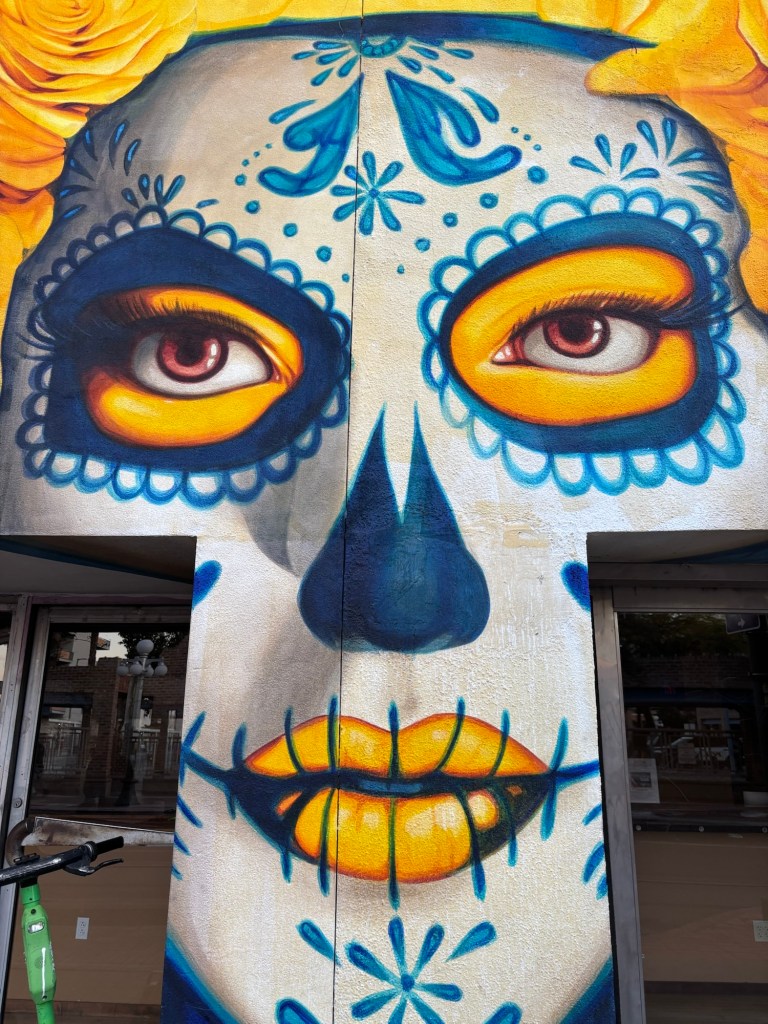
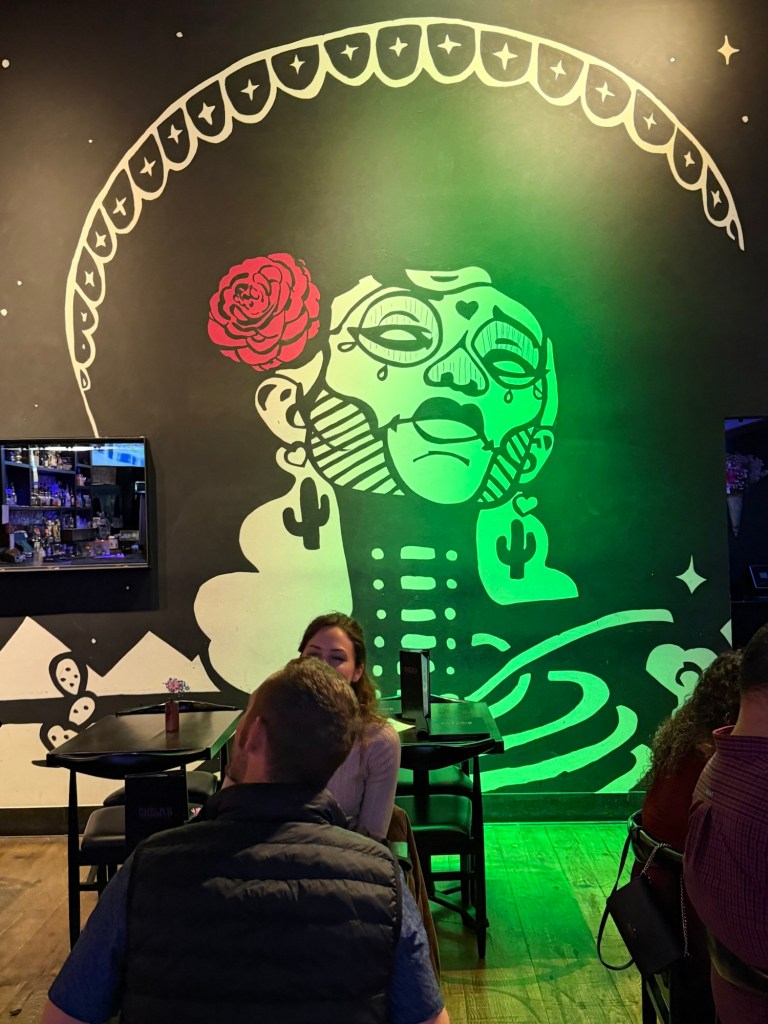


Still, the day itself had already delivered us the desert as dessert.



 Sabbatikos
Leave a comment