Day two in Atacama had us on the road at dawn, before the sun came over the Andes. We were on our way to the Los Flamencos Reserva Nacional, both Sector Soncor as well as Sector Miscanti Meniques.
But first our guides insisted on making us a sunrise breakfast in the long morning shadow of the Licancabur Volcano.
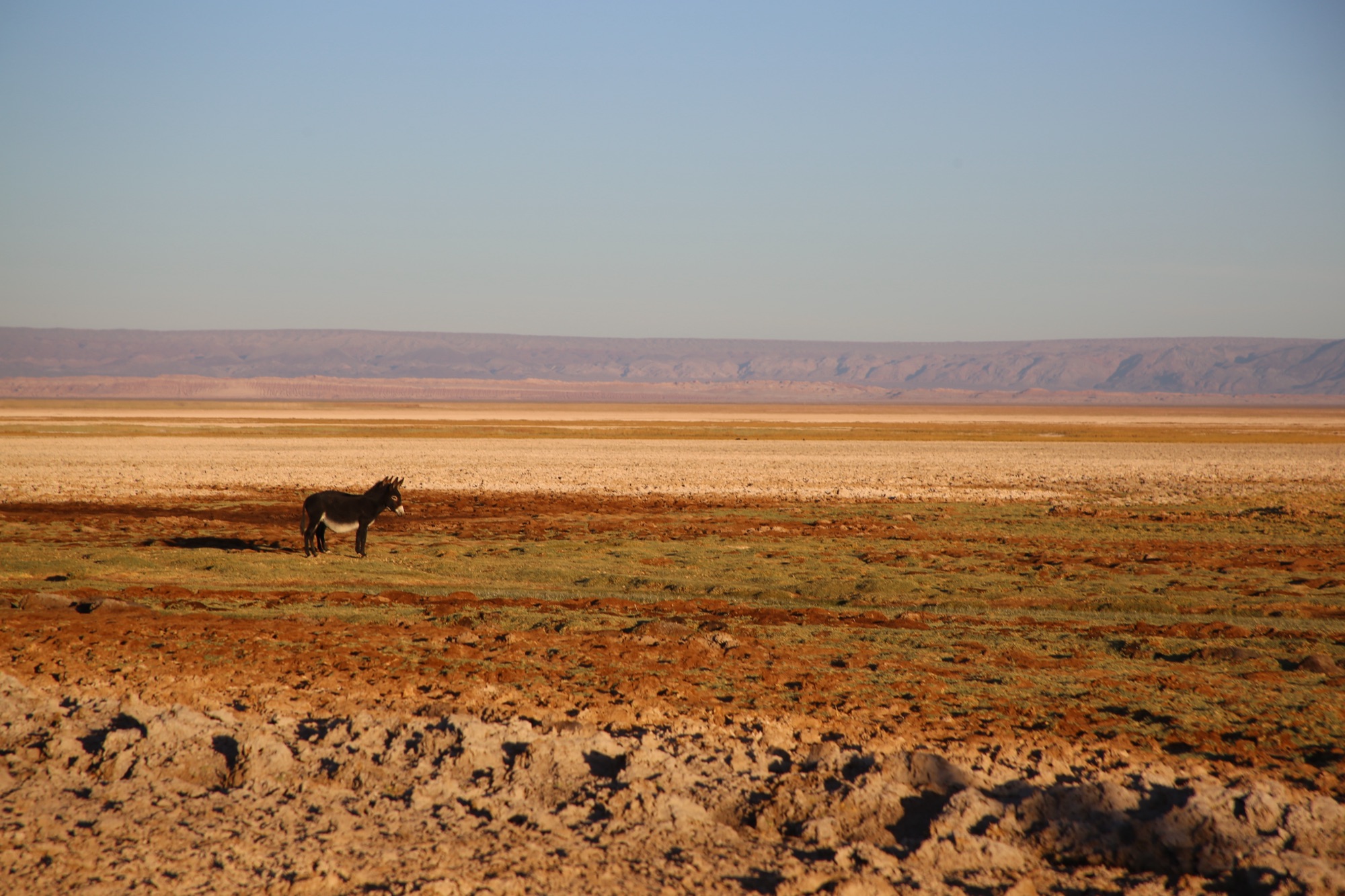
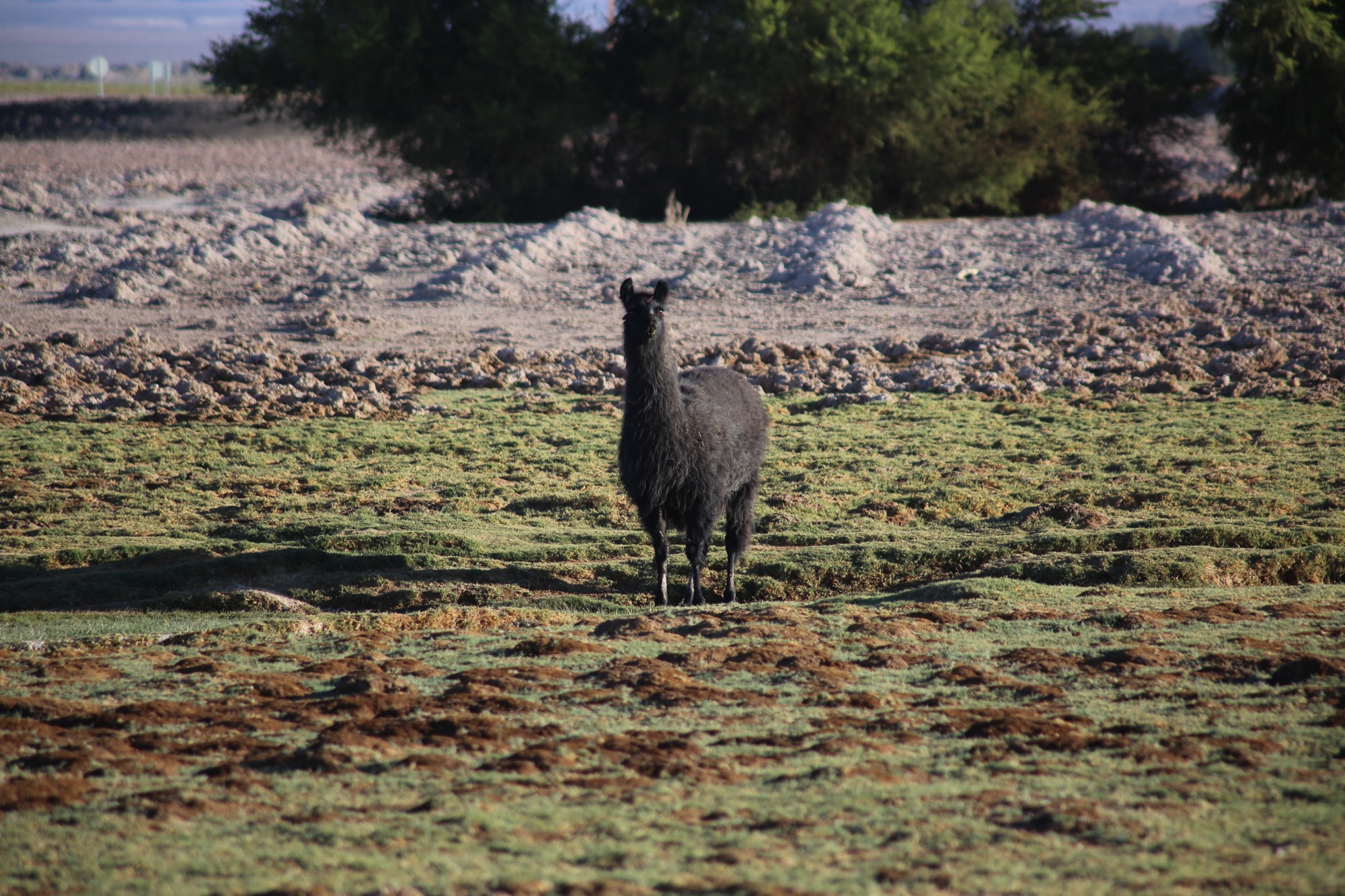
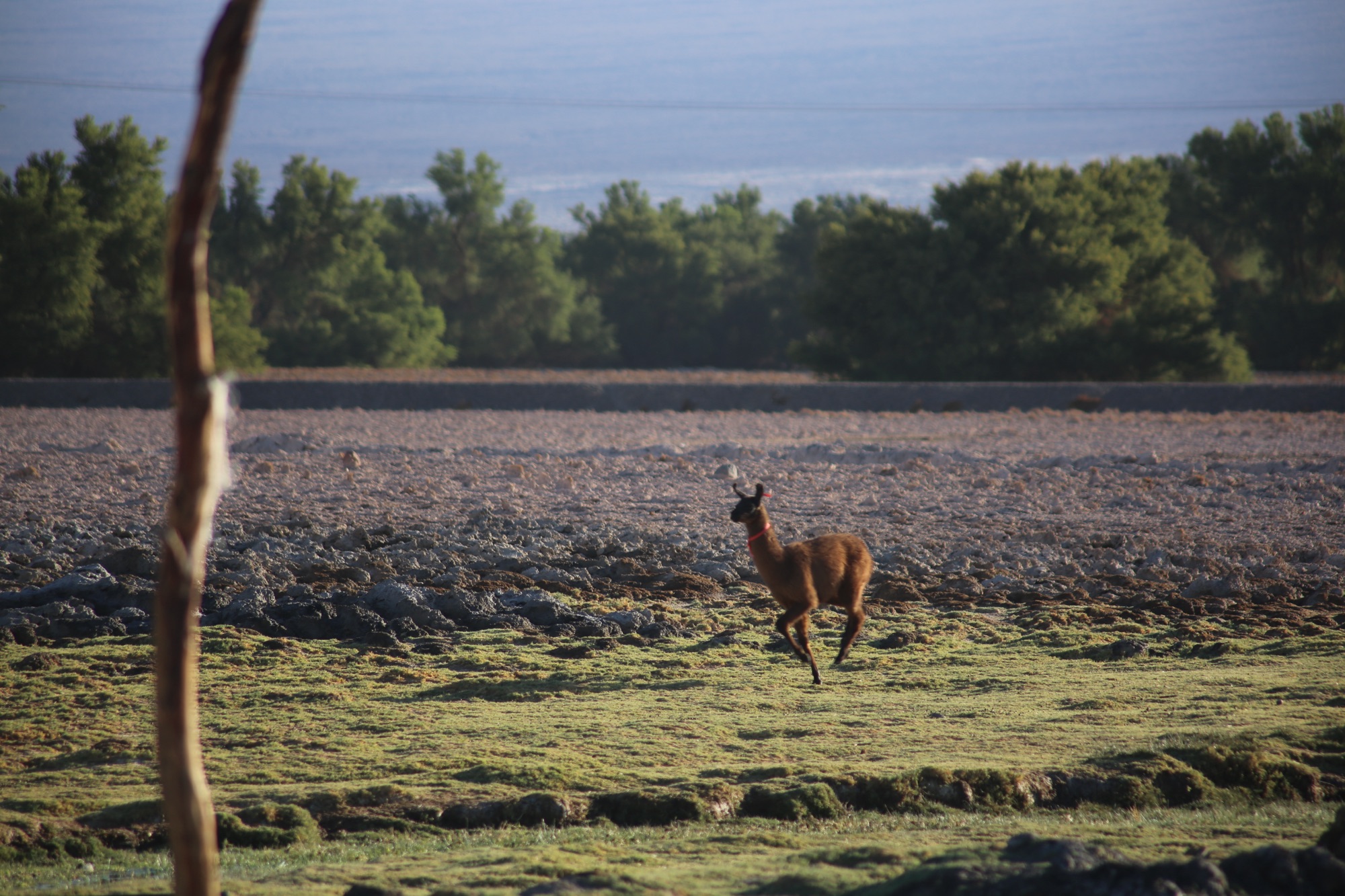
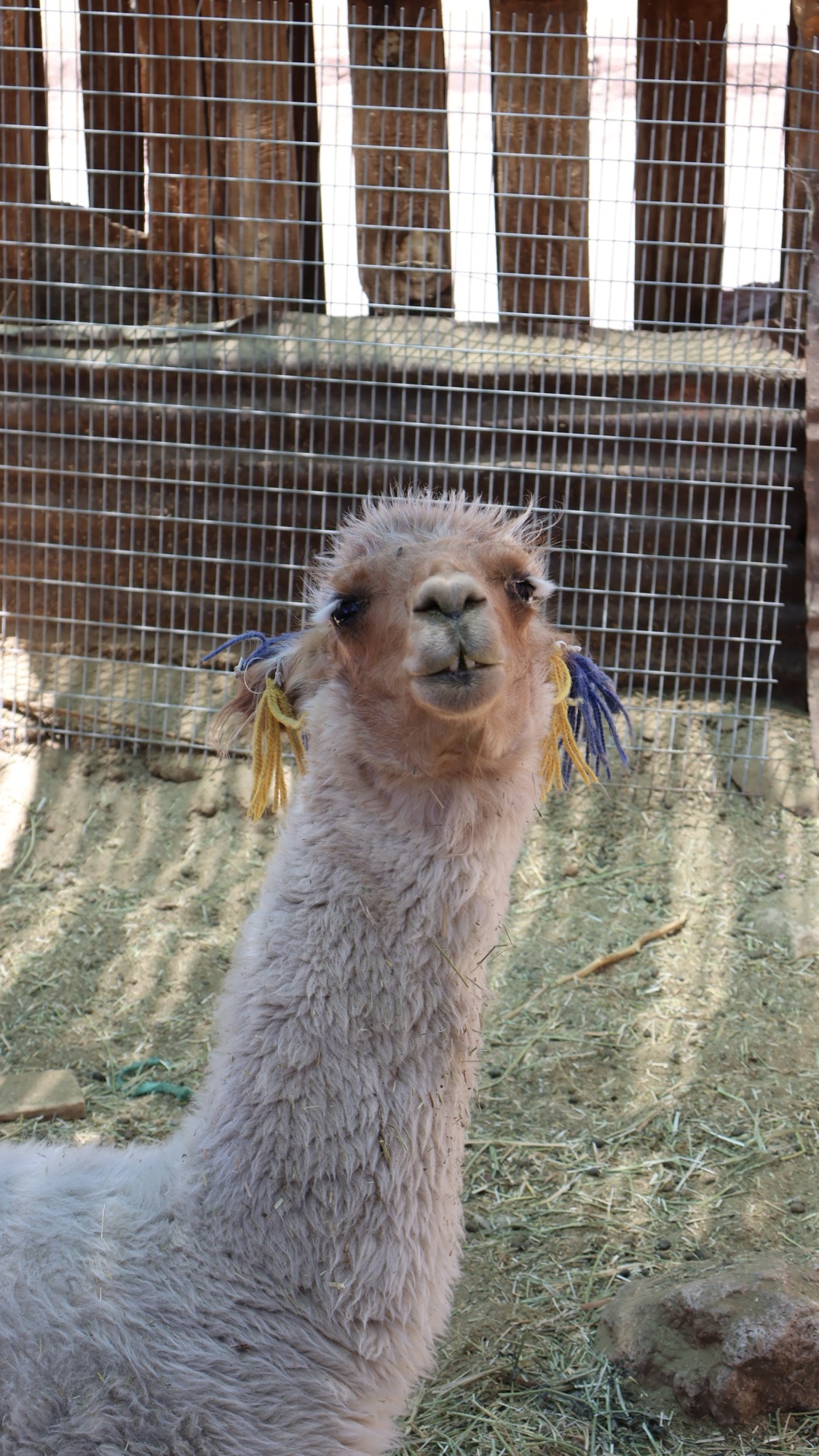
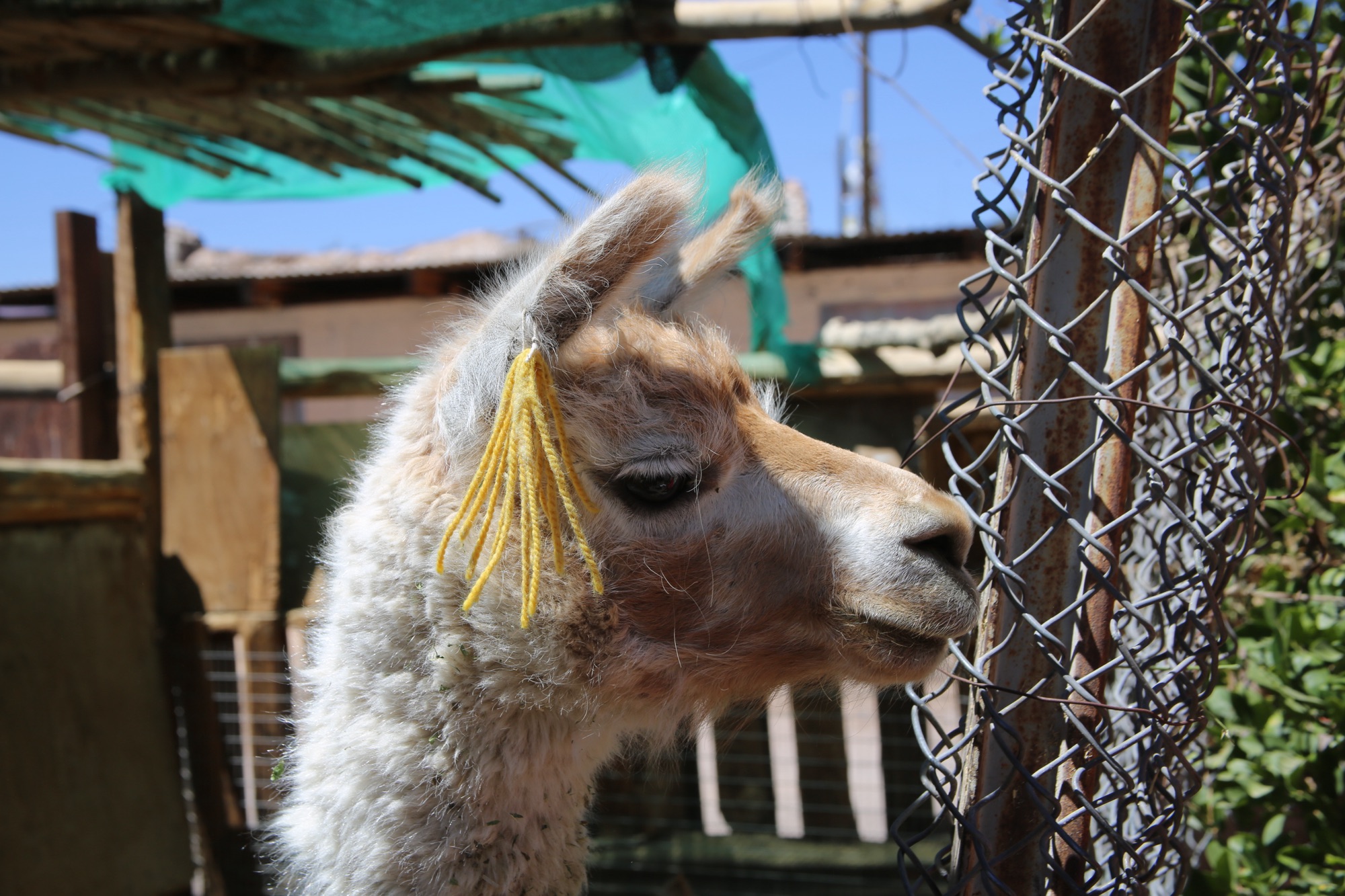
We explored the area, once a farm, now roaming freely with wild burros and llamas (llamas may belong to local farmers if they have colorful collars or tags of yarn attached to them). We saw several of both; first several burros coming together to graze near us, and then a family of llamas (a domesticated camelid derived from guanacos that are both farmed and run wild in the area).






The breakfast was truly incredible; the most heavenly freshly baked baguette (still warm), perfectly ripe fork smashed avocados, local eggs scrambled on a hot plate in the back of Sprinter van, French press coffee, fruit, and cheese.
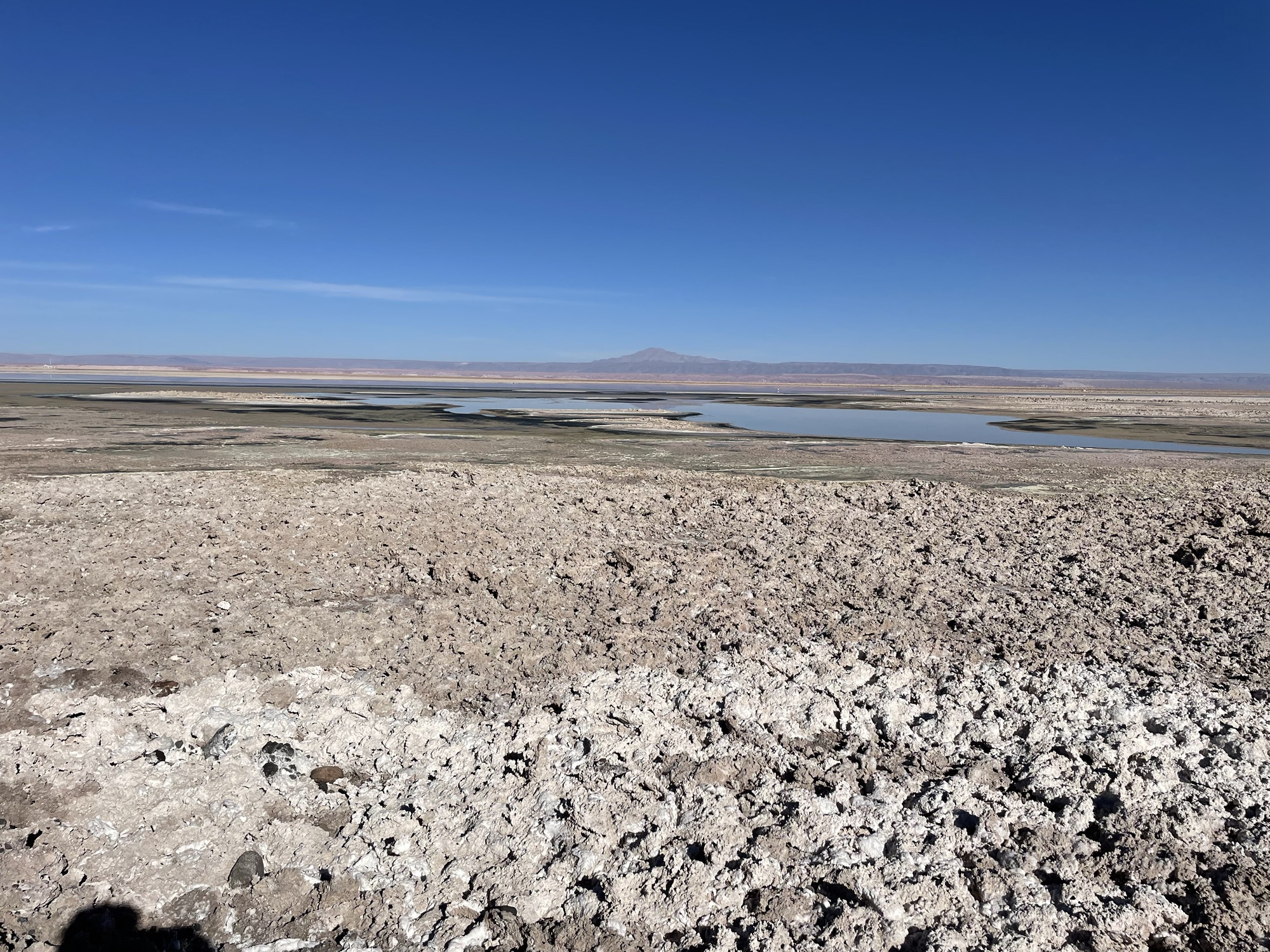
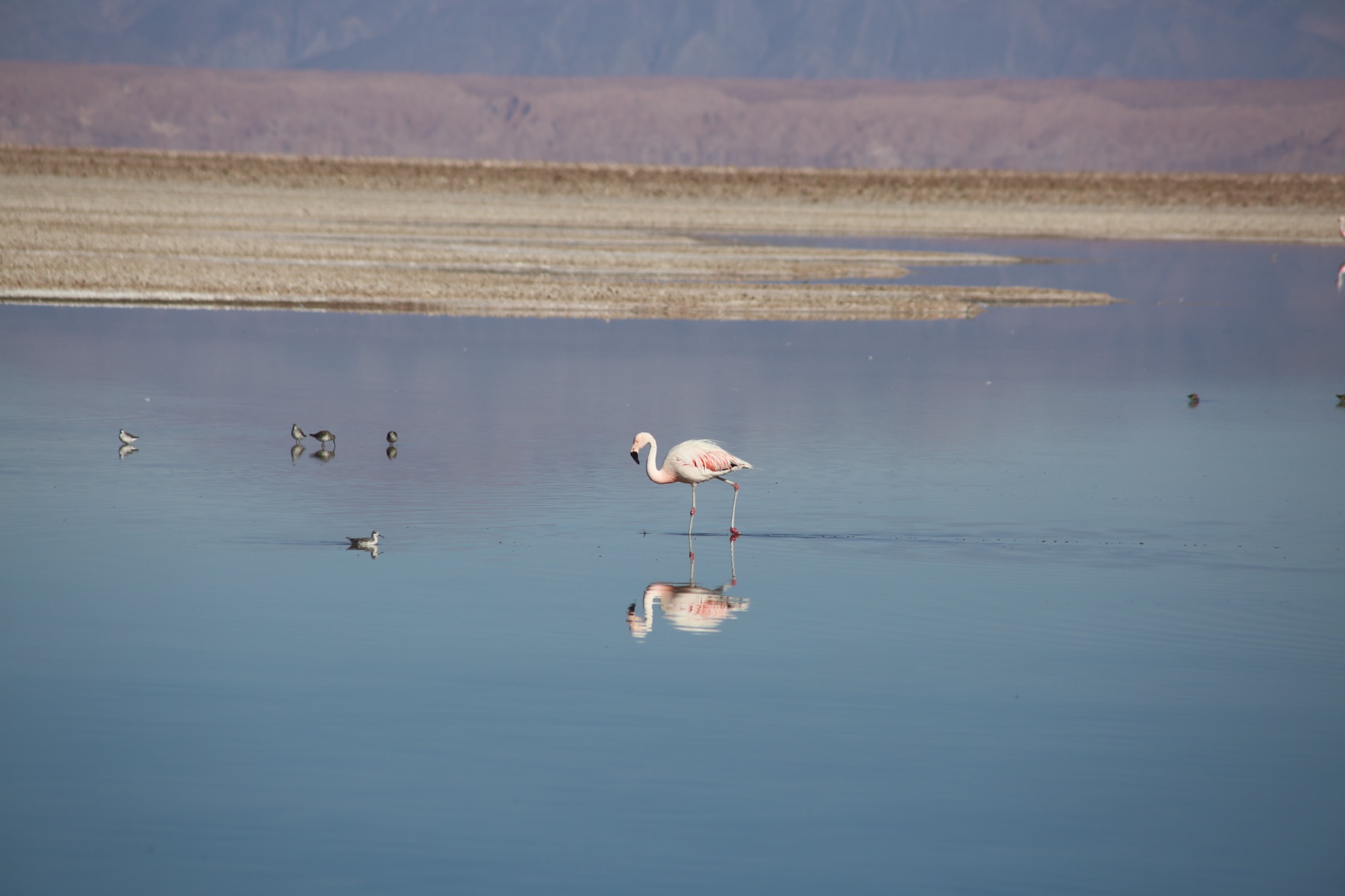
With our bellies full and the sun up we started our drive about an hour away across the salt flats to Sector Soncor to see flamingos in the wild. Hopefully, we’d see all three kinds of flamingos from this area (Chileno, James, and Andeno, with subtle variations between them). We saw both Chileno and Andeno.


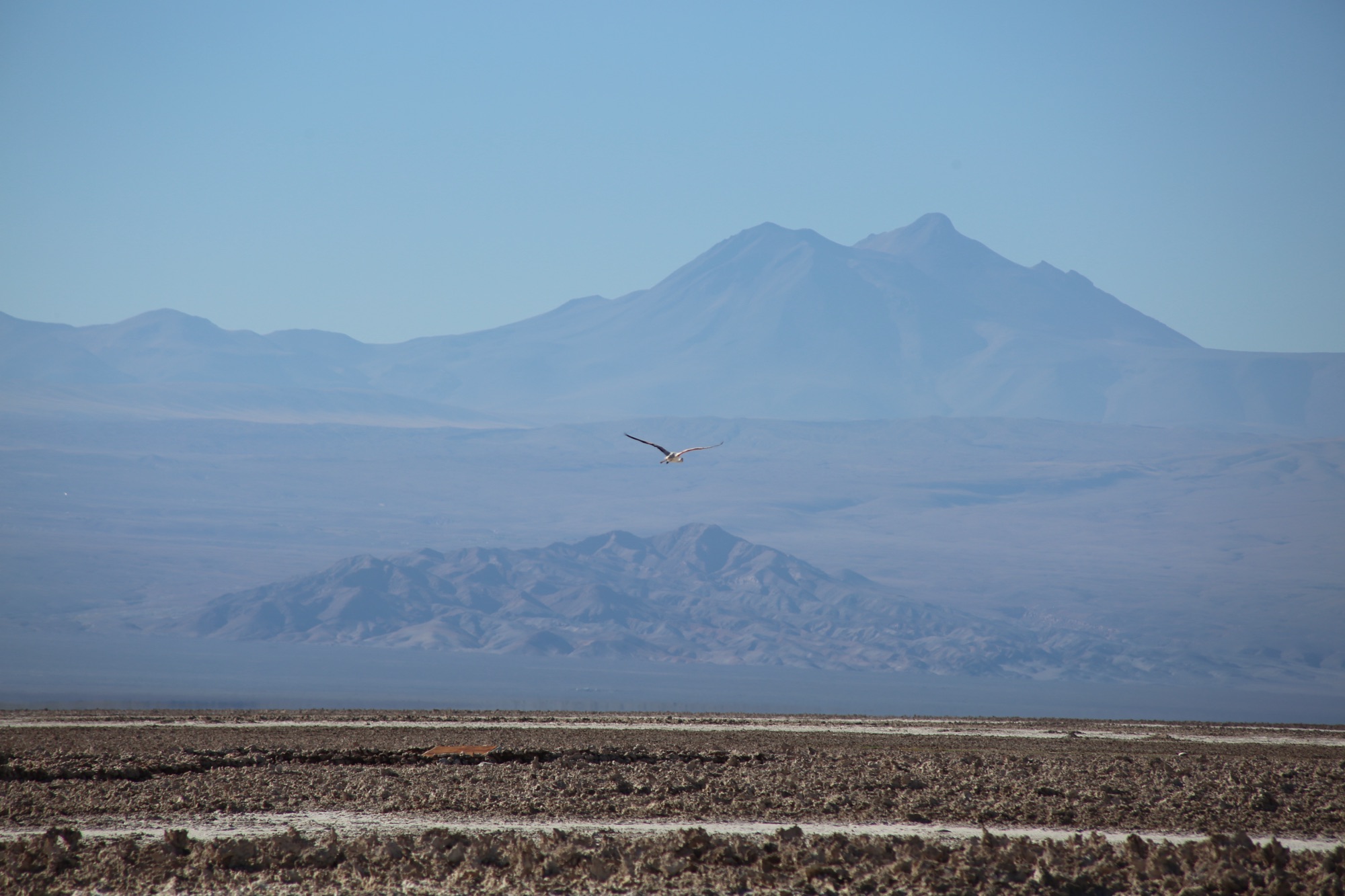


We learned a lot about flamingos, like how they only lay one egg a year, and must eat brine shrimp (which gives them their pink color) nearly 16 hours a day, and how the male flamingos care for the young, and how one species of flamingos is the only one to “dance” in circles to stir up the mud and raise brine shrimp (remember Sea Monkeys?) to the surface to eat.






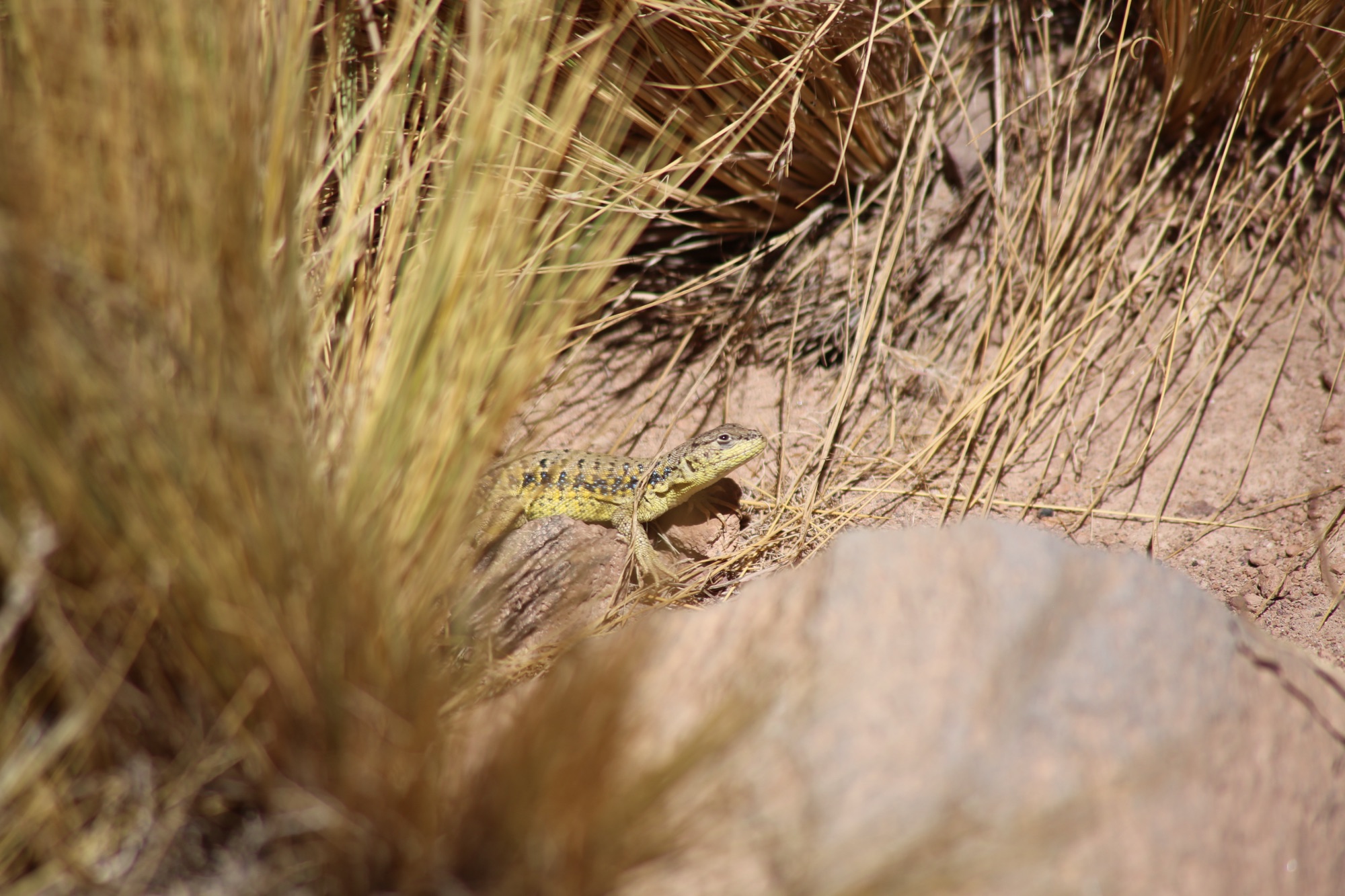
We were also lucky enough to see a Fabian’s Lizard, a native species to Chile, that lives at high altitude (we were at about 9000 ft) in hot climates and can become cannibalistic when food is scarce and territories invaded by their kin. They live in the salty, stark, and jagged environment near the muddy shores the flamingos and other smaller birds thrive in.
Unfortunately, our guide told us that The National Reserve of Sector Soncor would be closing the next month or so, and probably indefinitely. It seems the salty environs they live in is also a source of lithium, that requires water and evaporation to produce. Here’s an article about it. The Atacama region is rich in many metals and minerals, such as copper, lithium, sulfur, and more, which puts many of these animals at risk.
With that news we left the salt flats of the Atacama and headed to the high plateau to visit Sector Miscanti Meniques.
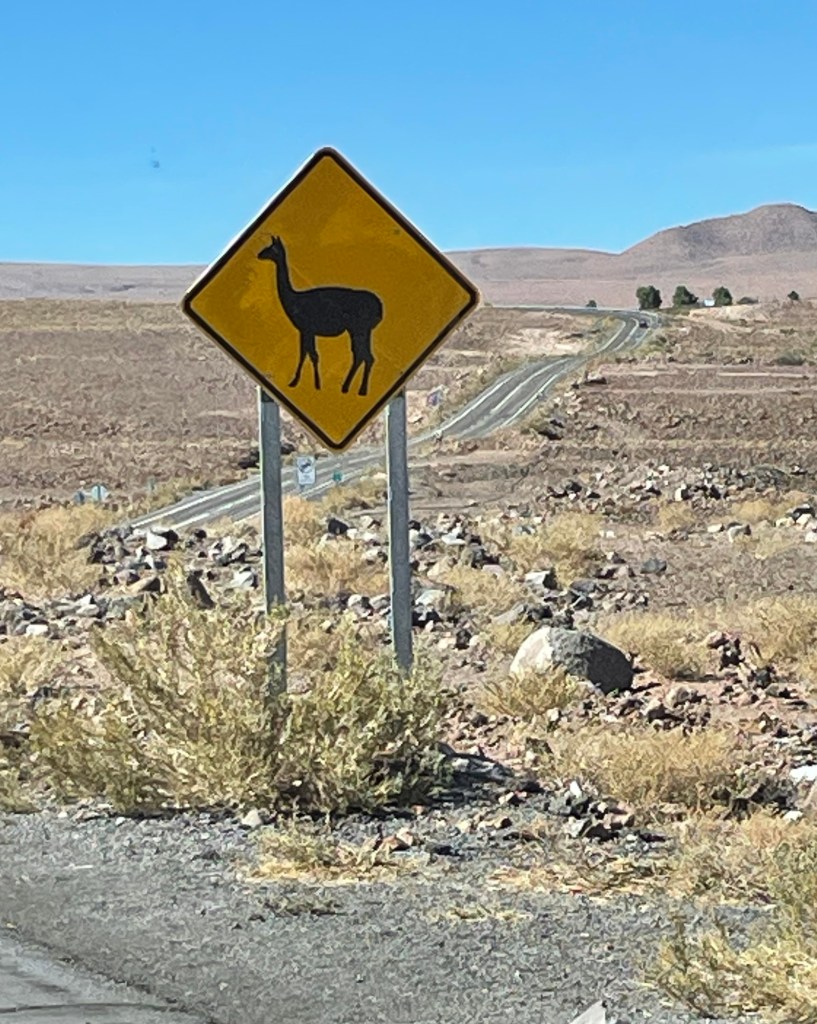
As we started heading up the mountains we hoped we’d see more wildlife. You can tell you are going to have wild animals in the Atacama Desert, when you see the signs: Guanco (also works for llamas and Vicuña), Andean Fox, Rheas (locally known as Suri).


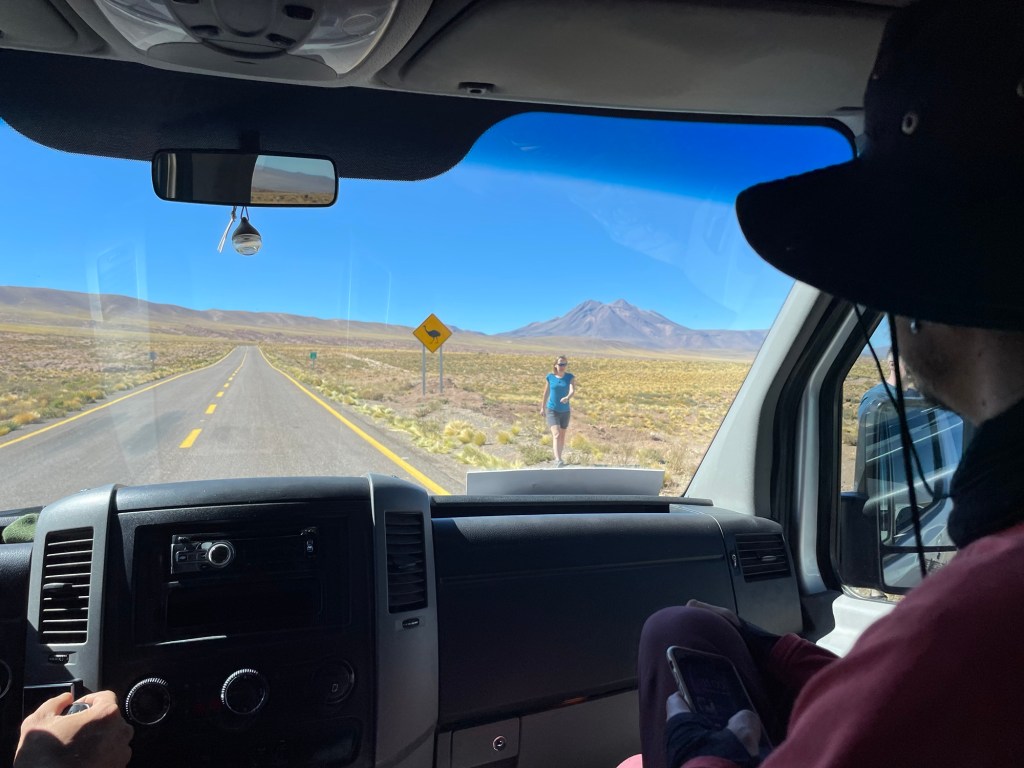
And sure enough, we happened to see a few Rhea (Suri) just off the side of the road, apparently a rare occurrence!

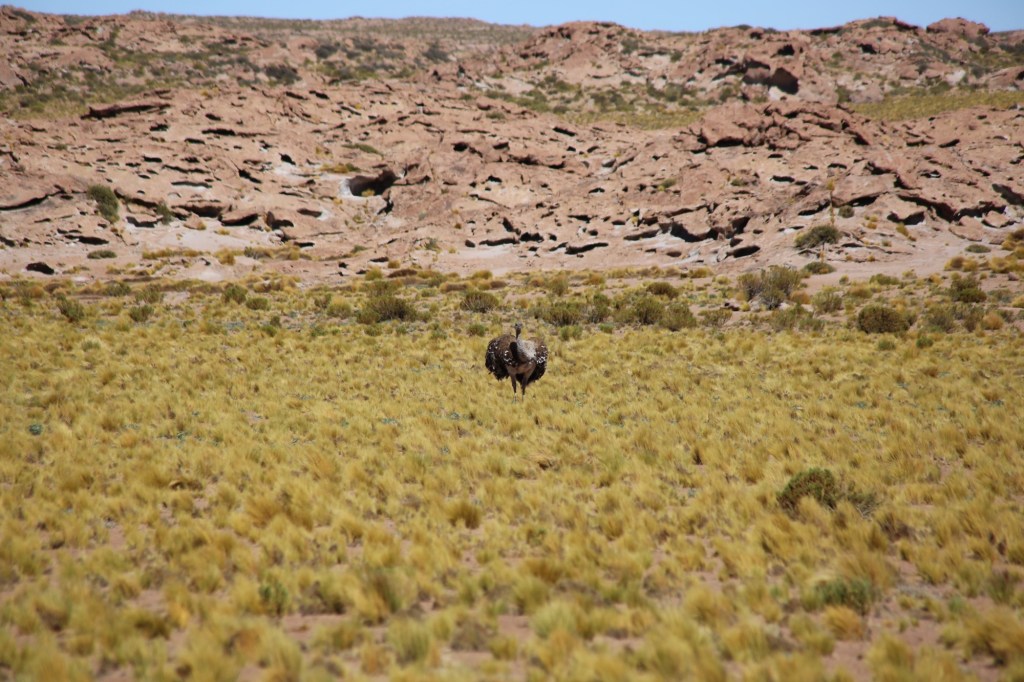
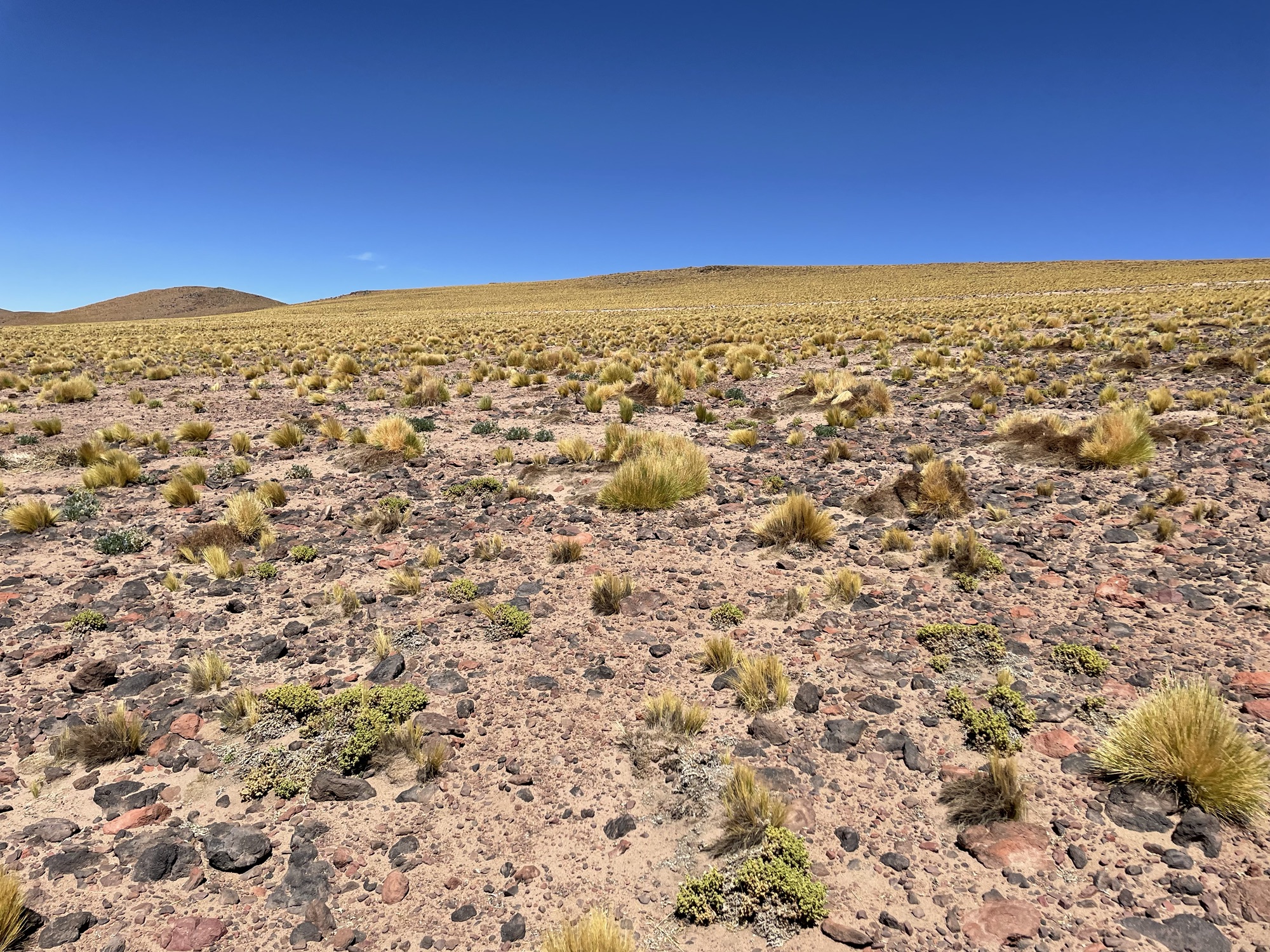
Something we noticed about the Atacama region is the landscape changes every 5-10 minutes of driving. You can go from sand to gravel to large rocks or strange rock formations within minutes. Even the color of the rock may change from minute to minute or from one side of the road to the other.
Sector Miscanti Meniques sits at 14000 feet, where there are two lagoons, nestled amongst active volcanos that provide sustenance to flamingos, vacuña, lizards, coots, and other wildlife. We were lucky enough to see all of the above with our breathtaking hike, both figuratively and literally given the views and the altitude. We started our hike with panoramic view of Lake Miscanti.

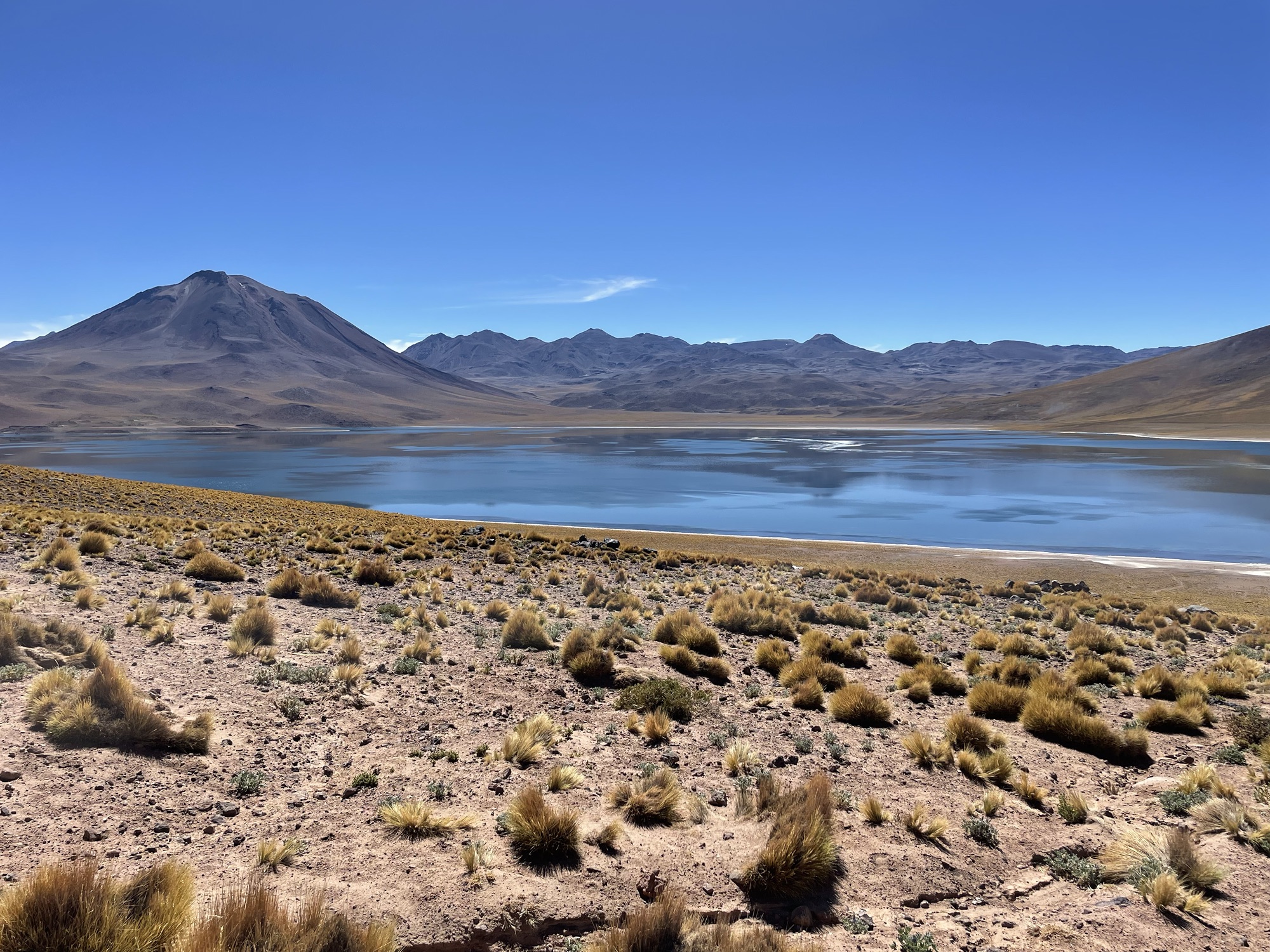
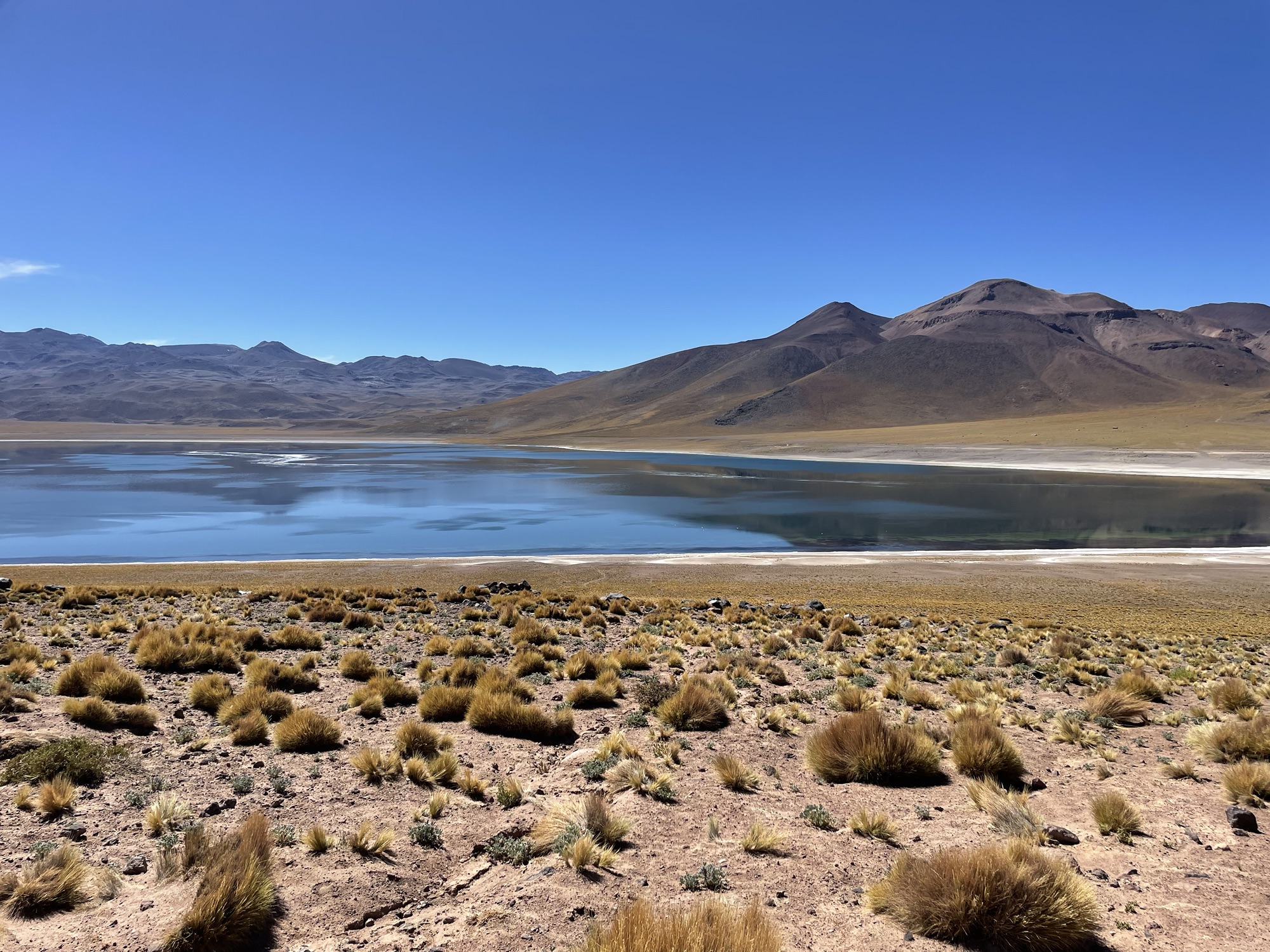
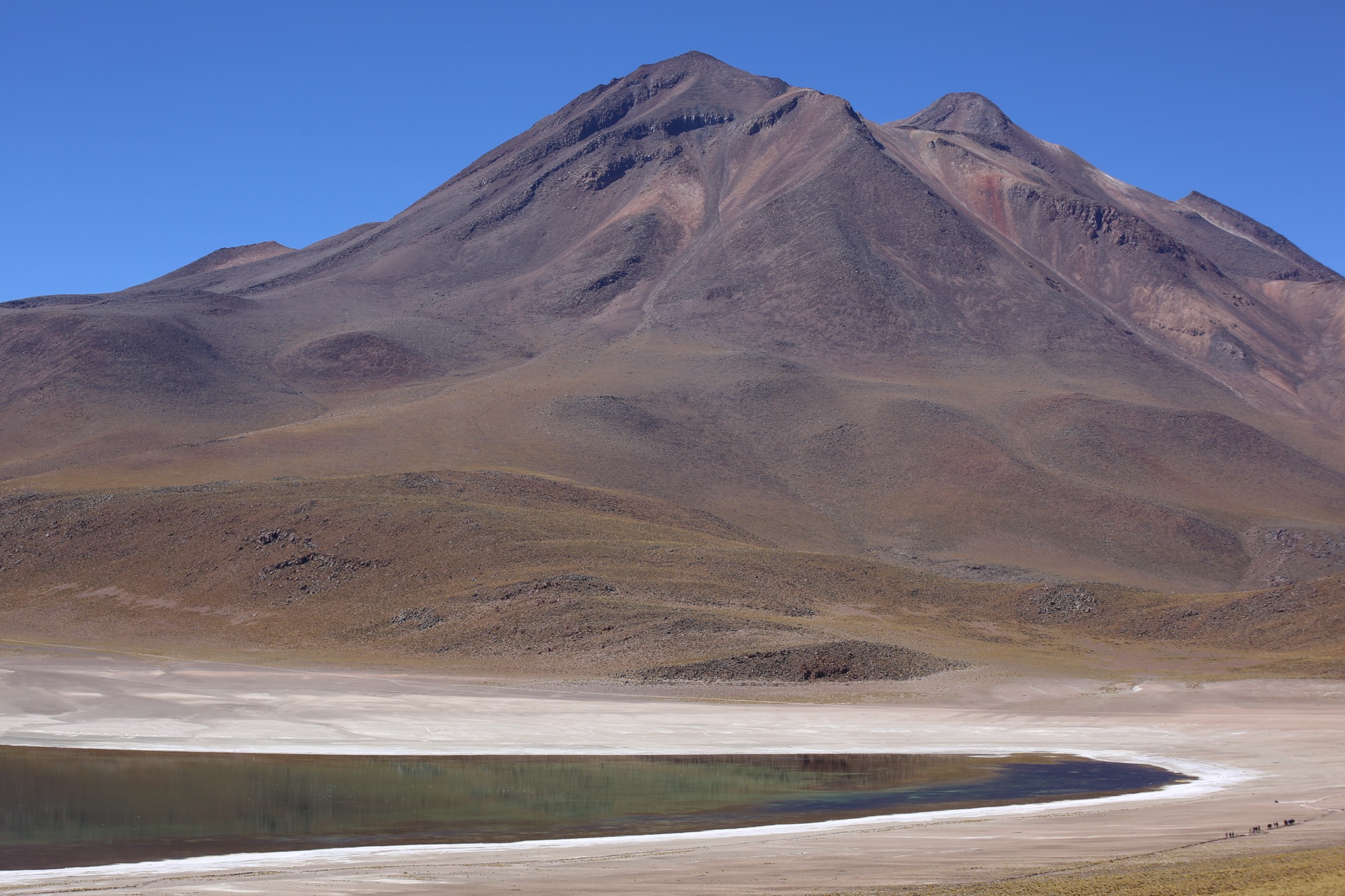
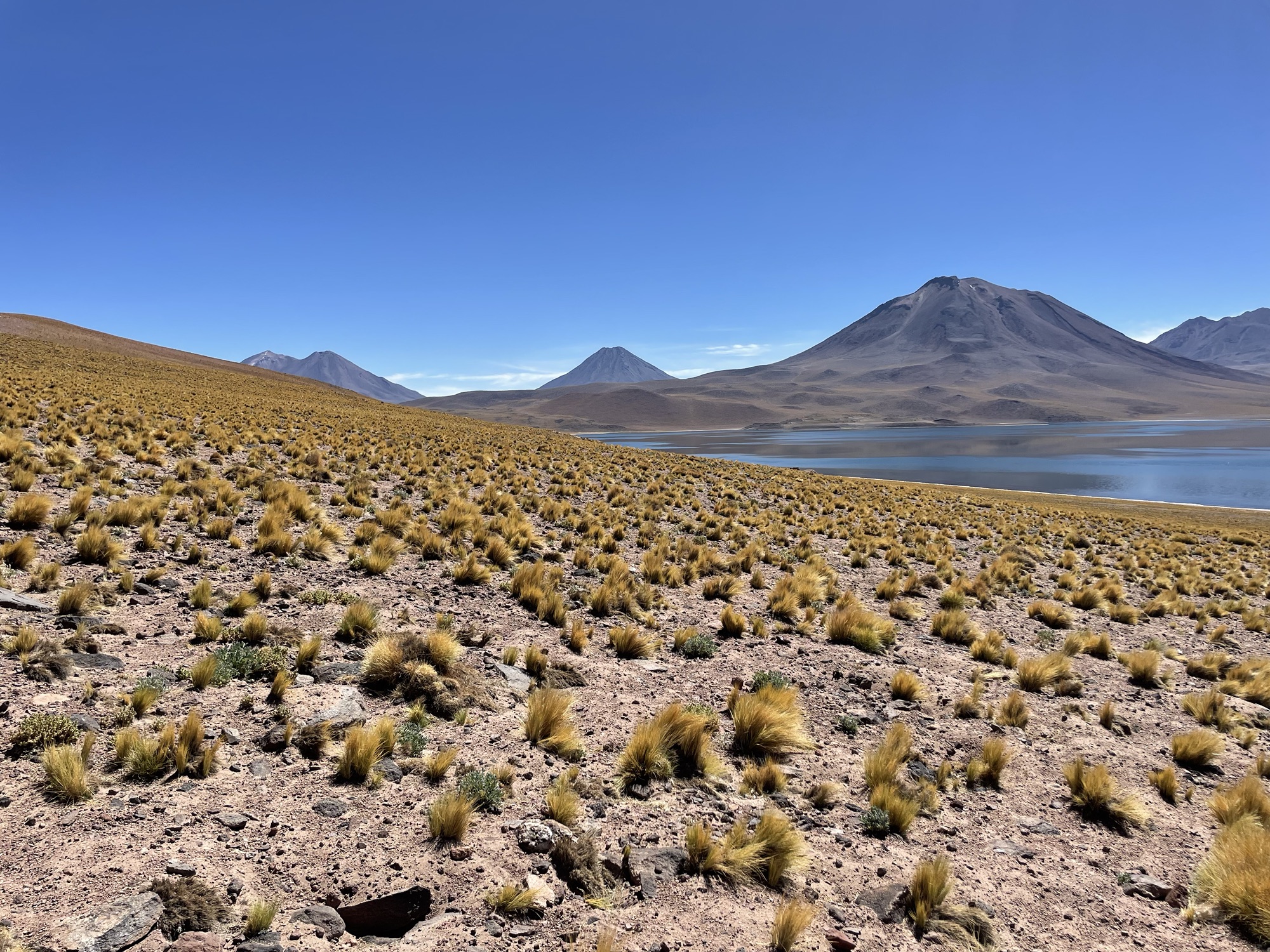
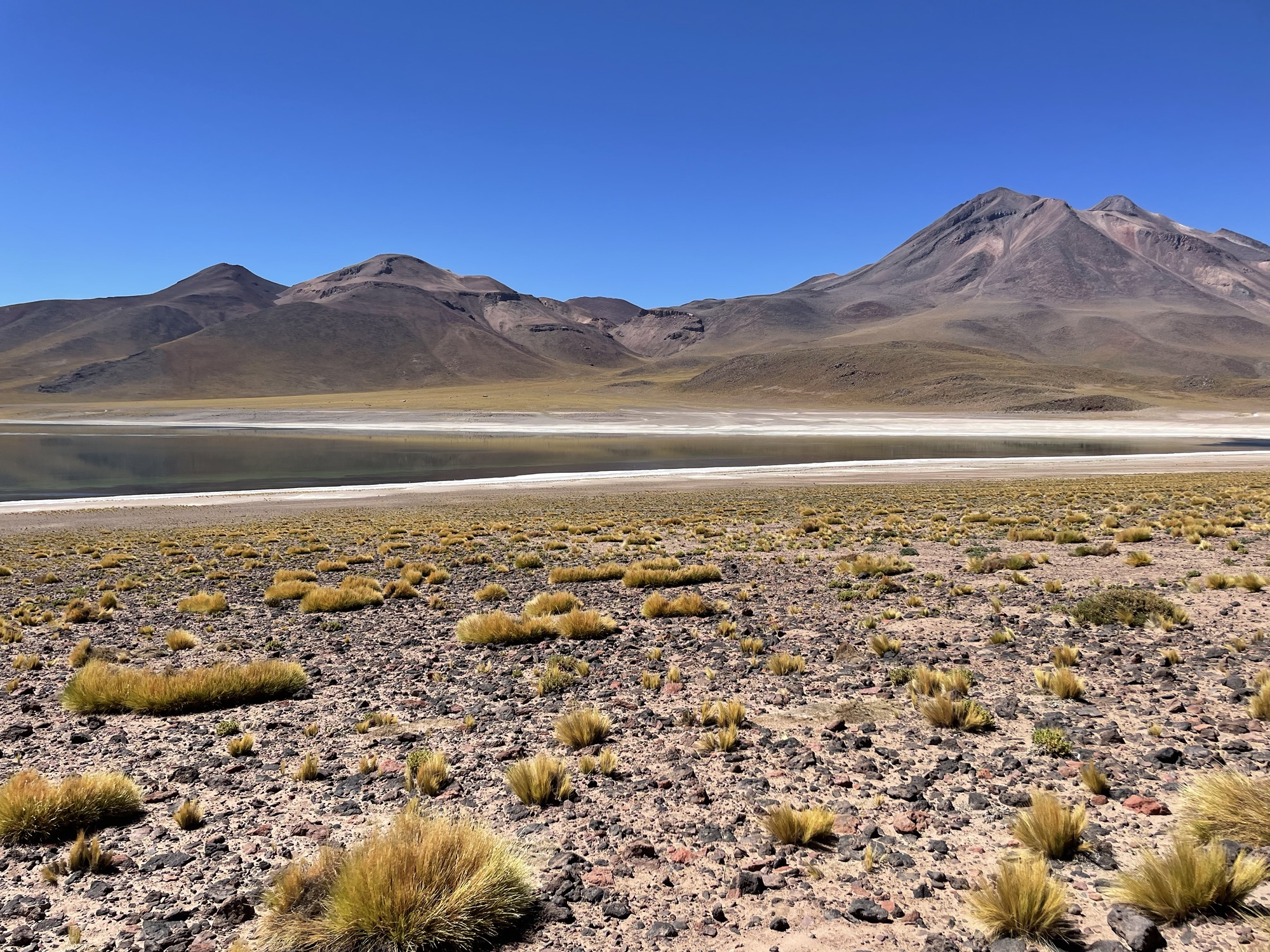

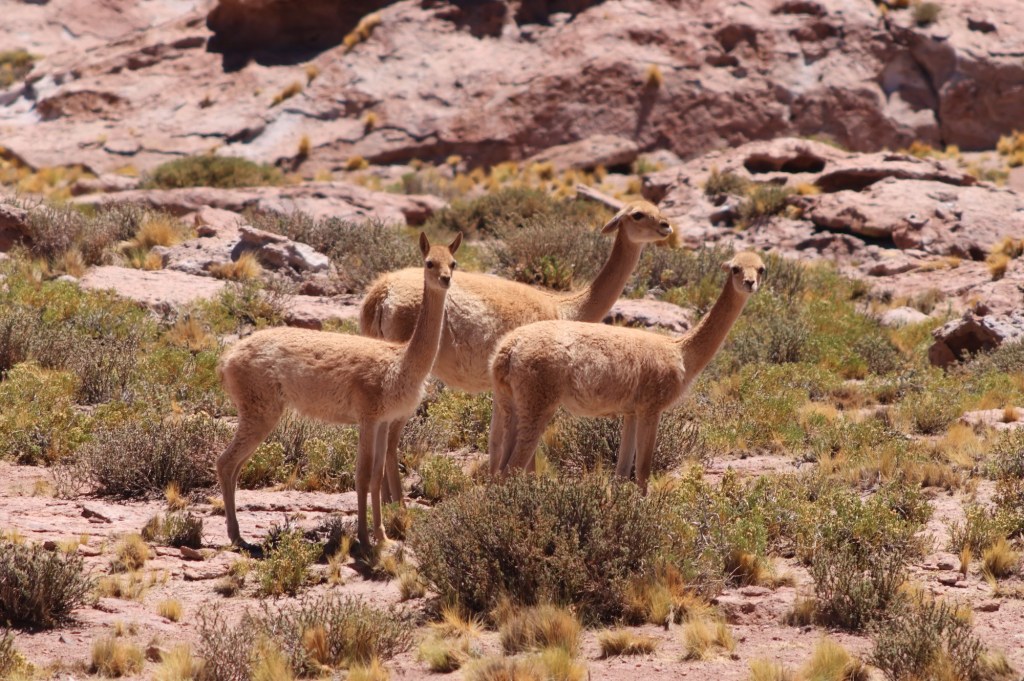
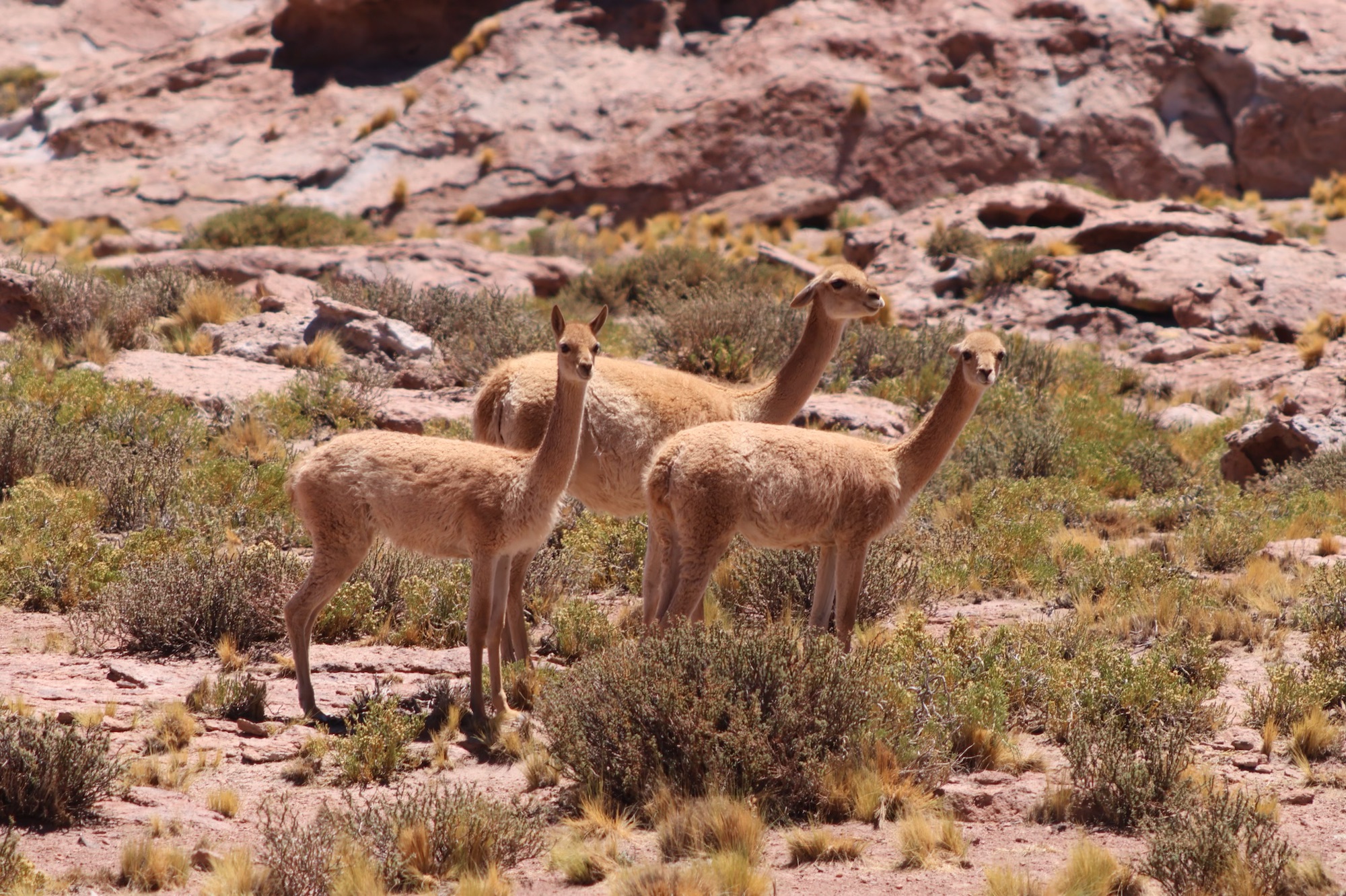
Then over a short hill to Laguna Meñiques where we saw more flamingos, and our first sighting of the vicuñas (the diminutively cuter version of the guanco).


From Sector Miscanti Meniques we drove back down the high planes towards the salt flats of the Atacama Desert. Along the way we took a short detour at some interesting rock formations eroded by wind and time which we explored while our drive and guide prepared lunch.
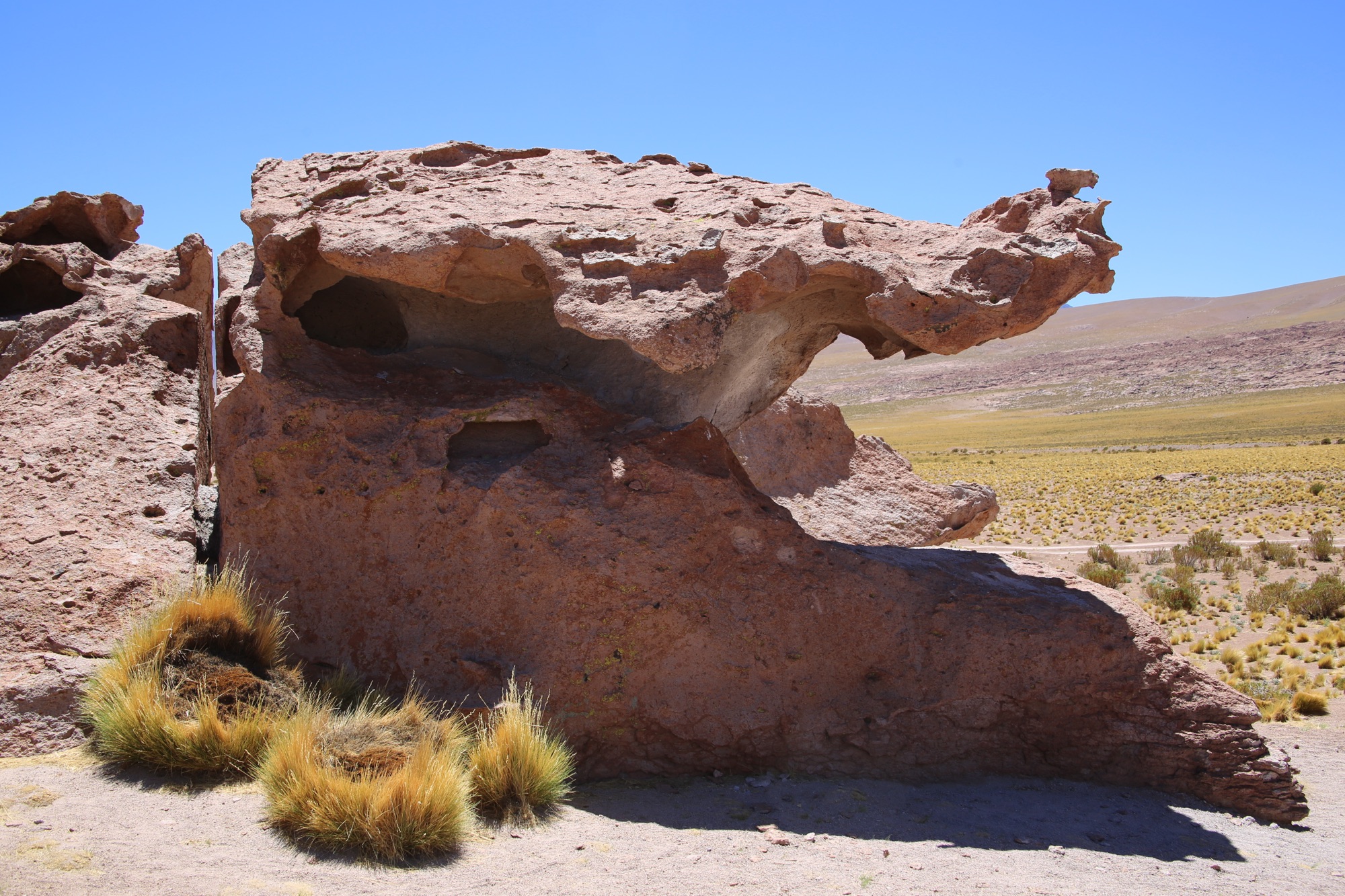


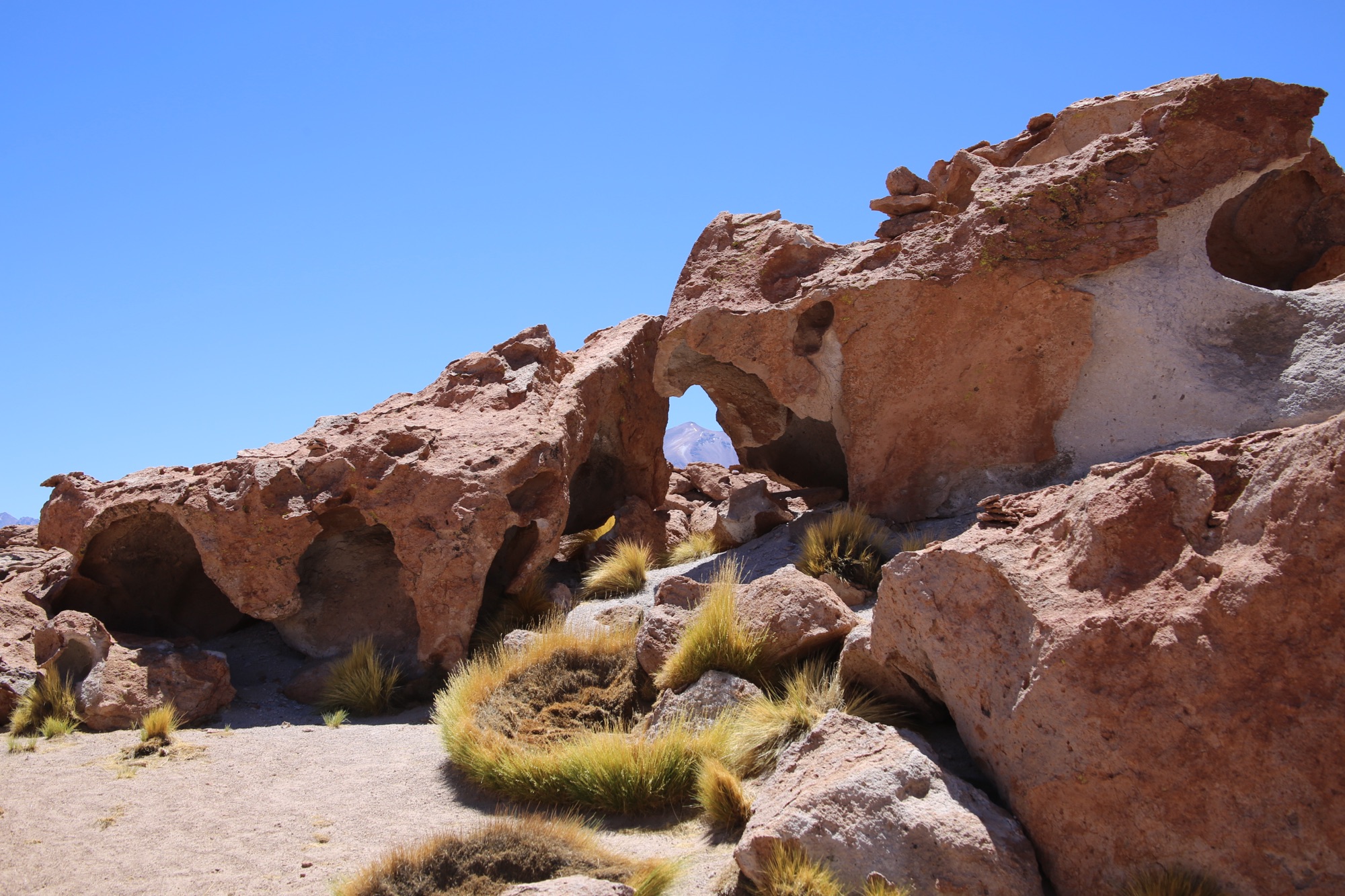
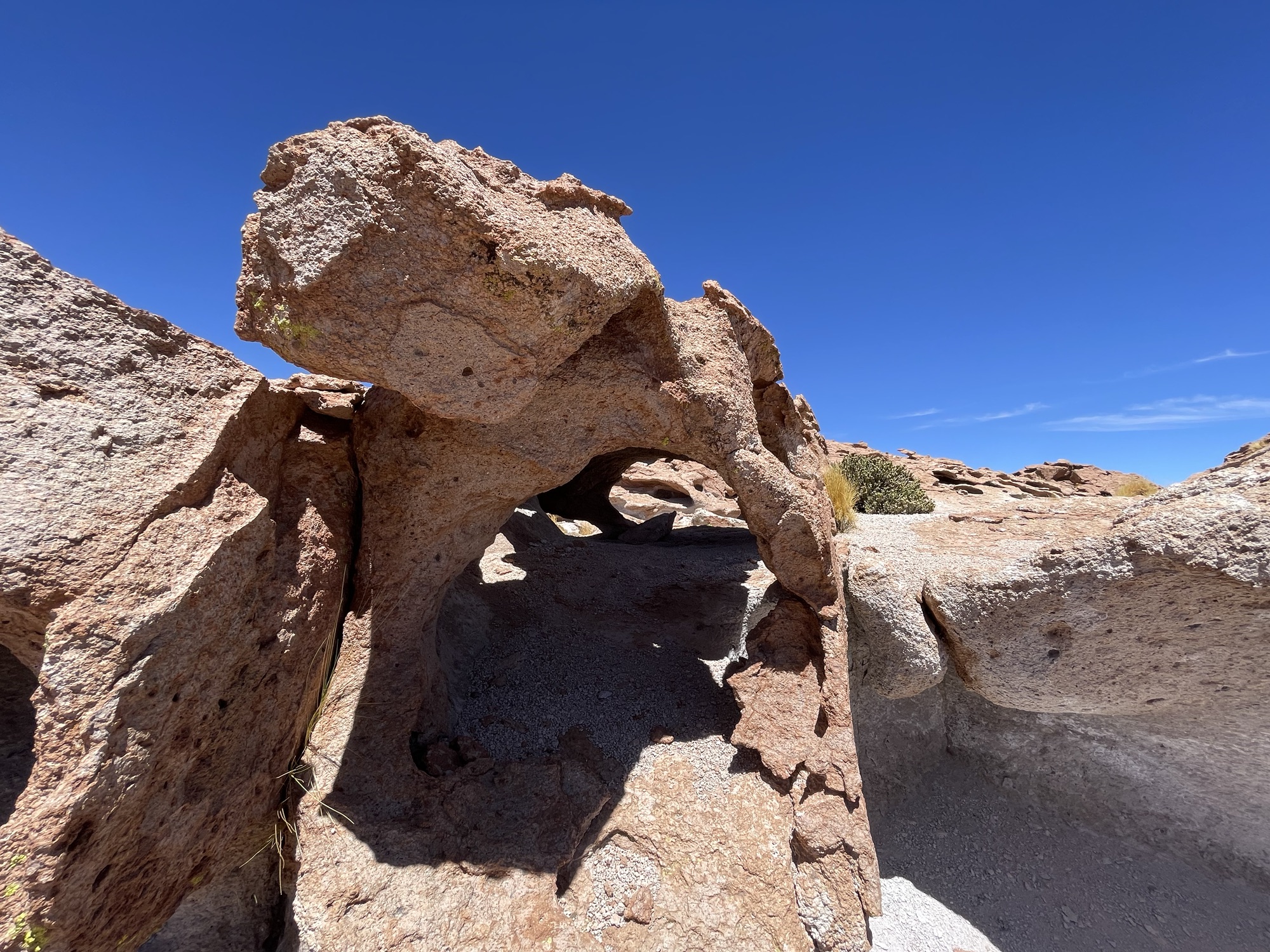

It was a delicious and civilized lunch in a very unique place. Salad of carrots, quinoa (which is grown here locally), lettuce, grilled chicken and a bottle for wine at around 12000 or 13000 feet (drive-time nap to soon follow).


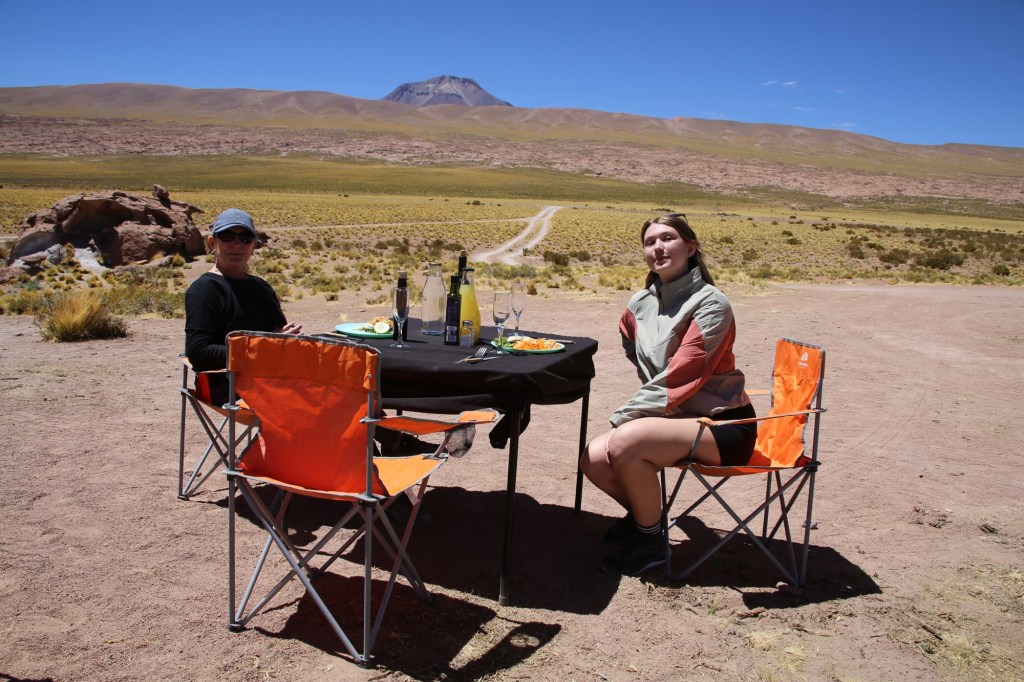
As we finished our lunch and our driver and guide were packing up we were lucky enough to spot three more Rhea and a family of vicuñas.


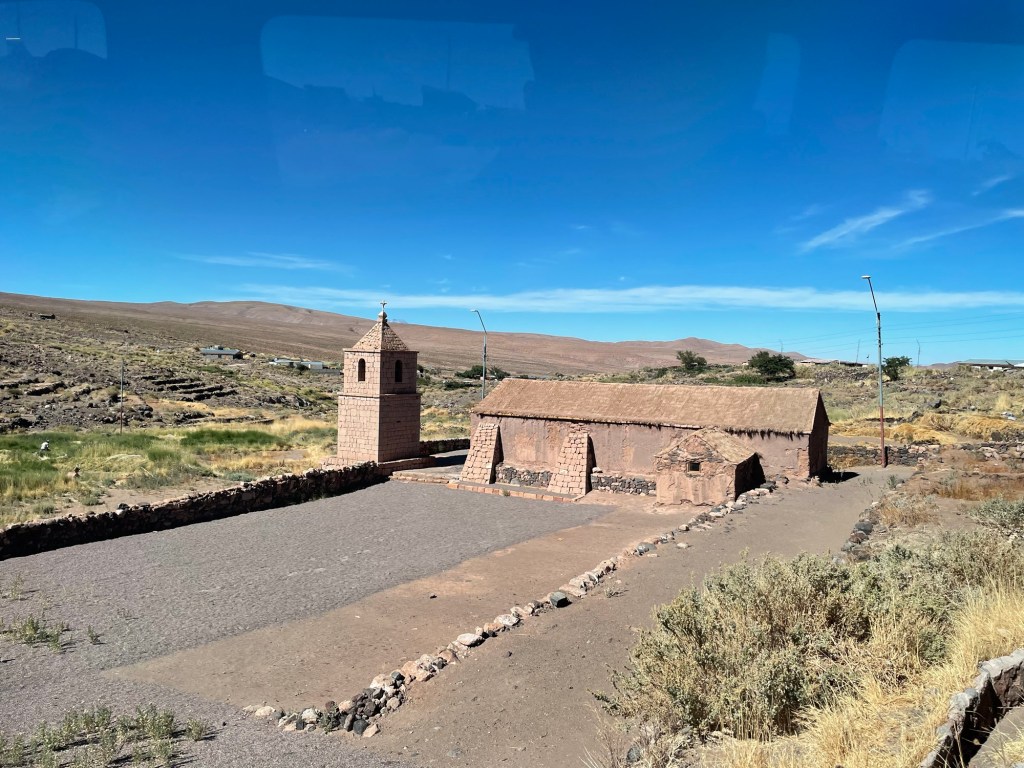
As we descended towards the Atacama salt flats we drive through a little town of maybe 600 people called Socaire near the Tropic of Capricorn. Unfortunately, this small community’s water supply is in jeopardy due to lithium mining in the area and the need for scarce water rights in the region. Here are a few pictures from the town, and one showing a black flag flown in protest of the issue. These flew all over town, but we didn’t stop here and only drove thru.
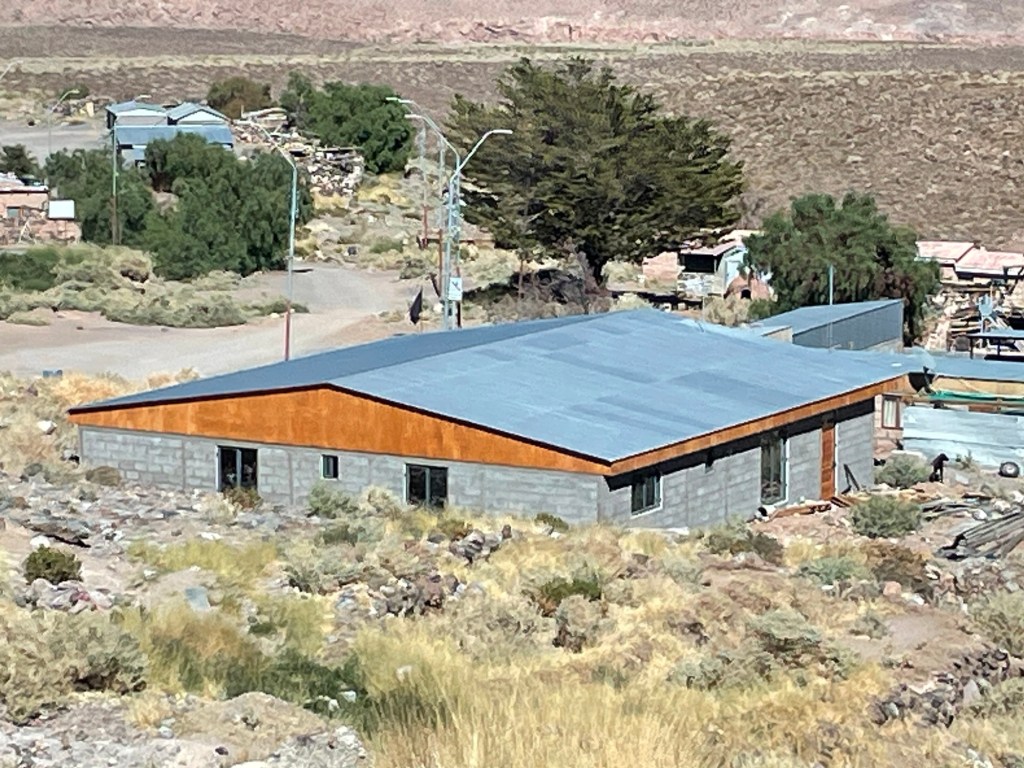
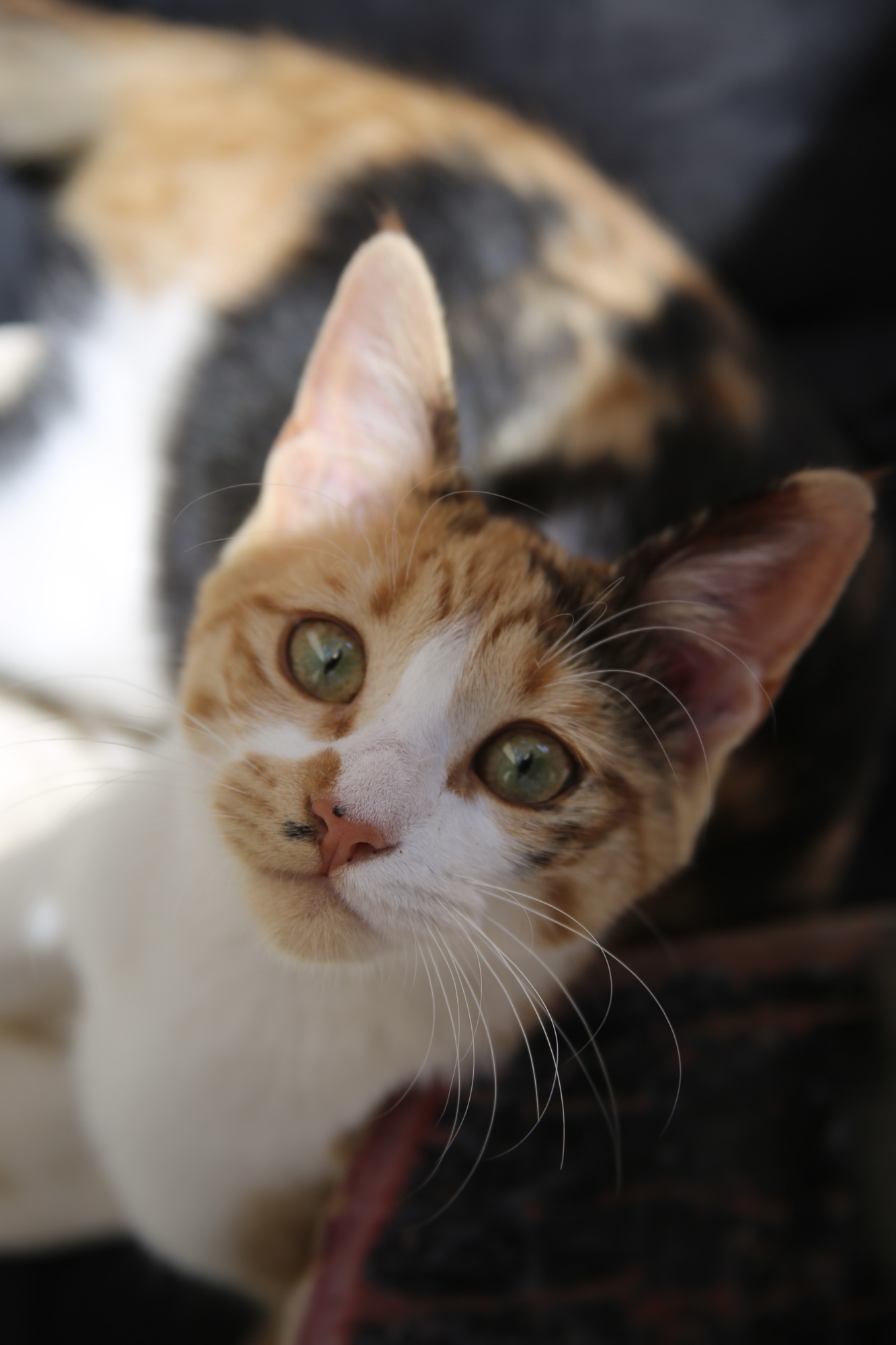
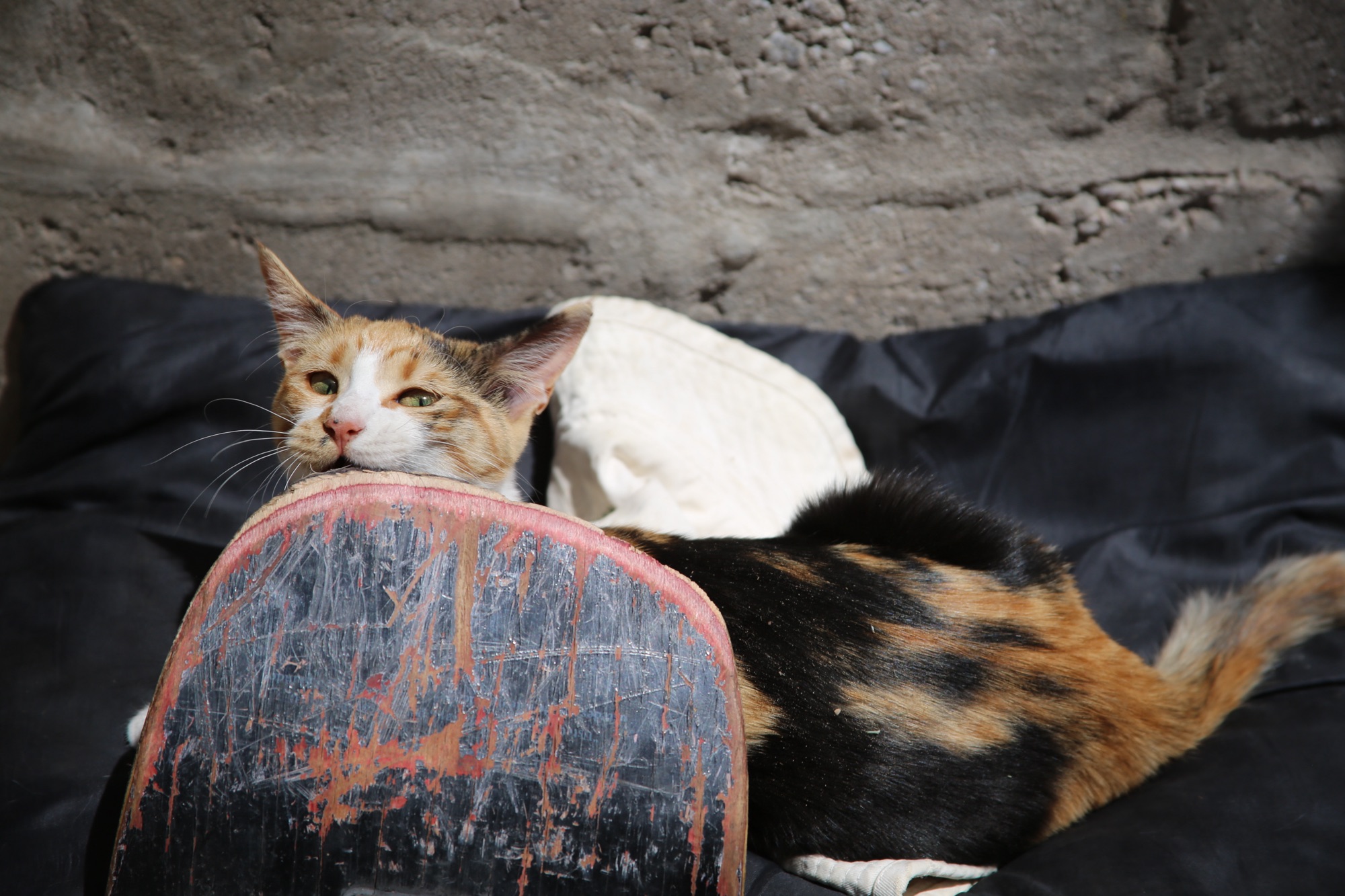
I dozed off (from the altitude and the wine) as we drove a little over an hour to the small town of Toconao we were visited a local shop and bought a hand-woven sweater and an alpaca scarf, as well as visited their llamas and little kitten.





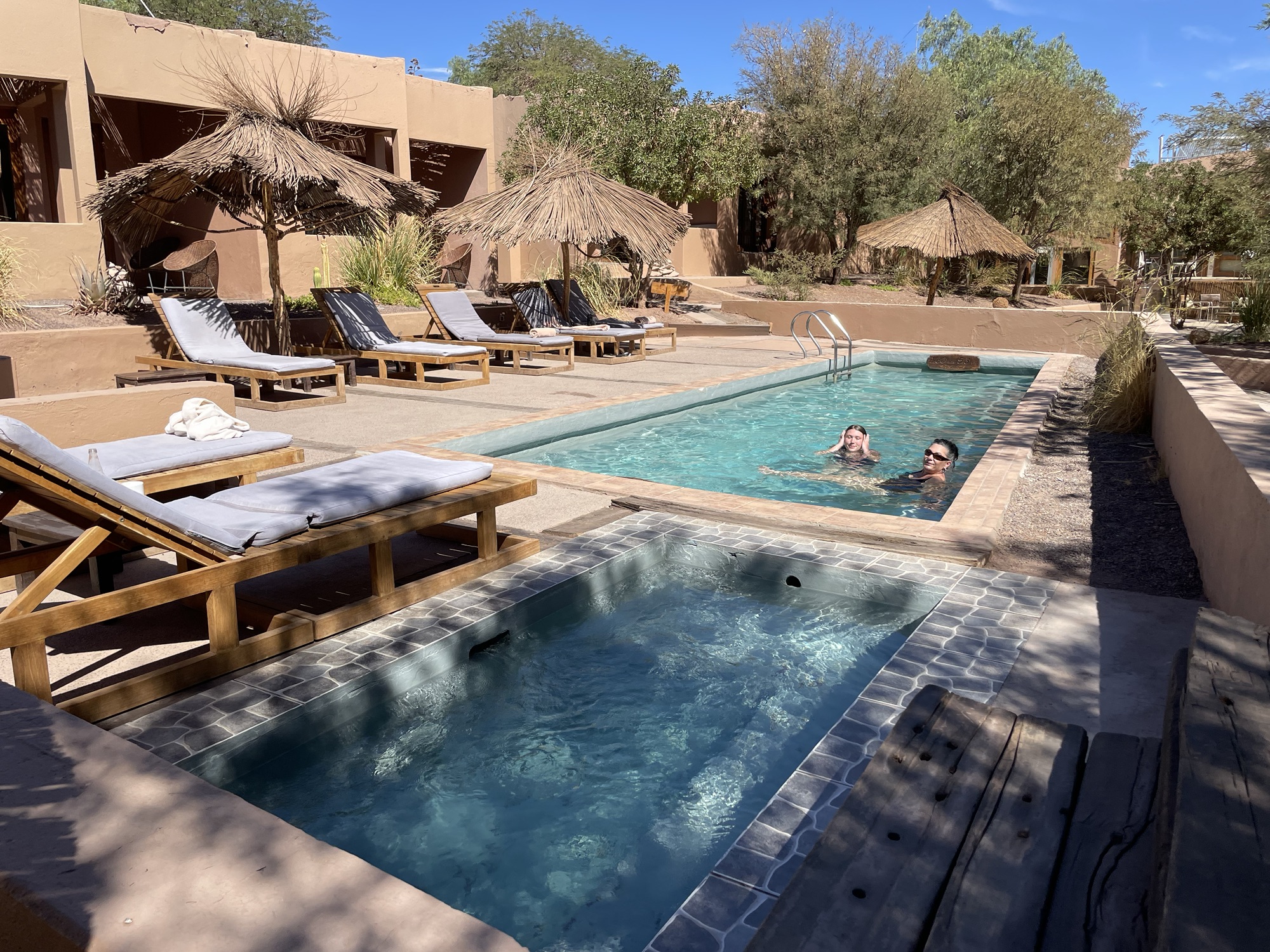
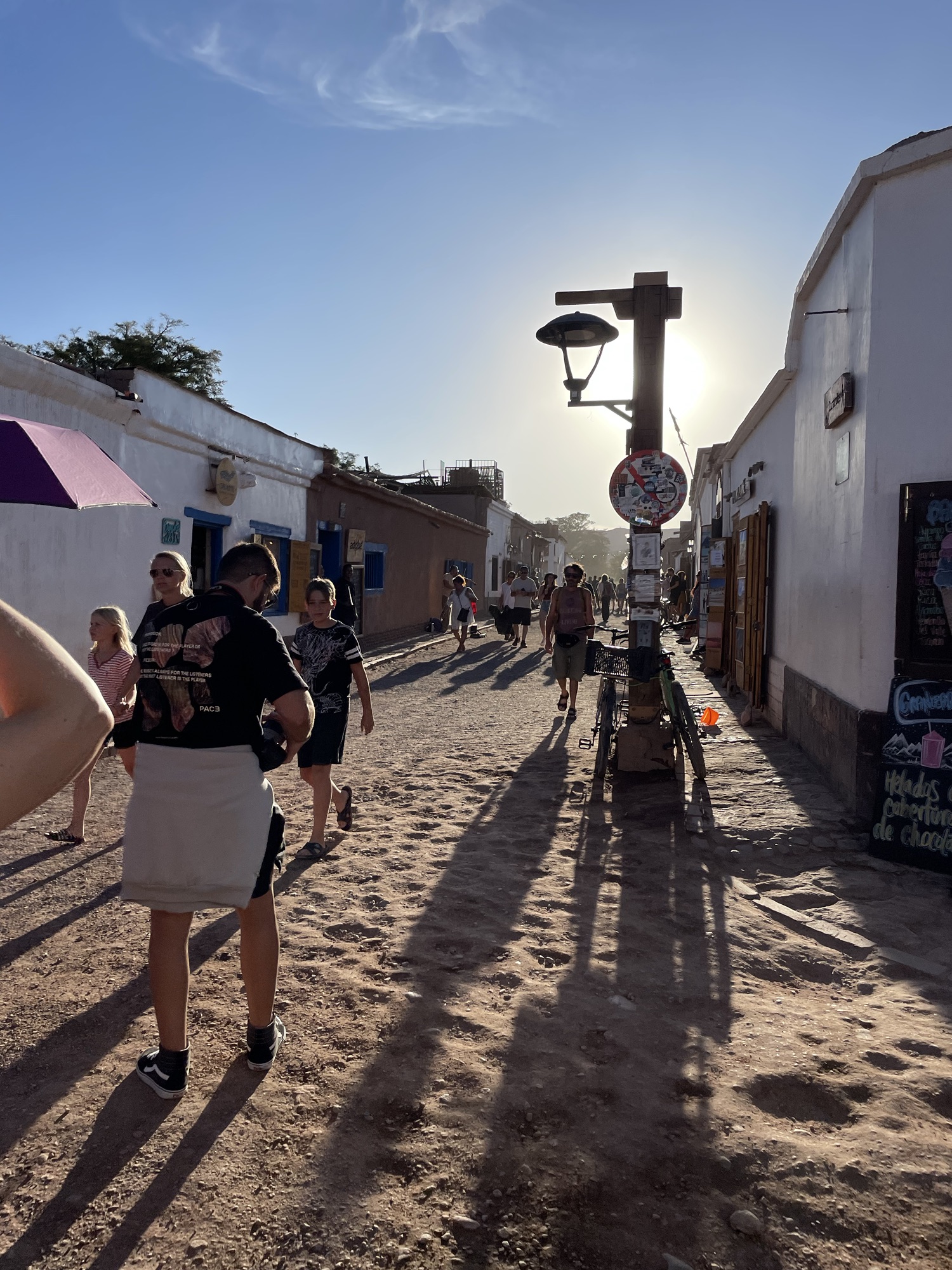
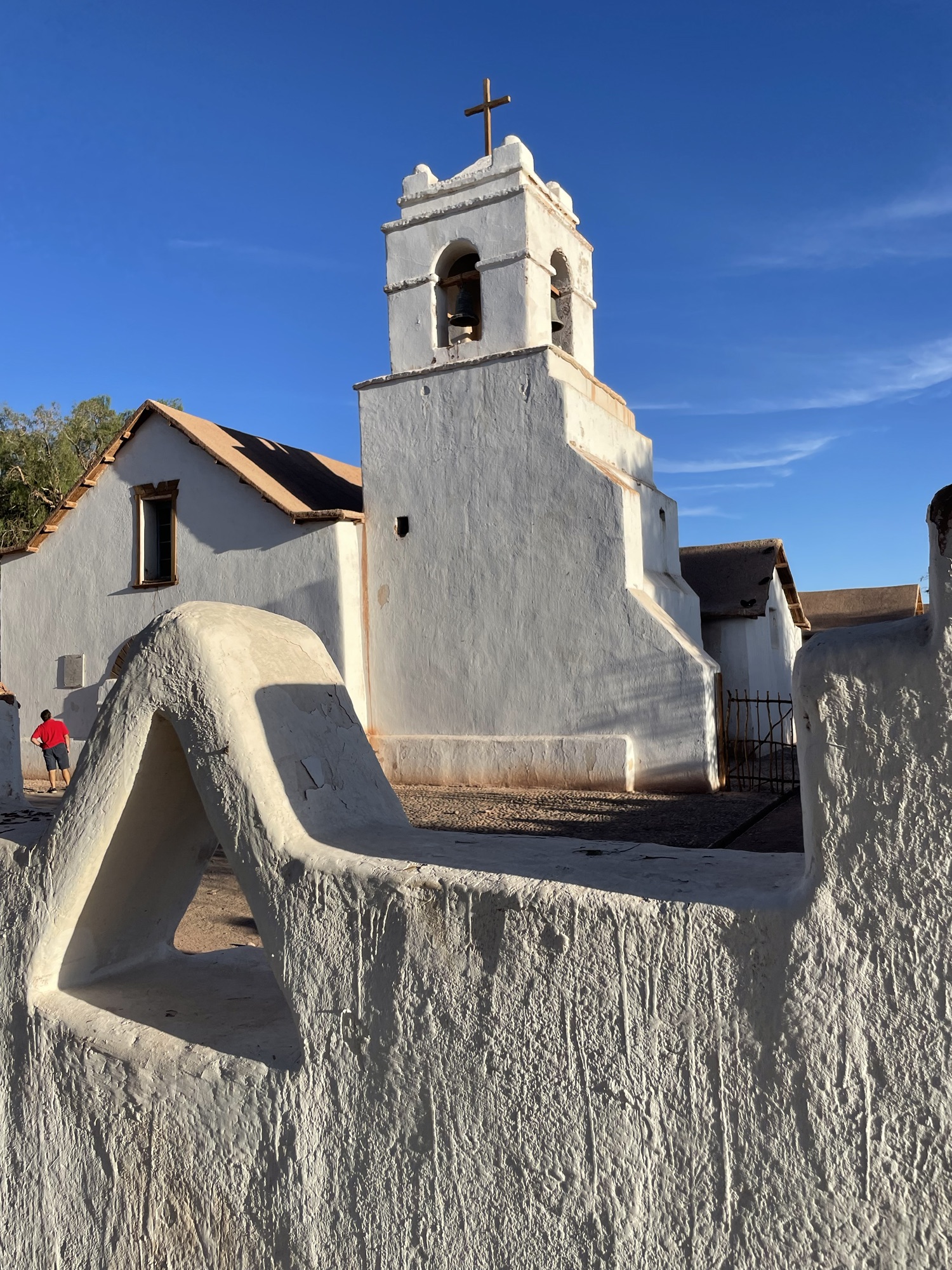
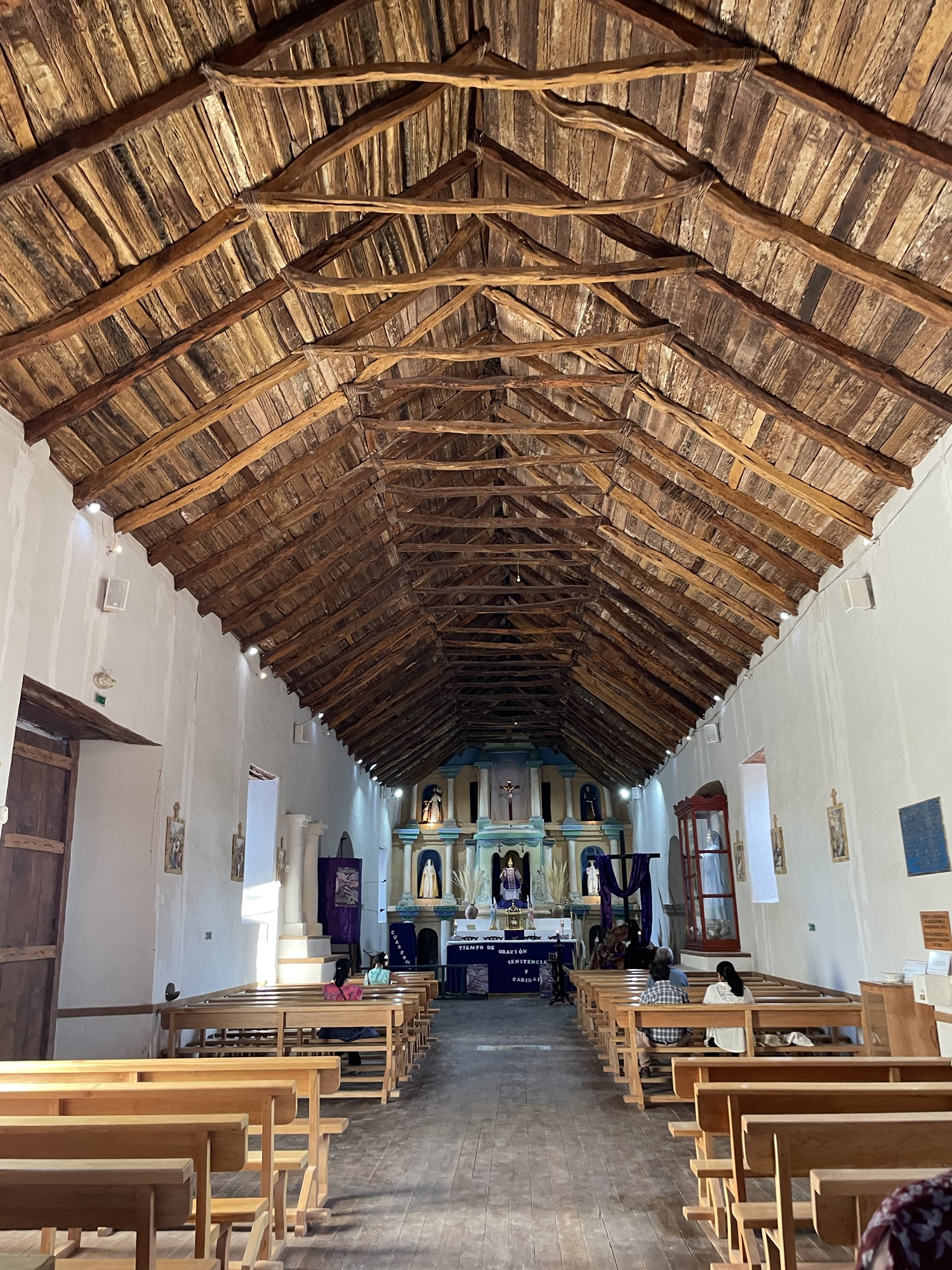
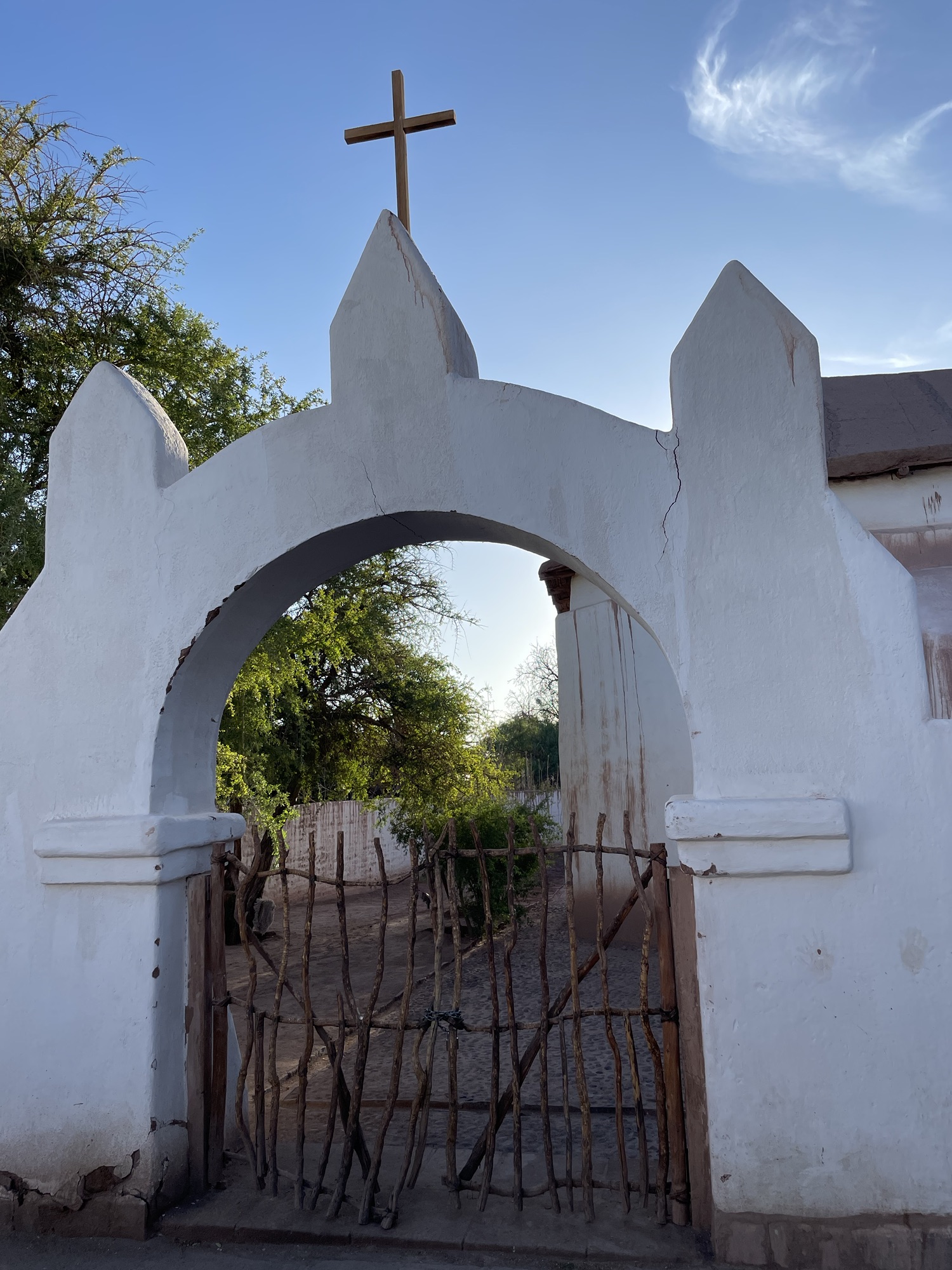
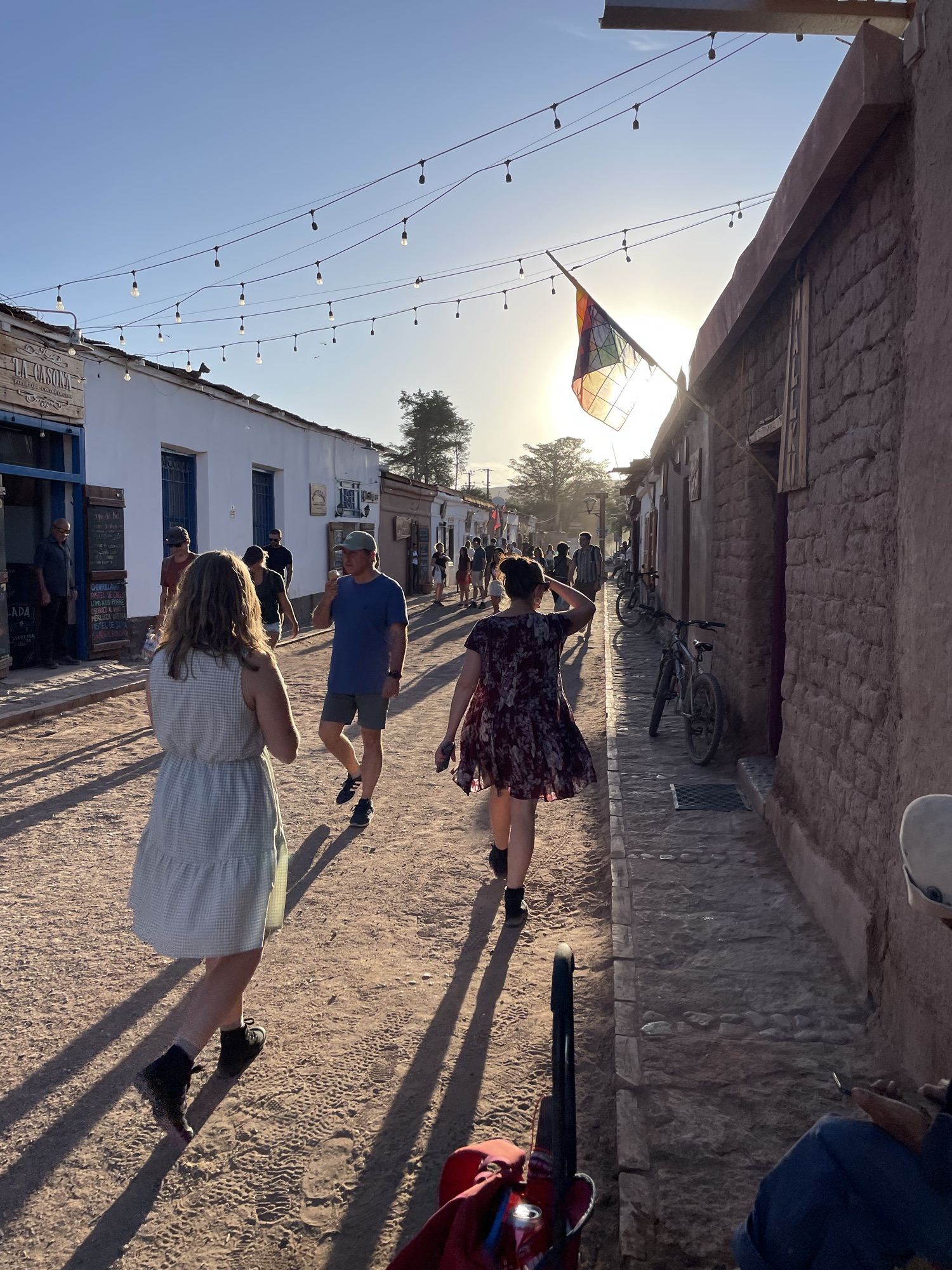
We had time in the afternoon to cool off from the heat in the pool before walking around the town of San Pedro de Atacama, and exploring the Church of San Pedro de Atacama, and local shops, streets, and dinner at Ckunna, before heading back to our hotel.






Star gazing in Atacama is a tour you can take, but the stars are pretty amazing just from stepping outside our room and looking up. Clara took this photo using her iPhone just outside her room.


 Sabbatikos
Leave a reply to Patagonia, Day 2: Historical Patagonia Hike – Sabbatikos Cancel reply