
After attending Jay Clayton’s memorial at the Vermont Jazz Center in Brattleboro, Vermont, we drove a few hours to visit some friends from college who live in Irvington, New York. Nearby, nestled in the picturesque village of Tarrytown, New York, is the Lyndhurst Mansion which stands as an exquisite example of Gothic Revival architecture. Since my daughter often teases me about going from “Goth to Boss”, we had to check it out!
Lyndhurst Mansion was designed in 1838 by architect Alexander Jackson Davis. Lyndhurst’s storied history begins with its first owner, William Paulding Jr., a former mayor of New York City who wanted an upstate farm. His time at Lyndhurst was short as he died there in early 1854.
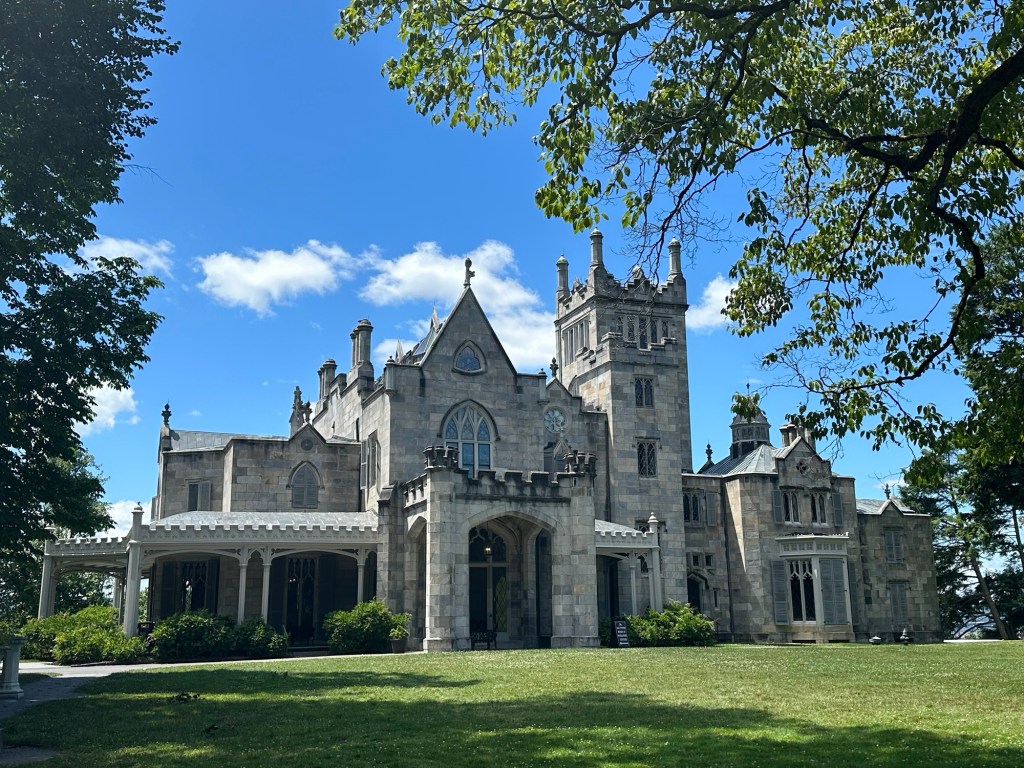
The property was sold to merchant George Merritt in 1864. Merritt, wished to expand the rather simple four-by-four house William Paulding Jr. had built to make it a full-time residence for his family. He re-commissioned architect Alexander Jackson Davis to design the expansion and updated the Gothic decorative finishes inside. These changes established Lyndhurst as an impressive Gothic Revival home. He also gave Lyndhurst its name by referring to his estate as ‘Lyndenhurst’ given the large number of Linden trees he had planted on the grounds, which remain there today.

It was railroad magnate Jay Gould who brought Lyndhurst to true prominence. Gould transformed it into a lavish residence that exemplified the opulence of the Gilded Age and also becoming a filming location for the Max dramatic series The Gilded Age.
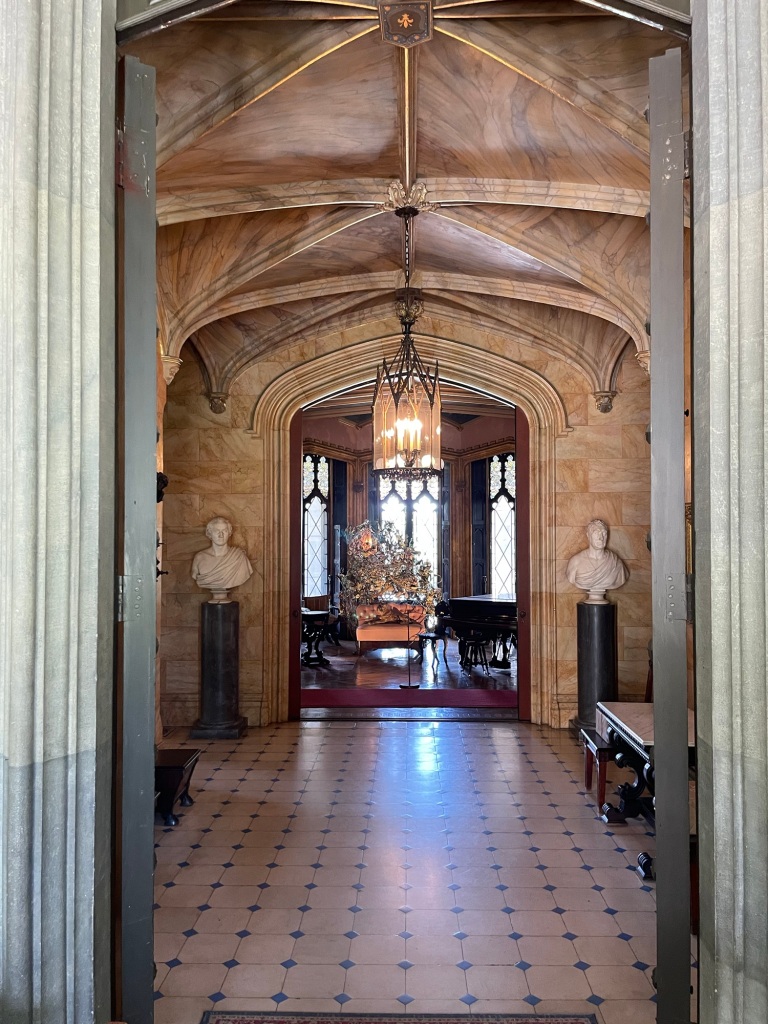
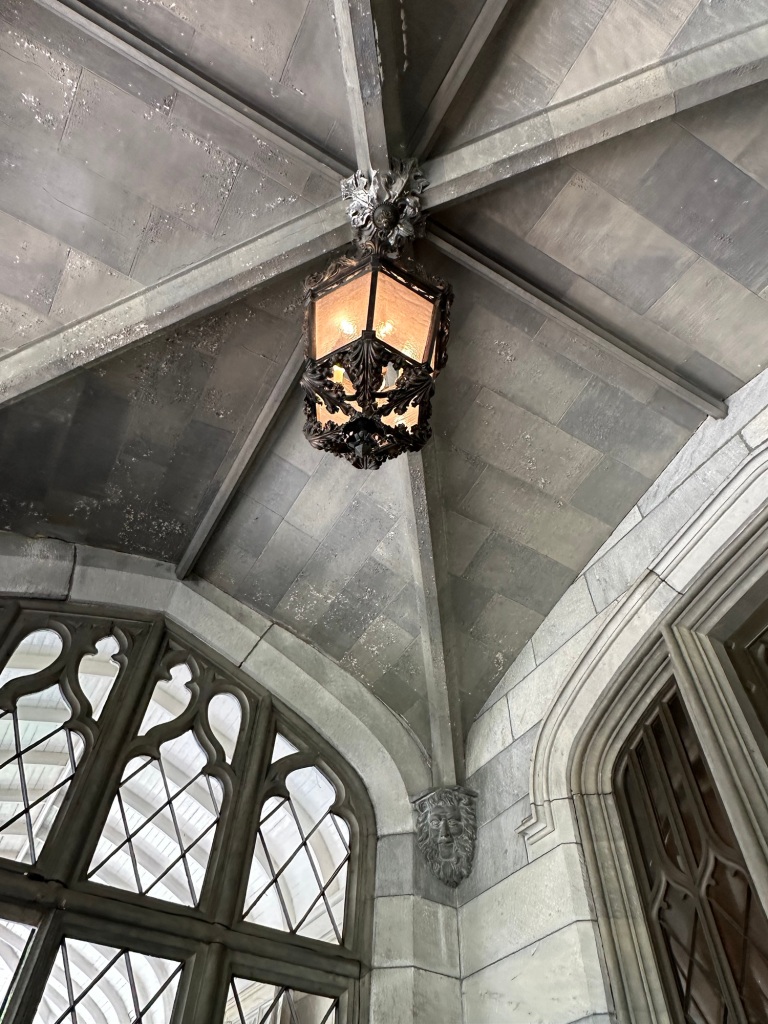
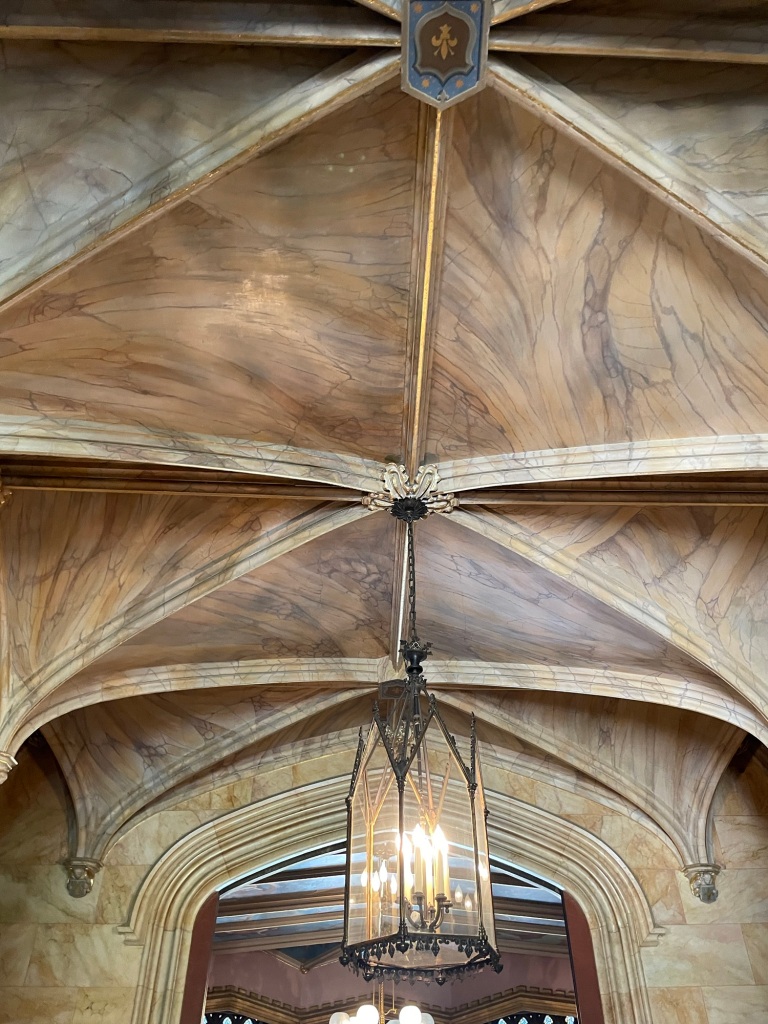
We went on a tour of the mansion to get a more intimate glimpse into the life and times of Lyndhurst’s illustrious past. As we were guided through the grand hallways and restored rooms, our knowledgeable guide shared anecdotes about the mansion’s history and its architectural details. I wish I could remember them all. One of the most interesting features of the house is the use of painted wood and painted plaster to simulate marble. In this period of time, “fake” was considered more ostentatious than the real thing. However, on the “real” side, much (if not all) of the stained glass and lamps are from Tiffany Studios.


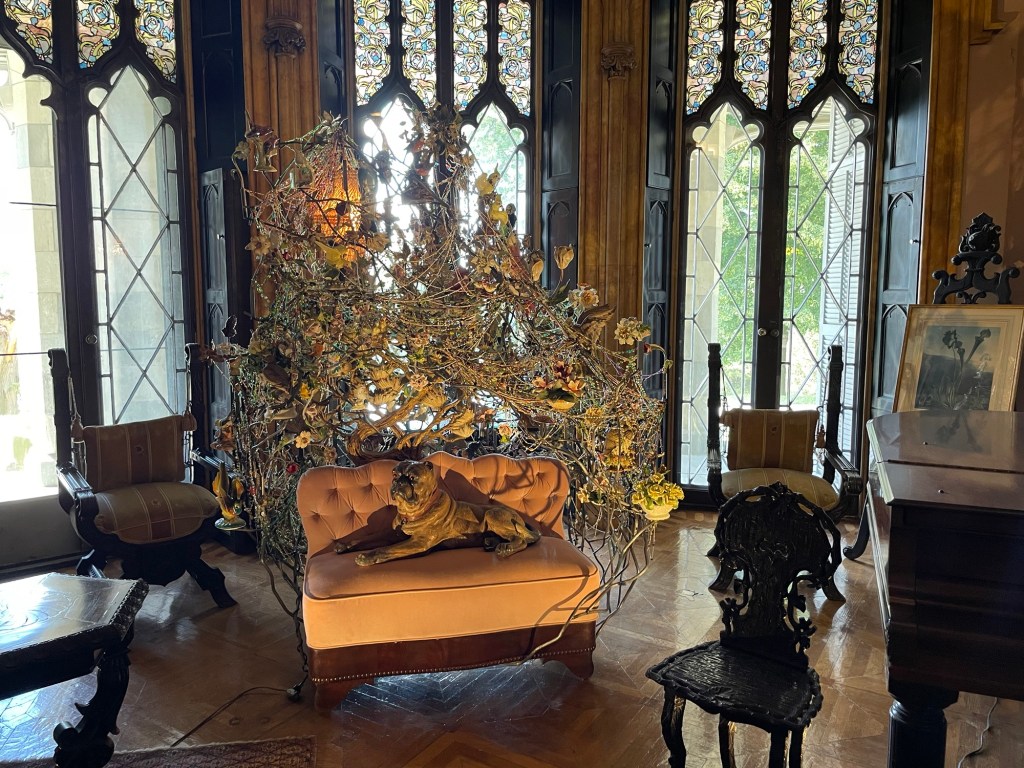
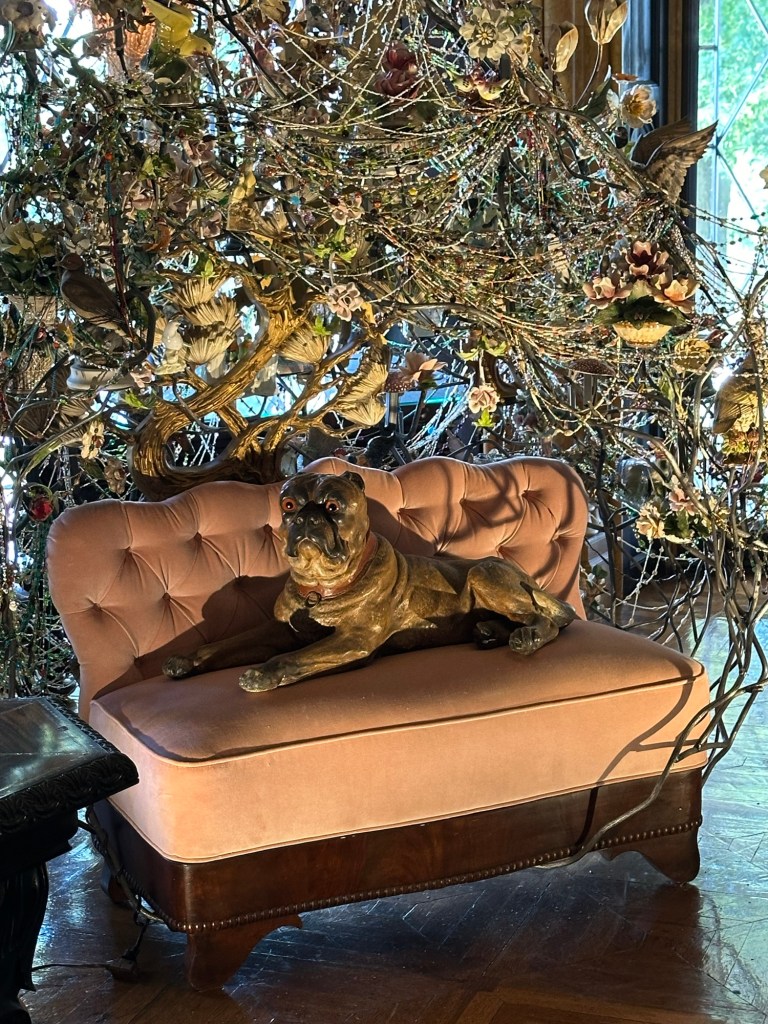
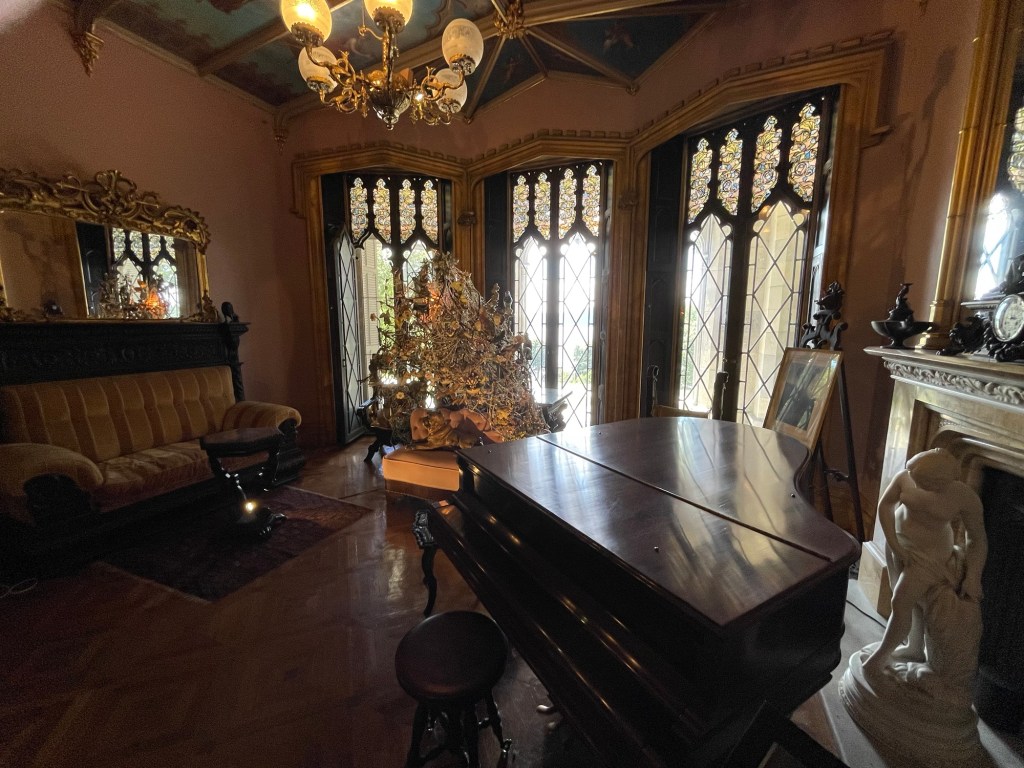


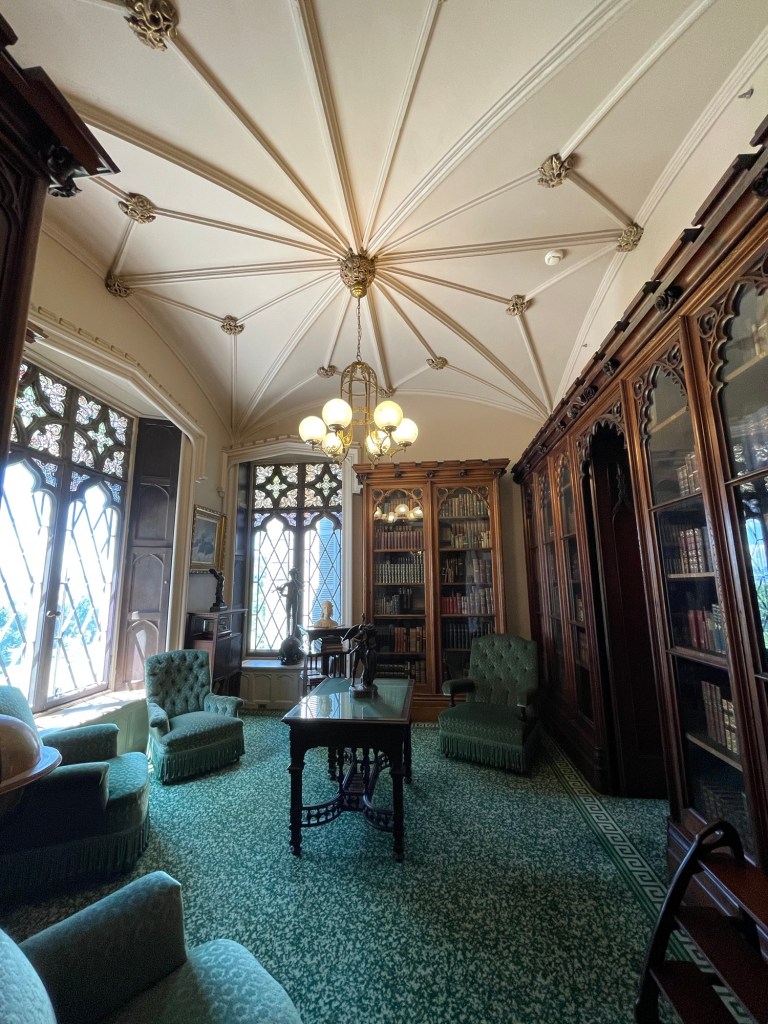


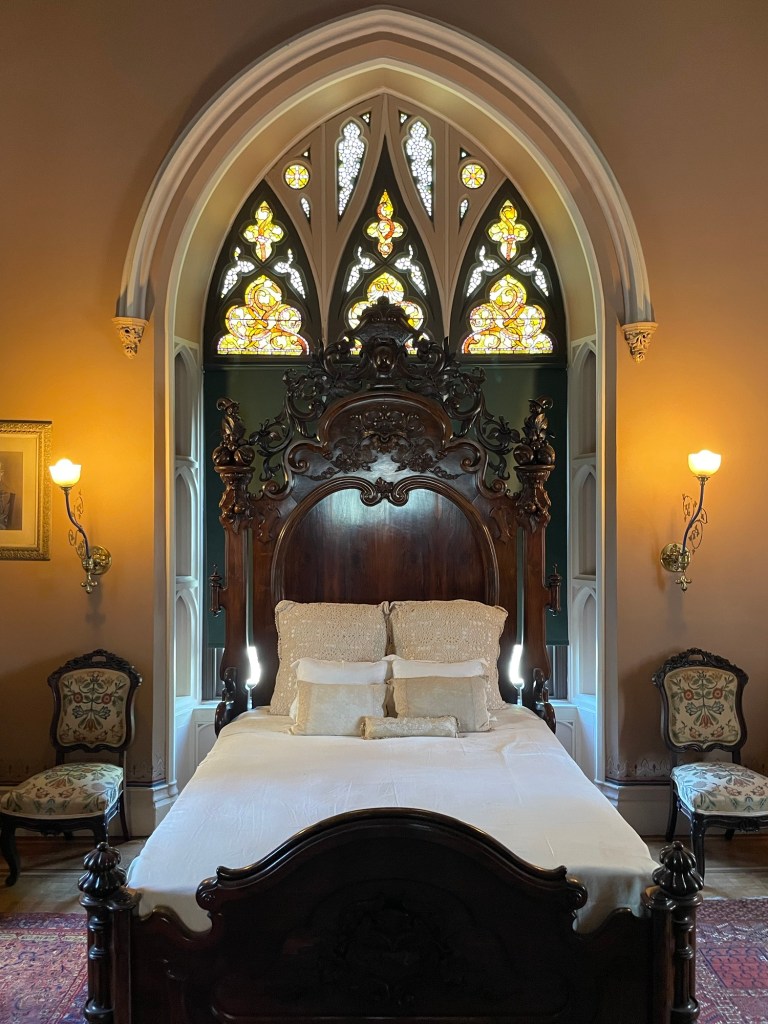
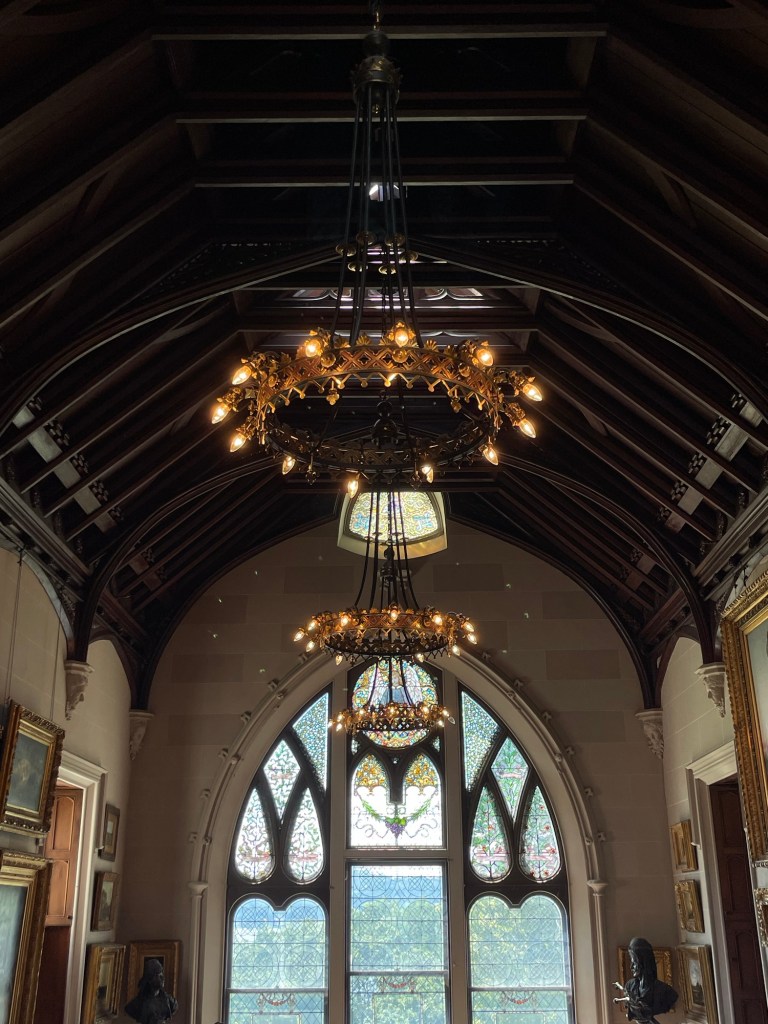

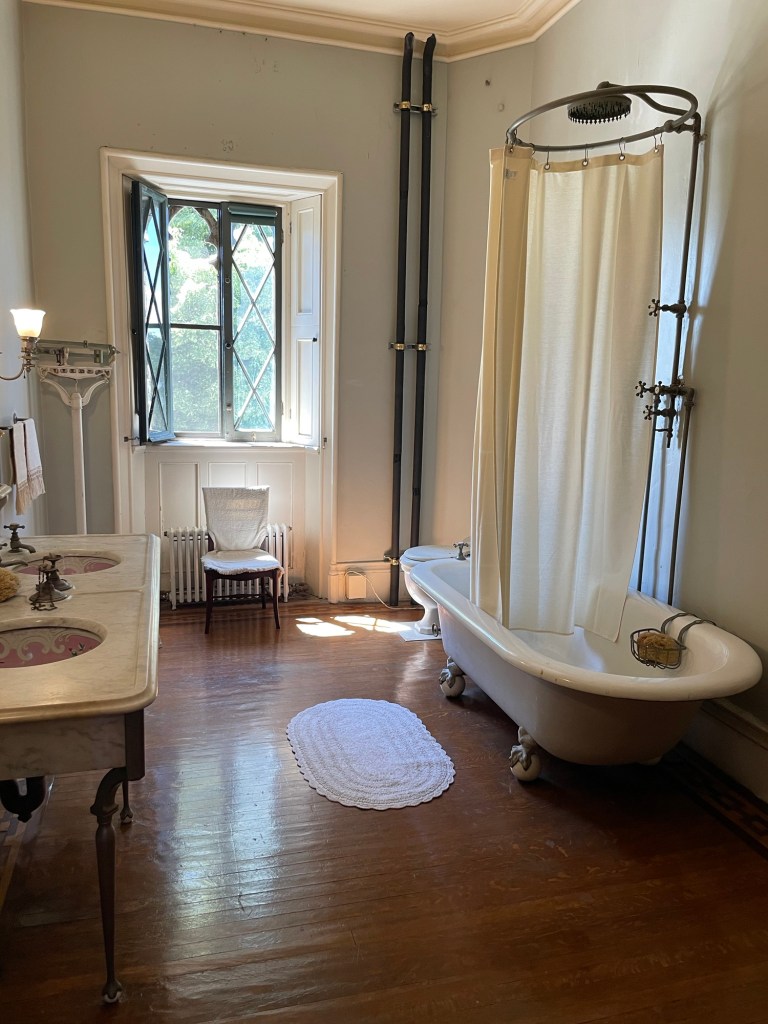

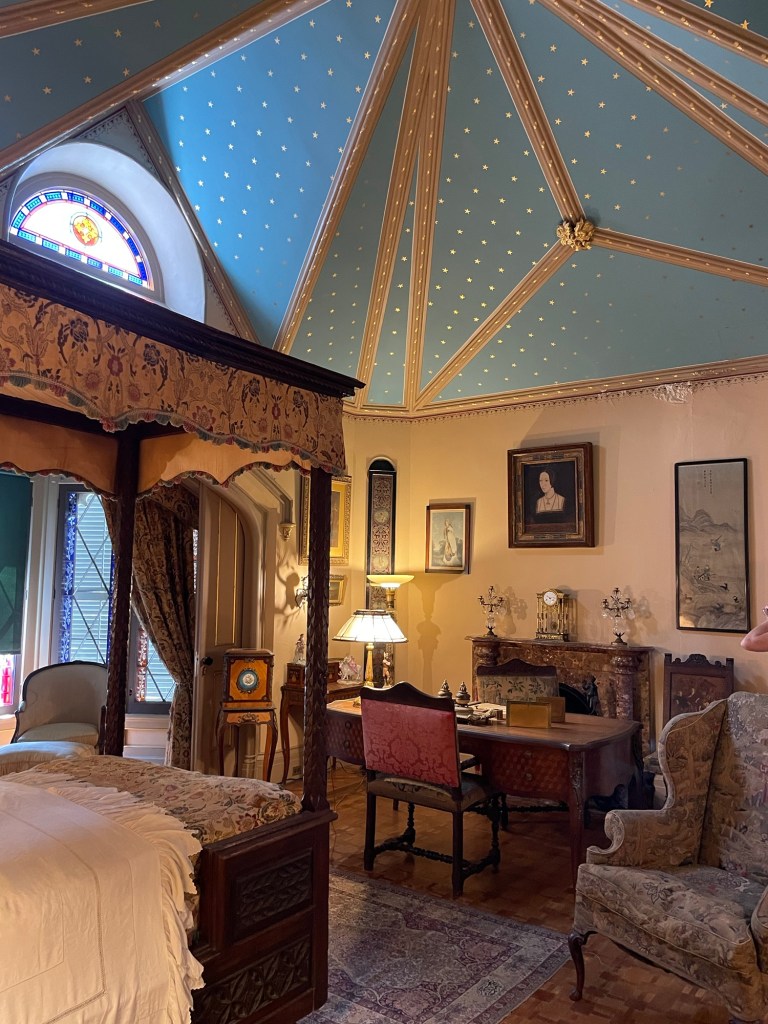
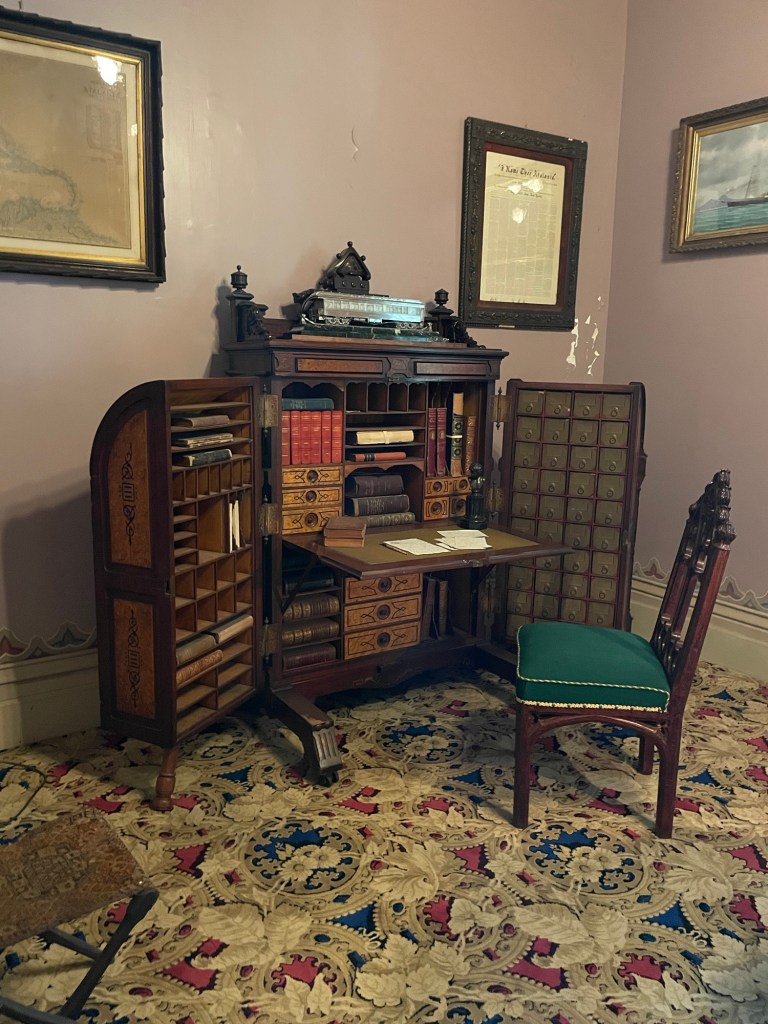
Helen Miller Gould Shepard and Anna Gould became the owners of Lyndhurst Mansion following the death of their father, Jay Gould, in 1892. Under their stewardship, the sisters used their considerable wealth and resources to support numerous philanthropic endeavors. Helen, in particular, was well-known for her charitable work, providing aid to the disadvantaged through initiatives such as funding educational institutions, hospitals, and relief efforts for soldiers and their families. Helen was also known for adding the Bowling Alley to the Lyndhurst Estate, which doubled as a sewing school for a time. We were lucky that it happened to be open the day we were visiting. So we checked it out.


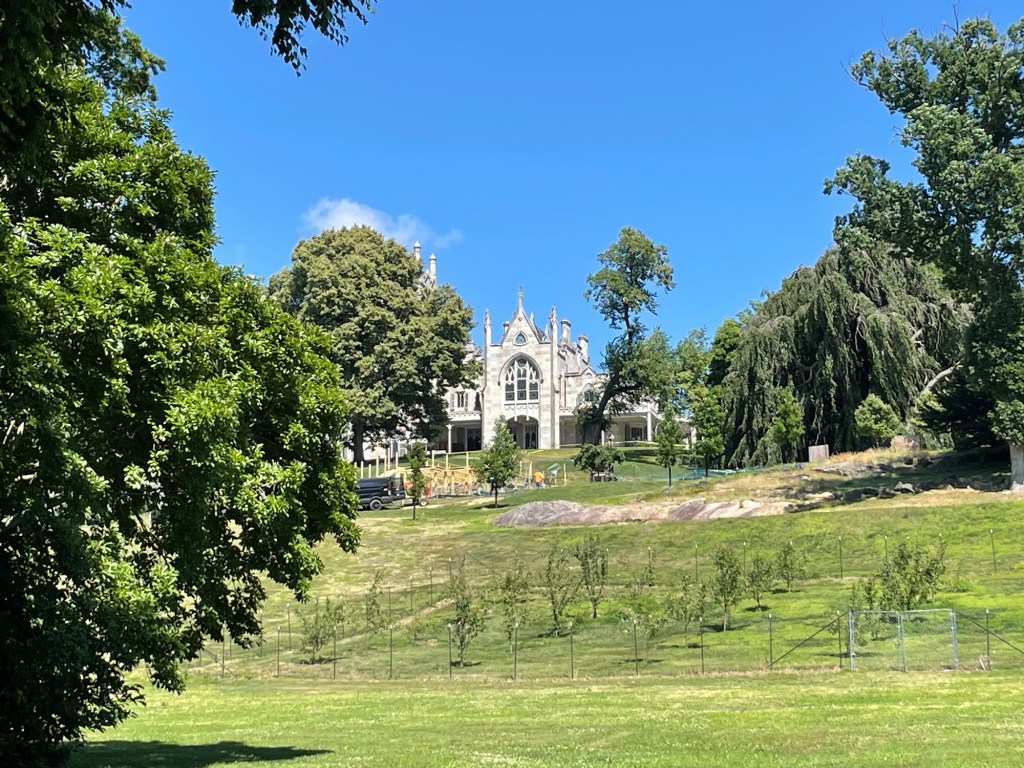
In 1961, Anna Gould (also known as the Duchess of Talleyrand-Périgord), the last family member to own Lyndhurst, generously donated the mansion and its grounds to the National Trust for Historic Preservation. This ensured the preservation of the estate and opened it to the public, allowing us and future generations to appreciate its historical and architectural significance. If you happen to be passing through Tarrytown, NY, I recommend you drop in for a tour.


 Sabbatikos
Leave a reply to 26 Incredible Time-Capsule Homes That Show America's Past Cancel reply