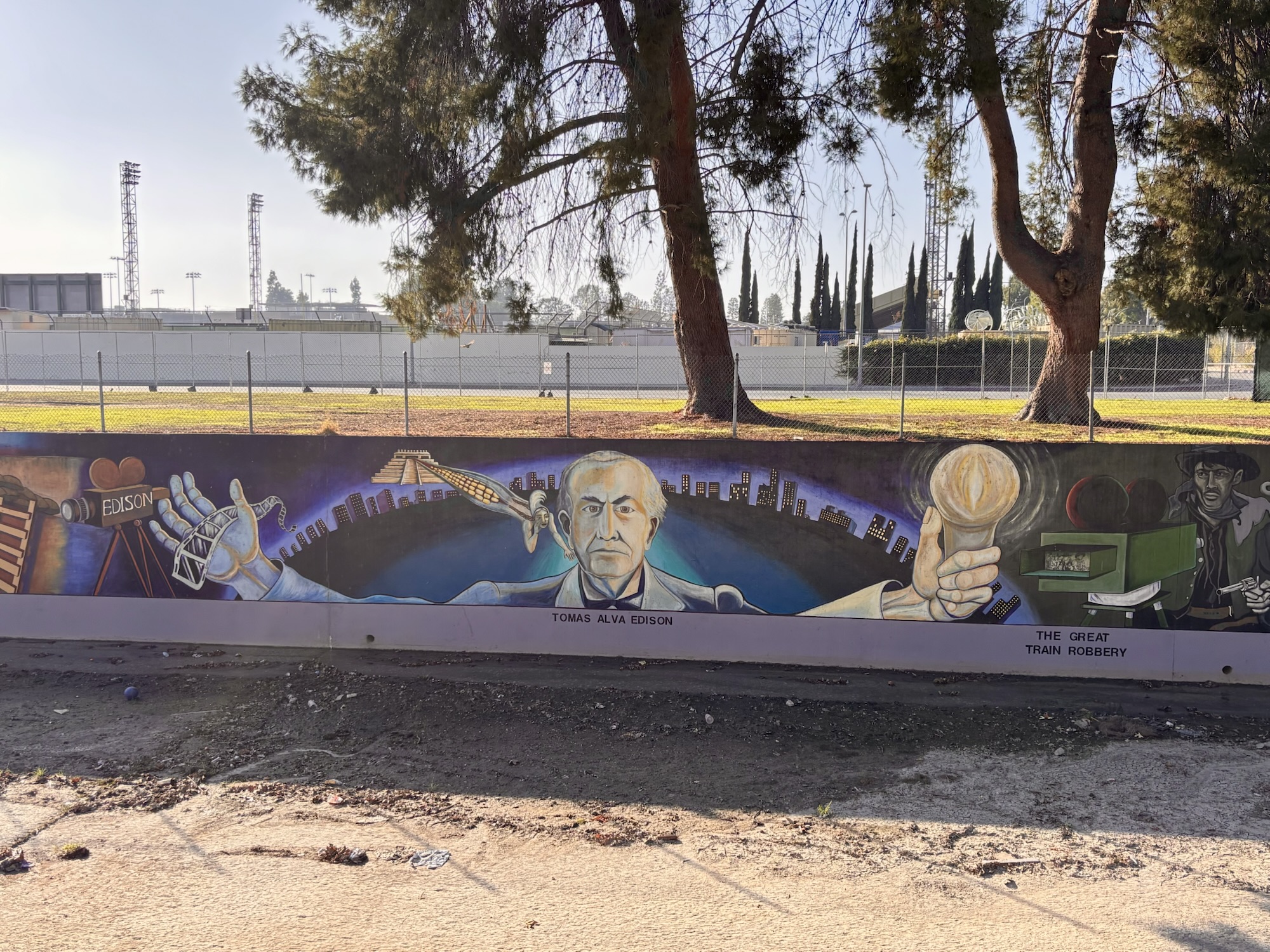
The Great Wall of Los Angeles is an important and interesting educational public art project located in the San Fernando Valley of LA. Stretching for over half a mile along the Tujunga Flood Control Channel, it is one of the longest murals in the world and serves as a painted narrative of California’s history—celebrating its achievements, and its more poignant moments never to be forgotten.


Designed by artist Judith Baca and driven to life by the non-profit organization Social and Public Art Resource Center (SPARC) in the 1970s, the mural’s creation brought together hundreds of artists, historians, and community members. Part of the project’s aim was to give voice to marginalized communities through an pictorial retelling of their stories, many of which we were unfamiliar with.
The mural unfolds from California pre-history (20,000 year ago at the La Brea Tar Pits) to the 1984 Summer Olympic Games. And everything in between across a sweeping timeline:


From prehistory and indigenous peoples, LA’s founding near Olvera Street, the Mission Period, the California Gold Rush, Edison and the start of Hollywood, Japanese American internment during World War II, McCarthyism and the Red Scare in Hollywood, to the Civil Rights Movement, and beyond. Each panel blends time and paint, transitioning seamlessly from one intertwined historical moment to another, using vibrant colors, symbolism, and an unflinching gaze at the darker chapters of California’s history. It is a great round trip walk of 1 mile that enriches you with a powerful lesson in visual storytelling of diversity and resilience.
The Great Wall (just like California history) continues to grow and evolve, with plans to preserve and extend its narrative to contemporary times, ensuring that future generations have an inclusive portrayal of their shared history.
To help preserve and extend The Great Wall consider contacting SPARC and becoming a supporter by making a donation or getting involved.

Leave a Reply