
We left the baroque beauty of Taormina behind and set out on a Sicilian adventure to meet Mount Etna, Europe’s largest and most active volcano and the dominating presence across the island.
Our driver and an interpreter met us early, and we headed southwest, winding (and I mean winding!) on narrow roads and corkscrew turns uncorking the sleepy Sicilian villages that clung to the slopes of Mount Etna. One village in particular, Ginestra, was bathed in golden light and named for the abundance of vibrant ginesteae, a yellow flower in the same family as cytisus scoparius (more commonly known as scotch broom), which flourishes here in the volcanic soil. Unfortunately for me, it’s also something I’m allergic to.
The air was cool, and the skies were a bit cloudy, leaving us worried we might be unable to hike the mountain. Rain was in the forecast. But as we passed the timberline and the giant, eerie nests of the pine processionary moth, and rose above the clouds, the sky began to clear. Below us, puffy clouds stretched out like a folded sea of fior di latte gelato.
We were lucky. Etna had been active the night before, releasing ash, steam, and lava flows. But she was calm today.
She (yes, Mount Etna is very much considered a woman in Italy) still vibrated with energy we could feel as we approached her. Even from several thousand feet below the summit, we could clearly see her steam plumes rising to the sky.
Mount Etna is not just a mountain; she is a force of nature. With eruptions dating back over 3,500 years, her most devastating occurred in 1669, when lava swept through the countryside, erasing entire villages. On our way up, we passed a church that is said to have miraculously halted the lava flow saving the town. Now, each year, the town celebrates that event with a procession through its streets. The land and towns endure, enriched by history, legends, and fertile volcanic soil that nourishes grapevines and, unfortunately, an abundance of gineseae.
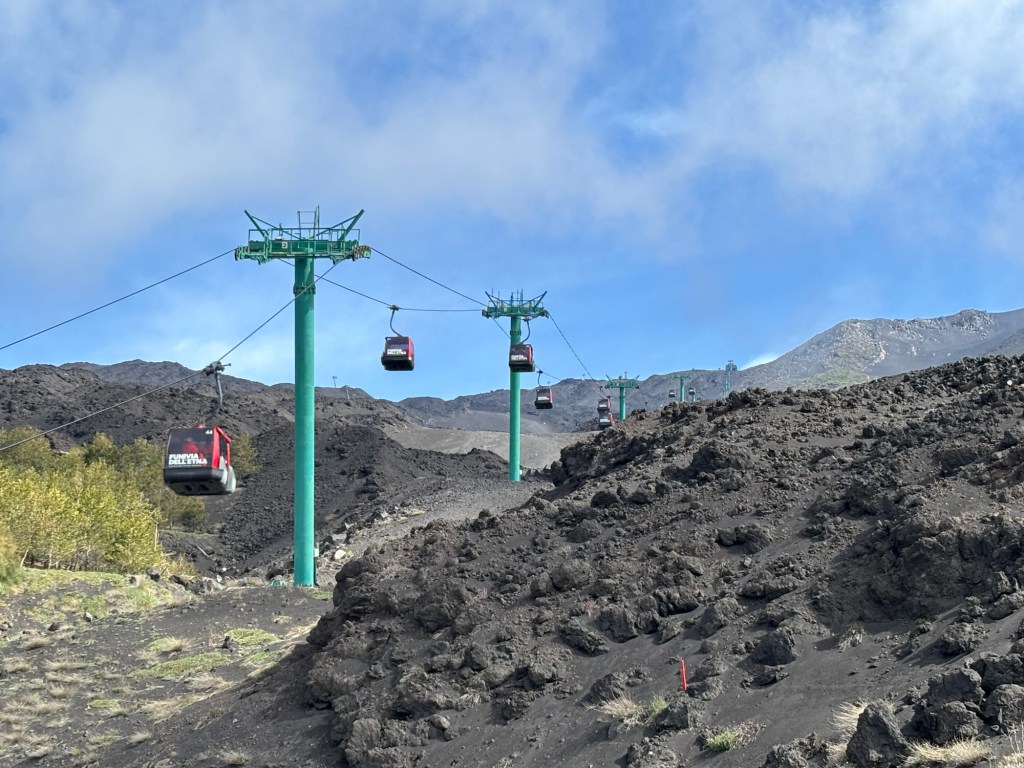
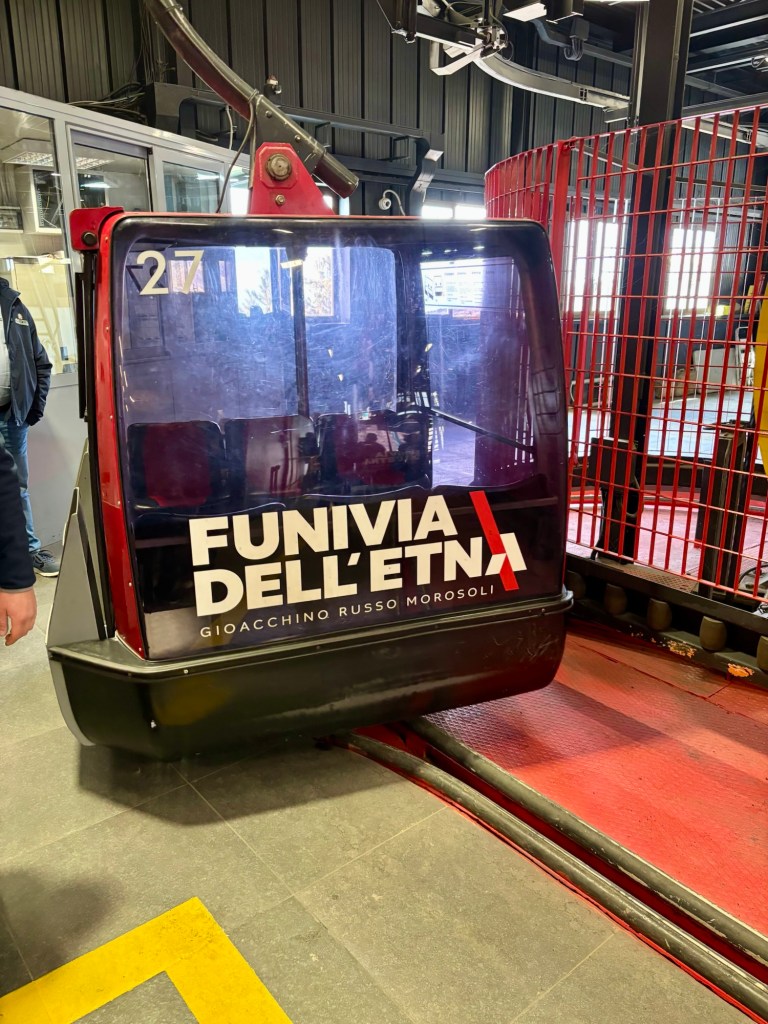
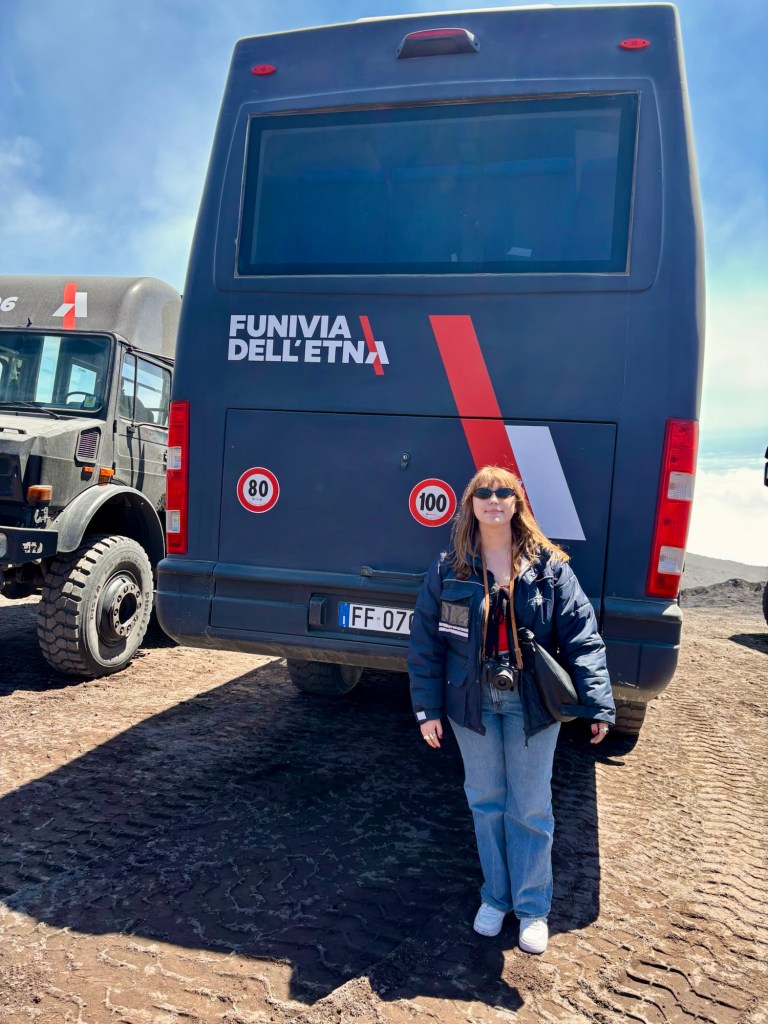
We reached the Rifugio Sapienza station at Funivia dell’Etna within Parco dell’Etna, well above the timberline at about 1923 meters (~6300 feet), where we met our local guide and boarded a cable car that lifted us into the high barrenness of Etna’s upper reaches. The cable car took us to the upper station at 2,500 meters (~8200 feet) where we transferred into massive Unimog-style all-terrain vehicles. These hulking beasts were designed for this alien terrain. They took us further up through fields of black hardened lava and ash. From there, we hiked on foot, crunching up loose volcanic gravel, to gaze into a crater formed during the 2001–2002 eruptions, one of Etna’s many pock-marked scars at about 9500 feet.




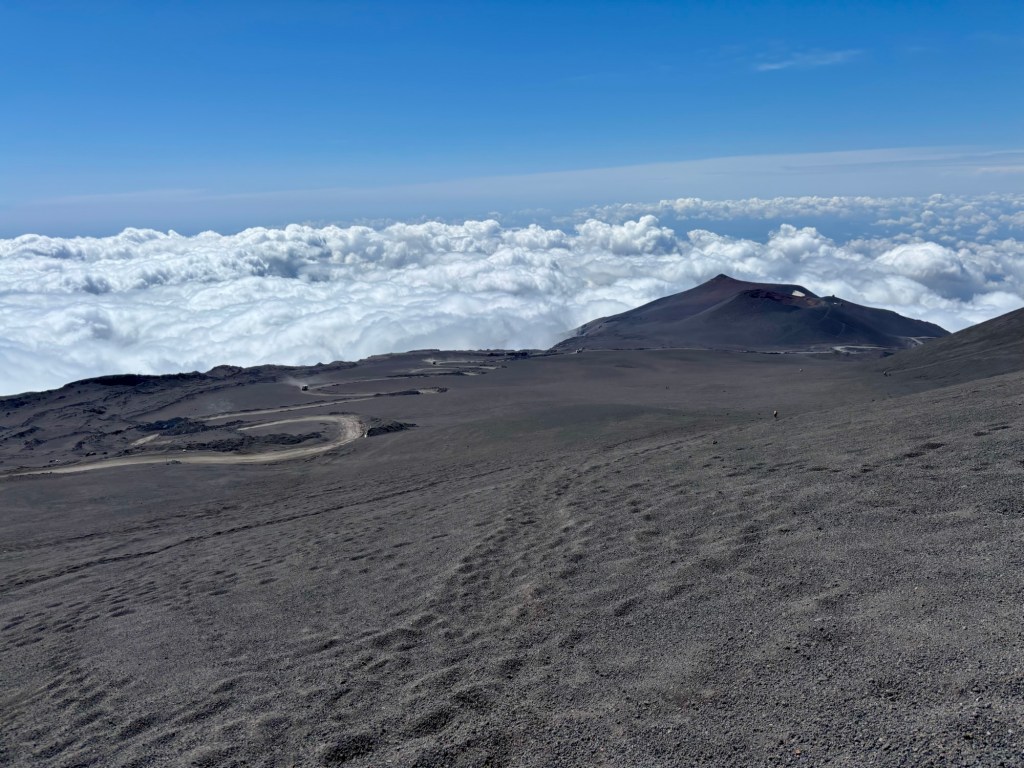


The air thinned as we climbed higher, tracing the ridge to about 9,600 feet, just shy of Etna’s summit at 10,912 feet. From the top, we could see steam rising from the summit craters, some snow dusted with soot from the night before, and volcanic “bombs” hurled from Etna’s depths across the hiking path. Our guide stopped, wide-eyed. “This wasn’t here yesterday!” she said, pointing to a fresh boulder the size of a washing machine. It was still warm from the heart of Etna herself.


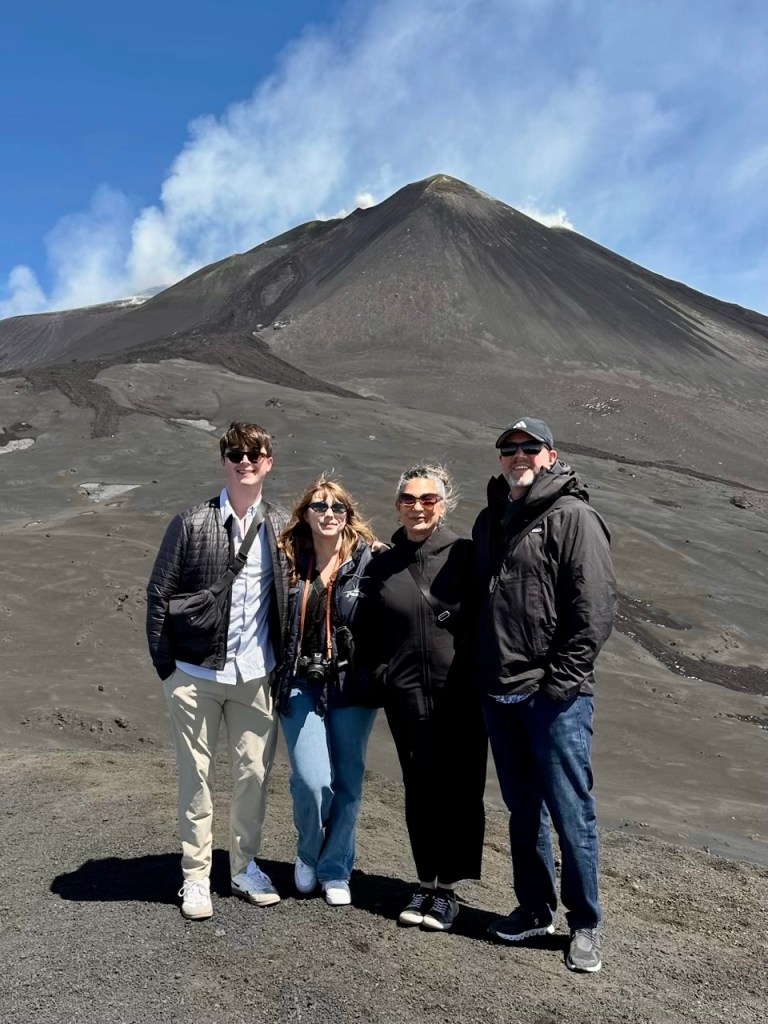


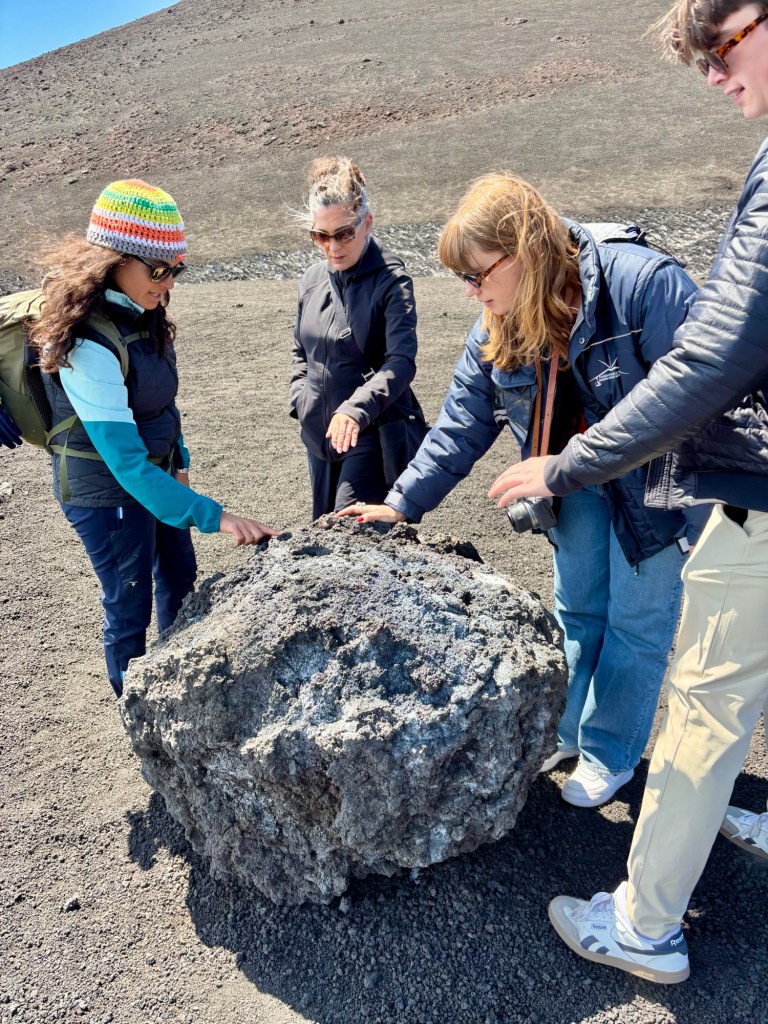


The Etna hike was a great experience. We hiked back down to the massive 4×4 busses which returned us to the gondola where we descended back to our driver and interpreter waiting for us.
After our descent, we made our way about an hour down the mountain to Barone di Villagrande, a family-run wine estate perched on Etna’s lush, forested slopes. It’s one of the oldest wineries on the volcano, producing lovely wines that reflect the mountain’s mineral-rich soil. We were treated to a five-wine tasting flight, paired with a leisurely (maybe too leisurely) five-course Sicilian lunch.

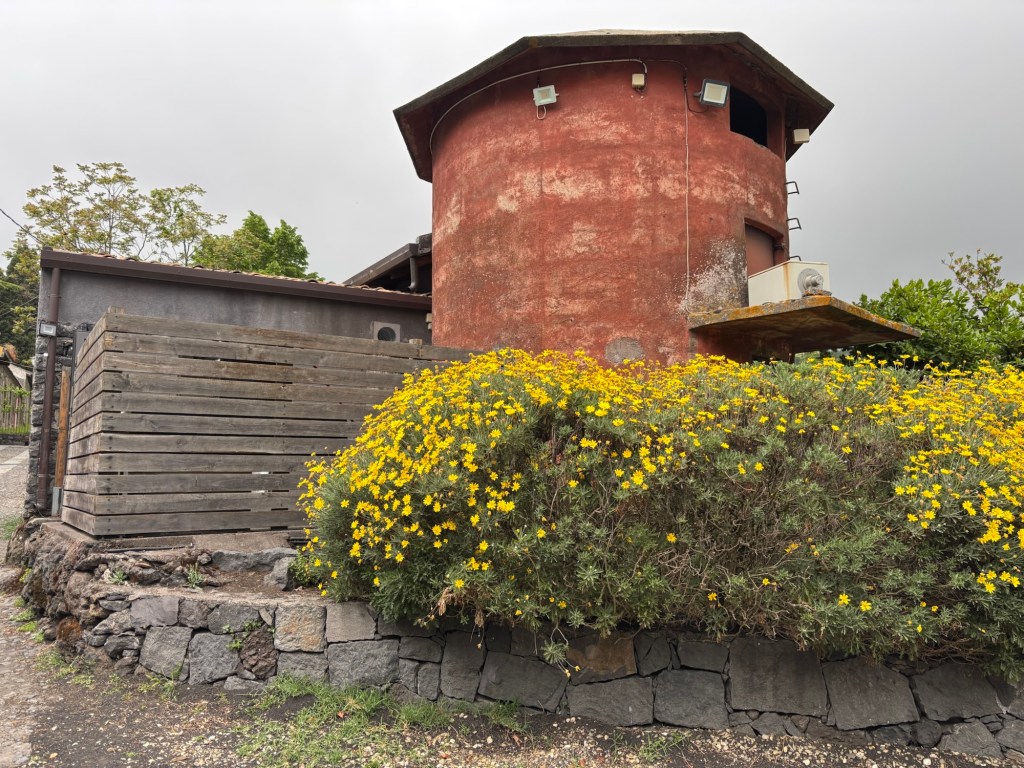


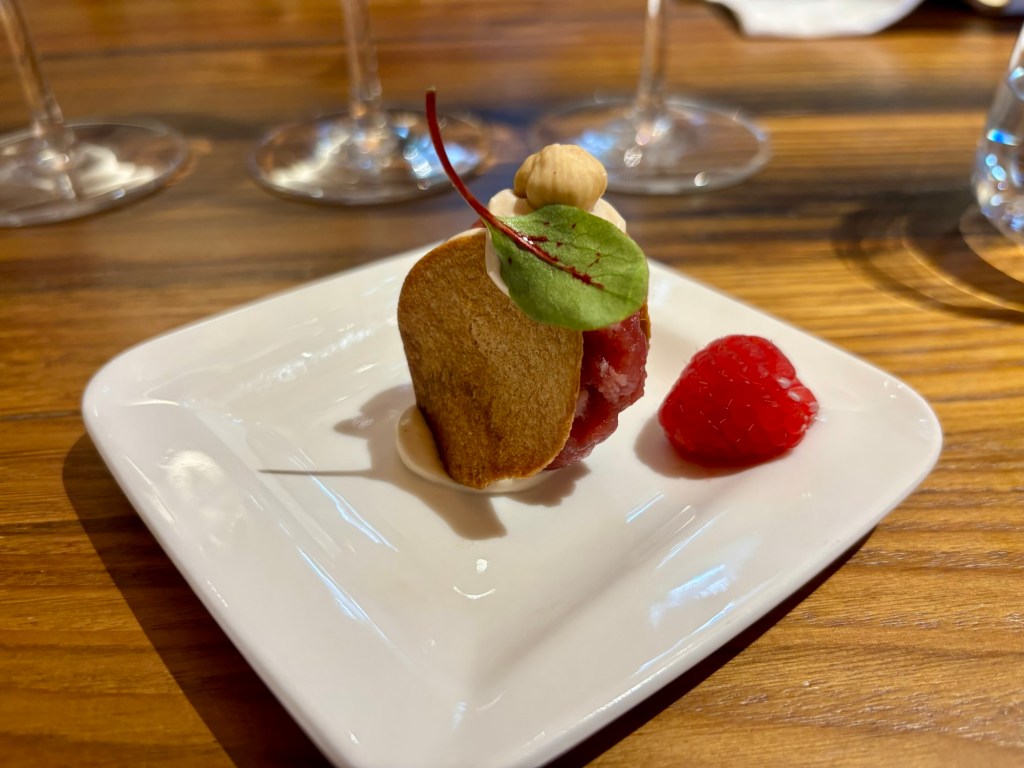


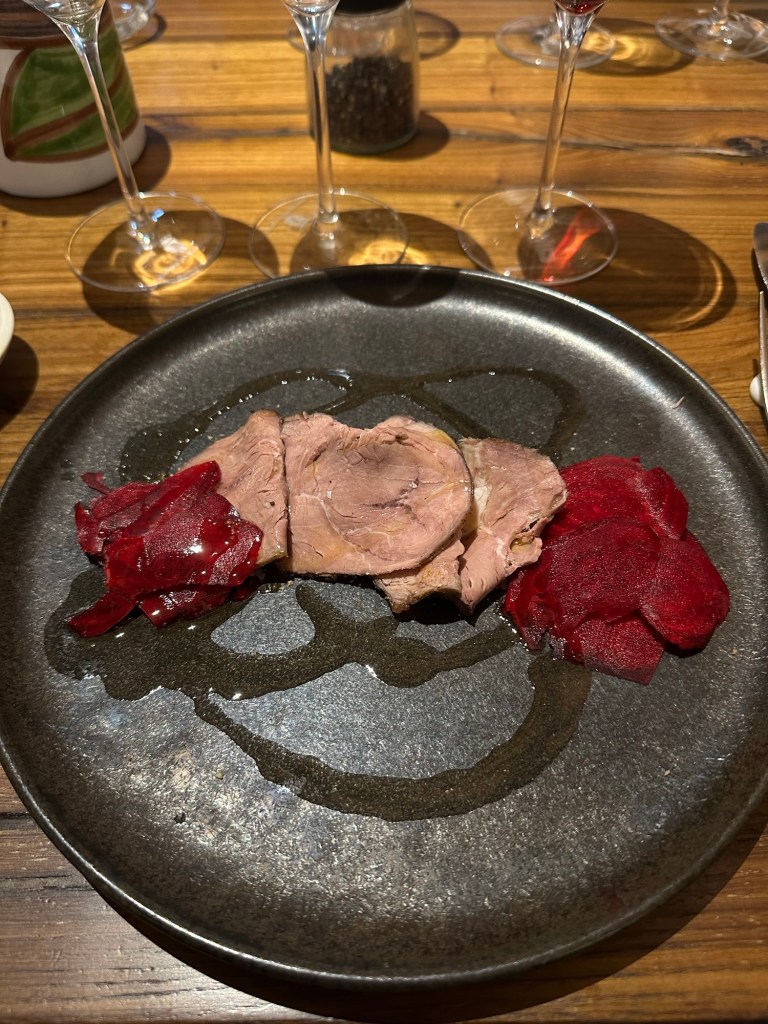


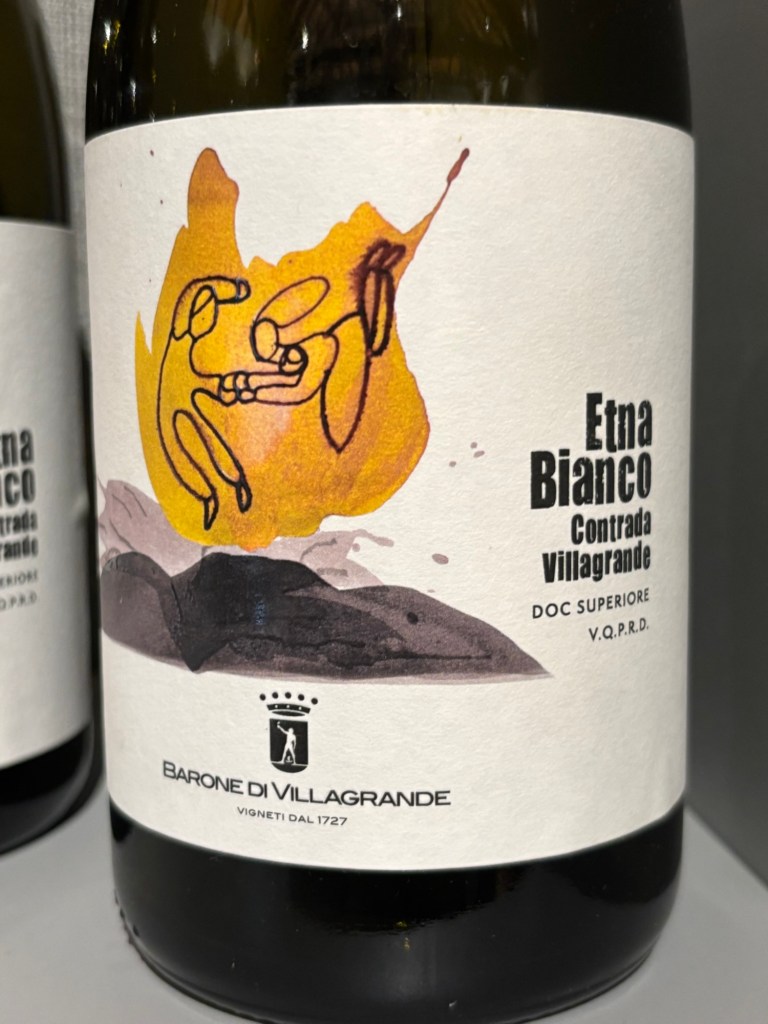


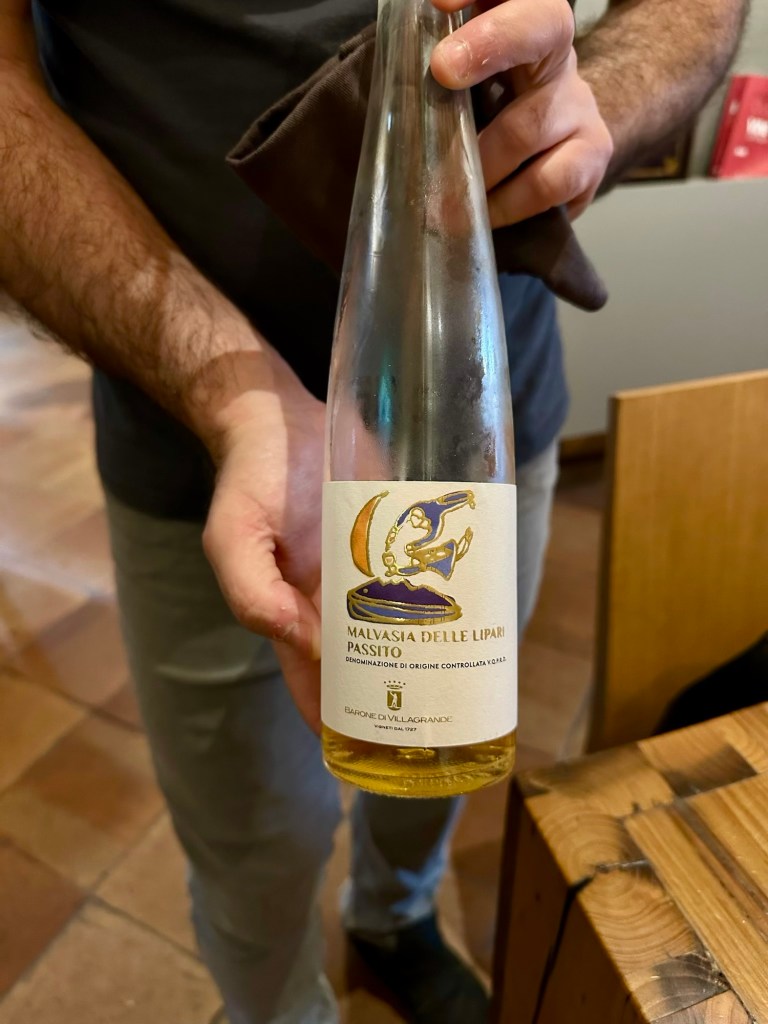
We returned to Hotel Villa Carlotta in Taormina as the sun set behind the cliffs and had a drink in the bar lounge. Hungry again, we strolled into town and found a hidden gem: Osteria De Gustibus, a tiny osteria with just five tables. The meal was honest, unfussy, and delicious, like a home-cooked meal cooked in a Sicilian’s kitchen.


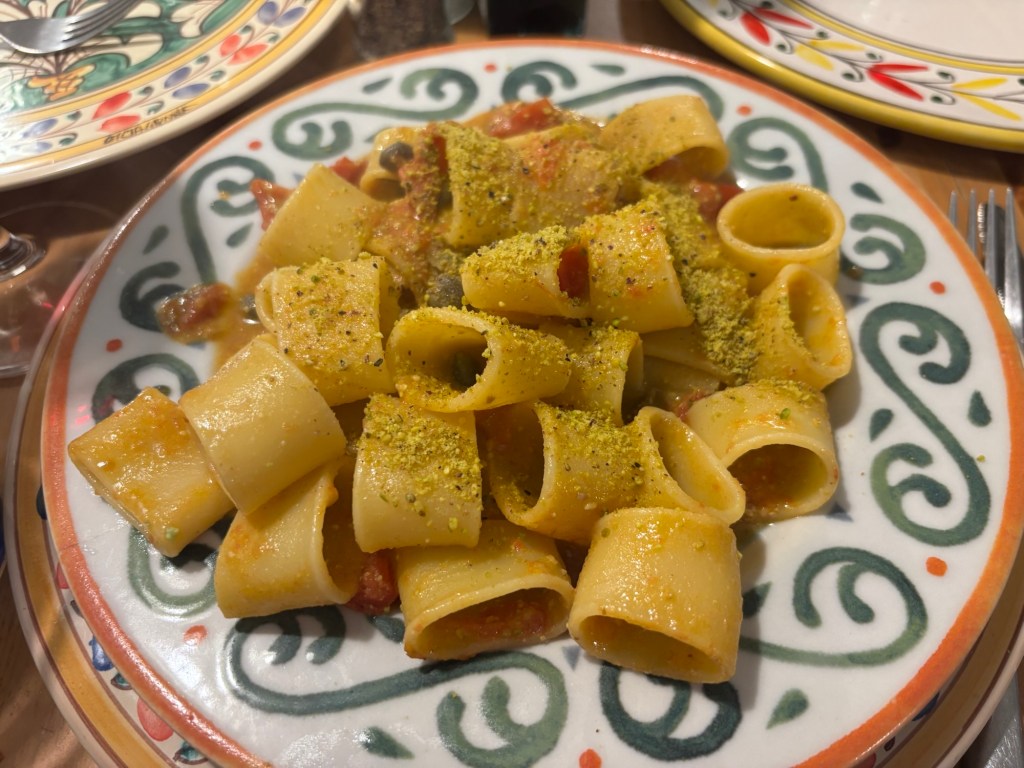

After dinner, we walked a few quiet streets, stopped for one last drink, and turned in for the night. Tomorrow, we’d leave the shadow of Etna and trade volcanoes for the Vatican. Rome was calling. But tonight, we still felt her warmth on our skin, her ash on our shoes, and her wine in our blood.
Update: June 2, 2025 — Mount Etna erupted, and tourists on the same hike we took just two weeks ago had to be evacuated.

 Sabbatikos
Leave a comment