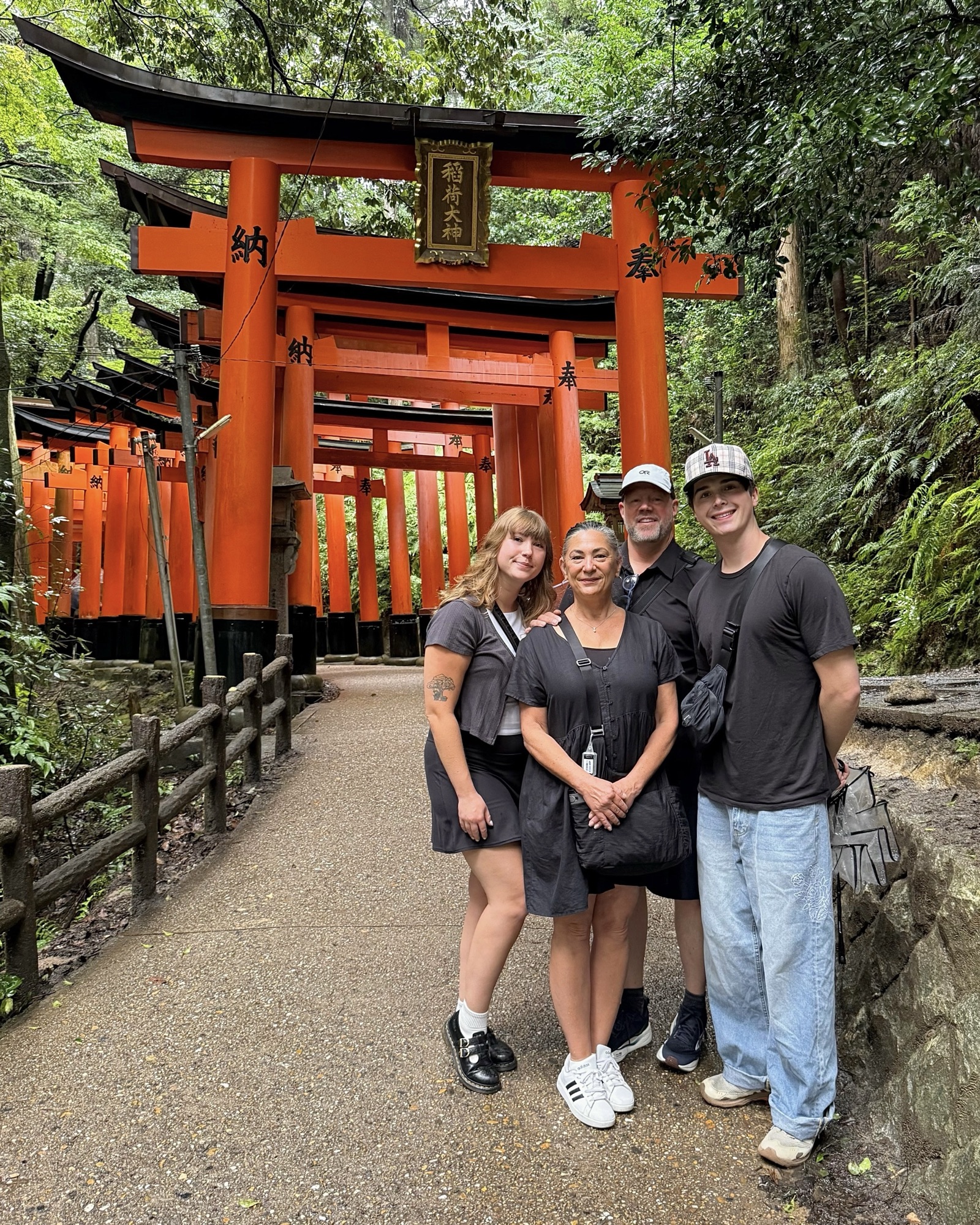
We decided that if we were going to see one of Kyoto’s most photographed places, we should make an effort to get there before it became overcrowded. That meant waking up early, leaving the Genji Kyoto Hotel by 7:00 a.m., and, with some regret, foregoing the morning ritual of its beautifully curated Japanese breakfast. We jumped into a taxi and headed across Kyoto toward Fushimi Inari Taisha, hoping to beat the parade of Instagrammers and TikTokkers (#fushimiinari) who are obligated to make the pilgrimage here while in Japan. Their quest (and ours) is one of Kyoto’s most recognizable images: thousands upon thousands of brilliant reddish-orange torii gates winding up the slopes of sacred Mount Inari.

Fushimi Inari Taisha has been a place of worship since 711, more than eighty years before Kyoto itself became Japan’s capital. It is the primary shrine for the roughly 30,000 Inari shrines scattered across Japan, all dedicated to Inari Okami, a Shinto god originally associated with rice, harvests, and abundance, but now includes business prosperity, safe home, and general good fortune, making Inari one of the most widely worshipped Shinto gods in the country.
And then there are the very photogenic torii. There are around 10,000 of them across Mount Inari, most donated by individuals, families, and businesses as expressions of gratitude or prayers for future prosperity. The names and dates of donors are painted in black characters on the gates. The orange color is significant too, traditionally associated with protection against evil, but at Fushimi Inari, also with abundance bestowed by Inari.


Whether it was the early hour, the rain, or some combination of the two, when we arrived at the massive Romon Gate, built in 1589 with an offering from samuari Toyotomi Hideyoshi, things were surprisingly calm. Beyond it sat the Honden, the main building, bright orange against the gray drizzle of morning. Even the parade of torii climbing into the wet green hillside were not nearly as packed as we had feared. Perhaps we’d also be allowed our Instagram moment. With our umbrellas open, we started climbing.


The torii are even more dramatic once you are tunneling through them. The gates become a seemingly endless orange tunnel, curving through the forest hillside. Around each curve, we’d pause, look uphill and downhill, and wait for the moment when nobody else was in the frame. We actually did pretty well. There was a steady stream of locals, pilgrims, tourists, and influencers moving up the mountain. The influencers were easy to spot, having arrived in their cutest, most carefully curated outfits, completely impractical for the hike. It was entertaining to watch them struggle in the rain and the heat. But the crowds were thin enough that patience occasionally rewarded us with several seconds of damp dripping peaceful serenity.


The shrine paths extend across a 233 meter (~765 feet) peak, and once you leave the lower torii behind, the walk becomes a genuine hike. There are long inclines, stone and gravel paths, and at times a seemingly endless staircases, all of which become considerably more difficult when wet and hot.


We continued upward through the rain, through more torii and past some shrine and a lake with a sign warning of wild boar!. Somewhere around three quarters of the way up, the rain finally softened into a mist. This should have been good news, except the thinning clouds allowed the temperature to rise and transformed the mountain into a steam room. The humidity had to have been over 100%. We (and the influencers) were sweaty hot messes. Eventually, Tawny, Clara, and I collectively reached the conclusion that Inari probably did not require us to die on the mountain to prove our devotion for the perfect shot. Perhaps Inari heard us, because only a few more steps ahead was a tiny tea and lunch hut alongside the trail. It wasn’t open yet, but outside was one of Japan’s ubiquitous vending machines. Arigatou gozaimasu! The prices were a bit higher than usual, but we didn’t mind. We spotted exactly what we needed: ice cold Pocari Sweat. By this point in the trip, Pocari Sweat had become one of our favorite discoveries in Japan. Its name might sound off-putting, but the lightly flavored electrolyte drink tasted good and is absolutely thirst quenching.
While Tawny, Clara, and I sat recovering, drinking our Pocari Sweat, Ian continued upward. He disappeared into the torii for another fifteen minutes or so before eventually returning, reporting that he had come close to the summit but it was too hot to go further. We acknowledged the power of his FOMO while remaining comfortable with our decision to stay put and rest. It gave us a chance to compose ourselves for some photo ops.


Rested, hydrated, and humbled by the heat, we began our descent. Rather than retracing our exact route, we inadvertently took a side path that slipped through more torii in a bamboo forest. Eventually, the endless tunnel of torii gates gave way to smaller shrines, mossy stones, lanterns, and intimate spaces tucked along the path. It felt less like the Fushimi Inari of Instagram and more like a place local people had been quietly coming to for centuries to worship and reflect. Stone foxes began appearing everywhere. We had seen some up on the mountain, but now they were everywhere.
Foxes are Inari’s messengers, known as kitsune, or white foxes. Stone foxes stood guard beside shrines and altars, often wearing bright red bibs placed around their necks. Many held mysterious objects in their mouths. What at first looked like a nut to us we found out later was a jewel. Other foxes held scrolls or bundles of rice.


The shrines increased, some filled with miniature torii left as offerings. And then there were cats. Real ones. We began spotting them among the shrines and along the paths, lounging with indifference, reminding us of our own cats at home. Several had the unmistakable clipped ears used to identify they are sterilized, suggesting someone nearby was managing the population via TNR. Sacred foxes, feral cats, bamboo, 10,000 torii, moss covered shrines. Fushimi Inari was more than just an Instagram photo op.


As we worked our way farther down the mountain, the forest deposited us into ordinary Kyoto again. Tiny shops appeared between neighborhood houses. Storefronts were beginning to open. Souvenirs appeared and of course we bought some. Eventually the narrow streets delivered us back toward the grand Romon Gate and the Honden where we had started just a few hours earlier.
It was a little after 9:00 a.m. The rain had stopped but the temperature had climbed. The humidity was off the charts. And the shrine grounds were rapidly swelling with hordes of tourists and tour groups. We were glad we had gotten here early. But it was still early. What was next?
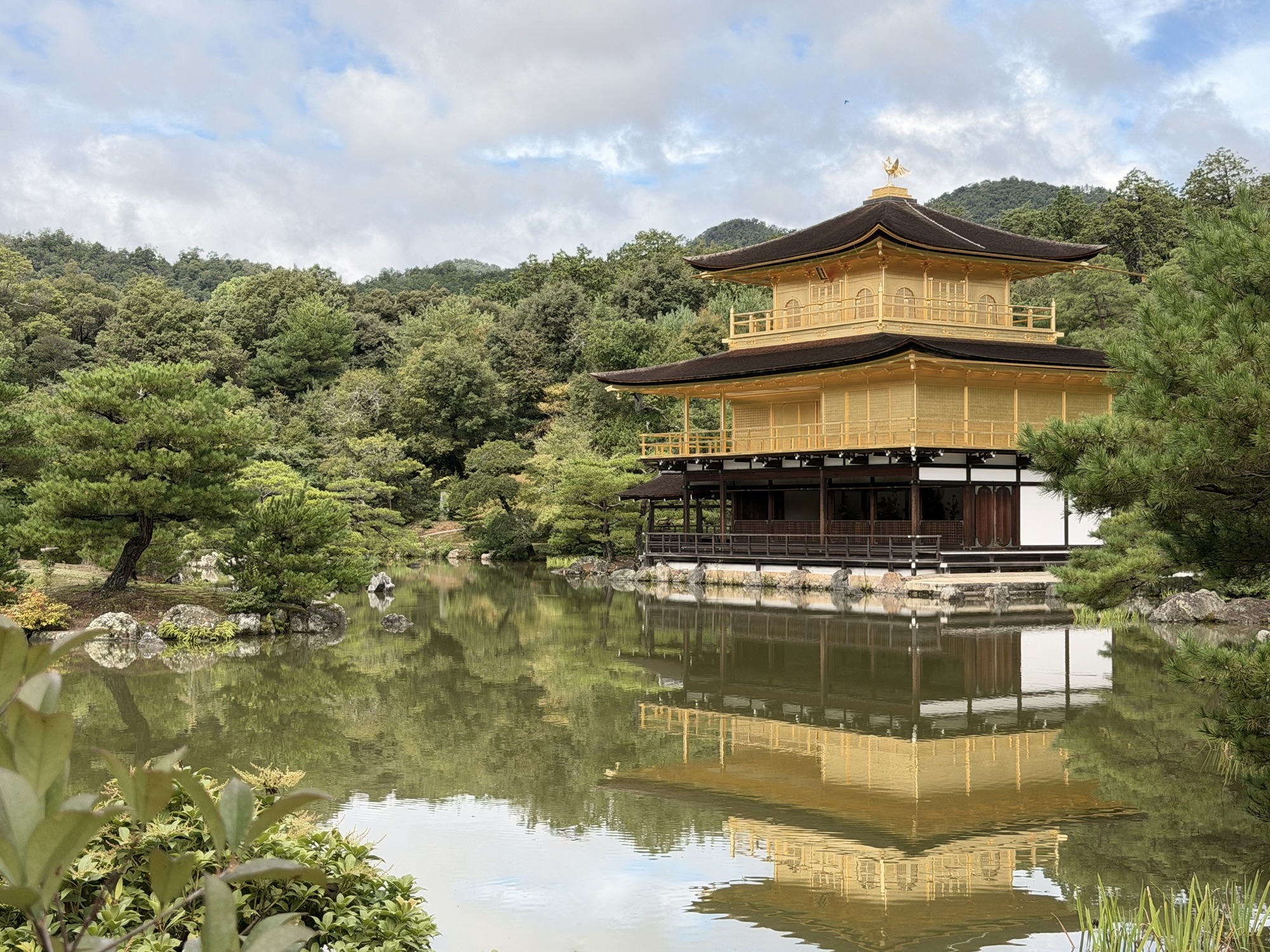
We found a taxi, collapsed gratefully into the cool air conditioning, and gave the driver our next destination: Kinkaku-ji, the Golden Pavilion.


Leave a Reply