We slept in. After nearly two weeks of temples, shrines, bullet trains, ramen, deer attacks, torrential rain, torii, shogun castles, bargain shopping, robo sushi, and blistered feet from averaging more than 20,000 steps a day, our Japan trip had been a sensory whirlwind. On our last full day in Tokyo, we gave ourselves permission to have no specific agenda except for one final mission: Clara still needed to find a Japanese edition of The Hunger Games.
We had already searched bookstores in Kyoto without success. The Japanese edition was out of print, which made this a scavenger hunt. A little sleuthing revealed that Tokyo had a used-book district neighborhood called Jimbocho or Book Town. Of course it does. But who knew?
We had gotten a late start, and Jimbocho wasn’t going anywhere. Looking at the map, we realized we could stitch together several other places we wanted to see on the way, including Tokyo Tower, the Imperial Palace, and a giant mechanical clock designed by Hayao Miyazaki. It was our last day in Tokyo. Let’s do it. We got on a train.
Our first destination was Tokyo Tower. We had no particular need to go up it. We had already seen Tokyo from various heights, and with low clouds and occasional rain, this didn’t seem like the day for panoramic views. We mostly wanted to see the tower up close. What we didn’t realize was that between the train station and the tower sat Zōjō-ji, a large Buddhist temple beside Shiba Park.


It was one of those happy travel accidents that Japan kept giving us. One minute we were walking toward a big tower, and the next we were wandering through a centuries-old Buddhist temple, exploring the grounds and nearby gardens while the modern Tokyo Tower rose above the historical, traditional temple below. It was like the contrast between Meiji Jingu and Harajuku from our first day. The rain was light enough that we didn’t bother with umbrellas, and the whole place felt calm.
We debated going up Tokyo Tower, but the clouds were still hanging around and we had another deadline. Somewhere in nearby Shiodome, Hayao Miyazaki had built a clock, and we needed to be there by noon.
It is called Nippon Television’s Really Big Clock. Miyazaki designed an enormous metal-clad mechanical Studio Ghibli-like creation on the side of Nippon Television’s headquarters in Shiodome, and several times a day it activates with turning gears, opening doors, and moving figures. We had made it just in time.
The clock was incredible, part cuckoo-clock, part industrial steampunk, part Howl’s Moving Castle. Watching it immediately brought us back to our first family trip to Japan, when Clara was about six and we took her to the Studio Ghibli, where Miyazaki wonders like this were around every corner. Eighteen years later, here we were, standing beneath another one of his masterpieces as it clanged and whirred above our heads. It was very cool.


From Shiodome we walked into Shimbashi, literally walking through the office buildings of one of Tokyo’s classic salaryman neighborhoods, headed for lunch. Clara wanted to go to Ichiran Shimbashi, a 24-hour tonkotsu ramen restaurant designed around the concept of a private ramen booth.
We joined the line outside, which eventually entered a doorway. That was fortunate because it had started raining again. The line went up two flights of stairs, then eventually placed us in front of a vending kiosk we fumbled through selecting and paying for our ramen. We chose our broth, noodles, toppings, and extras, received our little tickets, and entered yet another queue where we waited for individual seats to become available.
It didn’t really matter that we were a party of four because Ichiran wasn’t interested in group dining. Each diner sat on a stool inside a tiny individual booth with small walls on either side, facing a curtain. Behind the curtain was a server, except another wall blocked their face, so all you could see were hands and a bit of torso. Your food appeared through the opening. If you wanted something else, there were your tickets, and little wooden markers you could use to communicate. I wasn’t sure if conversation was unnecessary, or not allowed. It was all about silent slurping.


Tawny and I happened to land next to each other, but Clara and Ian vanished somewhere into the ramen booth labyrinth, swallowed by rooms of tiny booths and curtains. We were handed eggs to peel ourselves, followed by our beer, then our ramen. Mine arrived with extra pork, garlic, and woodear mushrooms. Around us, dozens of people sat quietly in their individual ramen booths, slurping noodles in near silence. We loved it! It was weirdly perfect. Efficient, delicious, slightly odd and awkward, and somehow seemingly a very Japanese experience.


After lunch we headed toward the Tokyo Imperial Palace, called Kōkyo, built on the grounds of the former Edo Castle and home to Japan’s Imperial Family. We walked through the immense open spaces of Kokyo Gaien National Garden, the large outer gardens in front of the palace. The map made the distances look manageable, but our feet said otherwise. Everything was further than it looked and it was hot and humid. It was also sunny but also raining a little. Much of what we had hoped to wander through wasn’t accessible or was closed, with increasingly unhappy feet, we decided to go book hunting. There had to be a Japanese copy of The Hunger Games hiding somewhere in Tokyo, and if it was anywhere, it would be Jimbocho. We took the train one stop to Jimbocho station.


We began going from bookstore to bookstore asking for The Hunger Games in Japanese. Most we asked knew immediately that they didn’t have it. At a few stores, however, the staff took up the challenge, disappearing into shelves, consulting computer inventories, and looking through stacks. But, nothing.


Along the way we passed Book Hotel Jimbocho, a hotel organized around books, where you could literally curl up with a good book for the night. It was a compelling concept. But it was what was next door that caught our attention, Vintage Jimbocho.

This place was amazing! This narrow little shop was packed floor to ceiling with decades of Japanese pop culture: old magazines, sports publications, professional wrestling memorabilia, movie programs, flyers, and stacks upon stacks of vintage Japanese film posters. Some were posters for Japanese movies. Others were Japanese posters and promo materials for Hollywood movies. Some were surprisingly from Japanese adult films. I wasn’t allowed to buy any of those. But we “embraced the chaos” and browsed for far too long, our bodies in Twister-like positions, straddling sacks on the floor so we could let somebody pass or reach another posters to view. We lost a considerable amount of time in there.
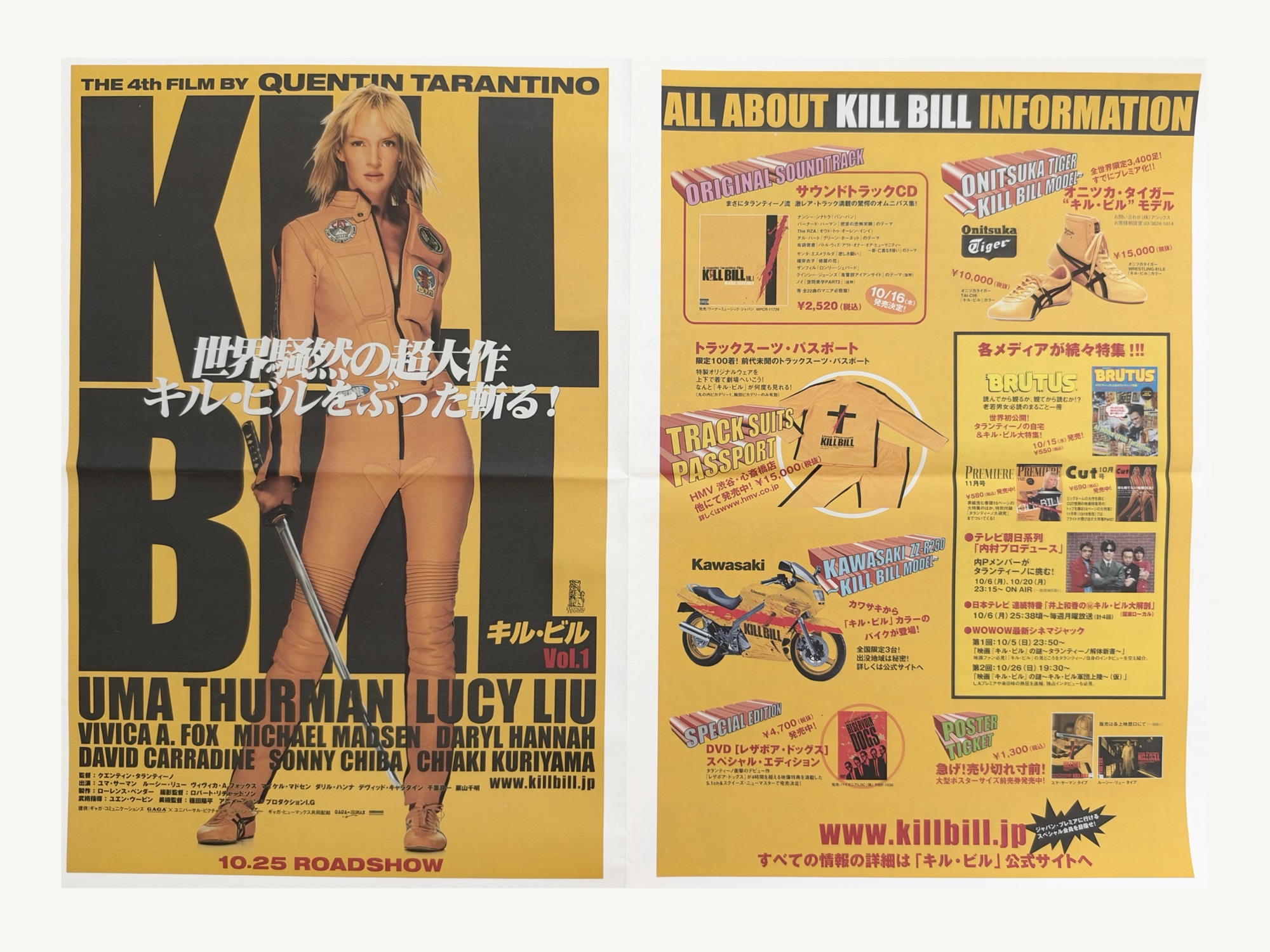
Photography wasn’t allowed, which was unfortunate because some of the posters were fantastic and very affordable. Clara, however, found a Super Girl poster from the 1984 version of Super Girl. She also found an incredible Japanese Kill Bill newspaper-style poster insert to go with the Onitsuka Tigers she had bought in Harajuku on our first day. She bought them both and we carefully carried them back to Los Angeles, where they are destined for a frame an a wall. Interestingly enough, Faye Dunaway was in Super Girl, and she also is rumored to have lived in Clara’s apartment!


The Japanese Hunger Games, however, continued to elude us. Eventually we admitted defeat. The odds were not in our favor.
By then we were thirsty, our feet said no more, and we happened across a little bar and yakitori restaurant down a side street just as it was opening for the evening called Sanbee 3B Three Nice Bar. A young couple appeared to run the place, and we settled in for drinks and a few small plates. It was exactly the kind of unplanned stop that had become one of our favorite parts of Japan. No reservation. Just a spontaneous stop in a tiny neighborhood place for some amazing food and drinks, and a chance to rest our feet.


When we came back outside, the sun was setting. We had reached the physical limits of the day. But somehow we ended up at Tokyo Station, which is less a train station than a small city where trains occasionally happen. We became distracted by station stamps, part of Clara’s ongoing effort to collect the ink stamps found at train stations, temples, shrines, and attractions throughout Japan. Then we became distracted by stores. Then we became distracted by capsule machines.


Our final evening in Tokyo began to echo our first, with ramen, shrines, kawaii overload, shopping, and capsule machines. Every corner of Tokyo, every alley, every store, every meal, and every sight seemed to offer some new and amazing discovery. So, naturally, we shopped some more.
Eventually, there was nothing left to do but return to the hotel and confront the consequences of all our shopping. Packing. My years of playing Tetris were about to pay off. A few things had to be sacrificed, and in the end, we abandoned a couple of curries and packages of instant ramen for the hotel staff, doubtful we would be allowed to bring them through customs anyway. We still reserved a little room for the special-edition Japanese Kit-Kats we absolutely had to buy at the airport. #Priorities
It was difficult to imagine that the trip was over. Japan had once again managed to feel simultaneously familiar and completely new. We had brought Clara here when she was six years old, and now, eighteen years later, we had returned with her as an adult, Ian beside her, retracing a few old memories and making new ones. There were places we remembered, places we had forgotten, and places we had never known existed until we accidentally walked into them.
Japan feels endless to me. Like an eternal isle of exploration and experiences. So, this didn’t really feel like goodbye. It was more an “Arigatō gozaimasu”. And we’ll see you next time. Japan, we love you.

Leave a Reply